
As an Indian journalist who has lived and worked in China for more than a decade, I have witnessed firsthand the astounding pace of China’s urban transformation—high-speed rail networks linking megacities, digital payment systems changing people’s daily life, smart manufacturing rising across industrial zones, and modern infrastructure spreading across the nation. Yet, my recent eight-day media tour to Zhejiang Province in east China offered a new and deeply thought-provoking perspective.
For the first time, I experienced rural China not just through data or policy reports, but up close, walking through villages, meeting local residents, interviewing officials and entrepreneurs, and observing the real dynamics behind China’s rural revitalization and common prosperity model. (China’s rural revitalization, a strategy introduced at the 19th Communist Party of China National Congress in 2017, promotes the economic prosperity and overall development of rural areas. It builds on the success of the nationwide poverty alleviation campaign that had eradicated absolute poverty as of late 2020—Ed.)
The tour took us across Ningbo, Huzhou and Jiaxing, three cities that have become showcases of China’s ambition to build a high-quality development demonstration zone for common prosperity. I visited more than 10 villages, industrial projects, rural tourism communities, cultural innovation parks, eco-agriculture zones, art and heritage centers, and modern cooperative agricultural bases.
Although I have explored many places in China over the years—from Beijing to Kashgar, from Shenzhen to Harbin—this journey was different. It revealed how China’s countryside has become a laboratory for innovation, shaping new models that elevate not only economics but also dignity, culture, environment and community values. And it raised an important reflection for me, as an Indian: What lessons can India draw from China’s rural transformation to uplift millions of people living in villages and small towns?
Five villages joining hands
Our first stop was Wucun Baotuan (Five Villages Together), Changxing County, Huzhou. Here, five neighboring villages have created a cooperative mechanism that enables them to share resources, industries, talent and tourism revenues. Through a “strong-helping-weak” development strategy led by Fangyi Village, a tourism association was established, uniting local homestays, training shared chefs and guides, and building community workshops. Today, more than 300 villagers, particularly left-behind labor groups and low-income residents, have stable employment.
During an interview, a local representative of the tourism association said: “When villages compete, everyone loses. When we unite, everyone wins. By sharing resources and talent, we make development faster and stronger.”
This model offers a critical lesson: strength in unity. In India, villages often develop in isolation, lacking coordination or resource sharing. If clusters of villages collaborated on agriculture, tourism, digital enterprises or skill-training, rural value chains could expand dramatically.
The power of village-enterprise cooperation
One of the most inspiring examples was Xinchuan Village in Changxing County, built through 30 years of partnership with Tianneng Group, a leading battery technology enterprise. This village-enterprise cooperation model has transformed the village into a prosperous community. The village has become a national demonstration site for digital governance and industrial rural revitalization.
Speaking with a village leader, I heard a perspective deeply rooted in reality: “The village helps the enterprise, and the enterprise helps the village. We grow together. A good life must be built by our own hands—and through cooperation.”
India’s rural economy lacks such structured partnerships. While India has major corporations, they rarely work directly with villages to empower local residents. Public-private-community partnerships could become a powerful pathway for India’s rural development.
Where green turns into gold
In Yucun Village of Anji County, President Xi Jinping first proposed the now-famous principle “Lucid waters and lush mountains are invaluable assets” in 2005. Yucun once depended on mining, which severely damaged its environment. Closing the mines seemed risky, but through eco-tourism, cultural tourism and green industries, the village reinvented itself. In 2024 alone, it welcomed 1.22 million tourists.
A villager who once worked in the mines now runs a small tourism business. He explained: “Before, we earned money by destroying our mountains. Now we earn money by protecting them. This is real development.”
Walking through Yucun, breathing in the clean mountain air and talking with local families, I understood that sustainable growth is not just a slogan here—it is a lived reality. The contrast with many rural areas in India, suffering from pollution or lack of planned tourism, is striking. Environmental protection and economic development are not necessarily in conflict—they can reinforce each other.
Cultural innovation and youth-driven rural revitalization
In Jiaxing City, we explored how culture and digital creativity are reshaping rural spaces. The Qianliji Creative Industrial Park, transformed from old grain warehouses, is now home to international art exhibitions, immersive extended reality (XR) experiences and creative cultural products.
The young entrepreneur managing the homestay told me: “The real value of the countryside is peace, beauty and culture. People don’t only travel to see scenery—they travel to feel life.”
The Himalaya Taocang Ideal Village project in the park blends digital music festivals, virtual reality theaters, immersive libraries and homestays, attracting young travelers and entrepreneurs.
The project director told me: “Culture attracts young people, technology retains them and industry supports them.”
Meanwhile, the modern folk painting base in Xiuzhou District of Jiaxing, rooted in 40 years of local artistic tradition, has trained nearly 2,000 rural painters, many of whom now sell artwork internationally. Art here is not an elite hobby—it is a pathway to economic empowerment and cultural confidence.
India, with its rich folk arts and music traditions, can learn much from this model. Too often Indian craft communities struggle due to lack of branding, digital access, or infrastructure. If creative industries were integrated into village development, rural cultural heritage could become a strong economic engine.
Farm-to-market modernization
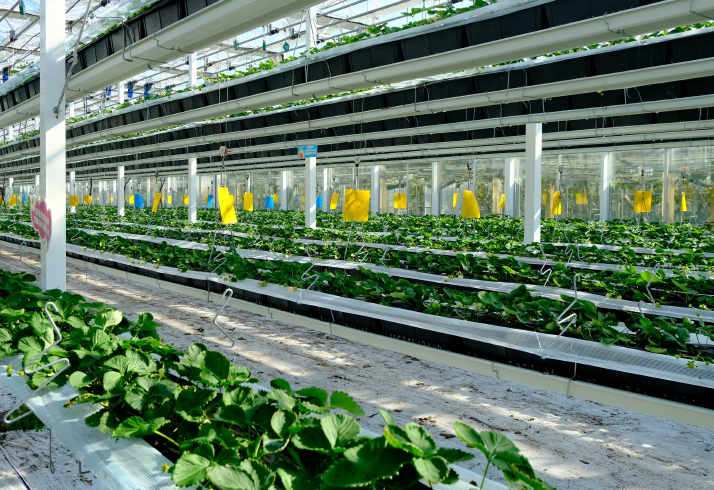
Another highlight was visiting an agricultural innovation center: the Tiangong Smart Agriculture Base in Wandi Village, Ningbo, using digital monitoring and automated greenhouses to increase production efficiency and reduce labor intensity.
This example proves that agriculture is not fading in China—it is becoming hi-tech, market-oriented and brand-driven. Smart agriculture and specialty branding could lift millions of farmers out of poverty.
A human story beyond statistics
Throughout the tour, I recorded interviews with local, elderly villagers who returned to farming, youth entrepreneurs returning from big cities, artists transforming rural traditions, and officials devoted to public service. Their confidence and pride made a deep impression. Rural revitalization in China is not just infrastructure or income—it is a transformation of mindset, offering dignity, opportunity and hope.
I was impressed by a young university graduate running a scenic homestay, who said, “Development is not about leaving the village but about making it a place worth returning to.”
This is inspirational for India, where urban migration has emptied many rural areas.
This trip to Zhejiang changed my understanding of rural China. It showed me a countryside that is confident, modern, creative and full of opportunity. China is not only building rich cities but also empowering villages to stand strong and prosperous.
The real strength of a nation is not measured only in skyscrapers and megacities, but also in the smiles and dignity of ordinary people living in its villages. –The Daily Mail-Beijing Review news exchange item