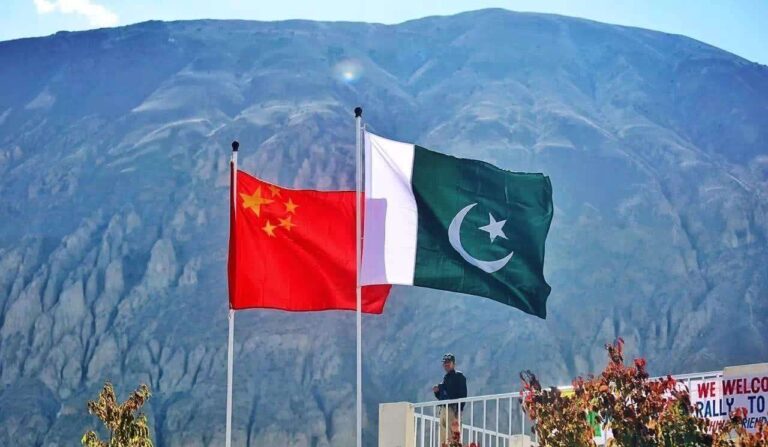
BEIJING: The recent job fair co-organized by the Pakistani Embassy in Beijing and Chinese institutions represents a pivotal step toward unlocking the potential of Pakistani graduates educated in Chinese universities for China-Pakistan cooperative enterprises. These graduates are more than mere job seekers—they can serve as vital bridges to enhance the efficiency and sustainability of Sino-Pak business collaborations.
This was stated by Prof. Cheng Xizhong, Senior Research Fellow at the Charhar Institute, a non-governmental Chinese think-tank on diplomacy and international studies based in Beijing.
Endowed with professional expertise, fluent Chinese proficiency and profound cultural insights, Pakistani graduates can effectively address two key challenges confronting Chinese enterprises operating in Pakistan: communication barriers and cultural misunderstandings. In sectors such as energy and infrastructure—where Chinese state-owned enterprises (SOEs) are major investors—these graduates can act as intermediaries between Chinese management and local teams, ensuring the seamless execution of projects, he said in a statement.
Their dual understanding of Chinese work methodologies and local market dynamics enables them to optimize operational strategies, mitigating risks and enhancing the adaptability of projects to local contexts.
Furthermore, as emphasized by Ambassador Khalil Hashmi, these graduates are well-equipped to assume supervisory and middle management roles. They can drive talent localization efforts, enabling Chinese enterprises to establish stable local teams and secure broader social acceptance. In doing so, this not only reduces operational costs but also reinforces grassroots people-to-people ties between the two countries. The planned expansion of the job fair to third countries further elevates their strategic value, allowing them to extend the reach of China-Pakistan cooperation beyond bilateral borders.
In essence, connecting Pakistani graduates from Chinese universities with cooperative enterprises constitutes a win-win strategy.
It empowers Pakistani young people with promising career opportunities while boosting the competitiveness of Chinese enterprises in Pakistan—thus laying a solid foundation for deeper Sino-Pak industrial and academic collaboration, he concluded. –Agencies