By Ali Imran
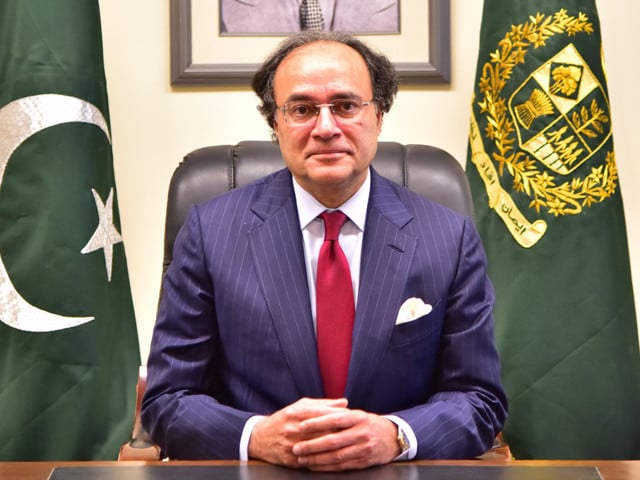
ISLAMABAD: Federal Minister for Finance and Revenue Senator Muhammad Aurangzeb, while participating in the 15th Ministerial Meeting of the Coalition of Finance Ministers for Climate Action (CFMCA), highlighted Pakistan’s growing climate resilience and accelerated shift toward a green economy.
The meeting was held under the theme “Climate Action as an Engine of Growth, Jobs and Competitiveness” on the sidelines of the World Bank-IMF Spring Meetings 2026 in Washington, D.C., a news release said here on Wednesday.
The minister underscored Pakistan’s evolving climate resilience, noting that during the devastating floods of 2022, the country had to immediately seek international support.
In contrast, he highlighted that when a similar disaster struck in 2025, Pakistan was able to mobilize relief through its own resources reflecting the strengthened fiscal buffers built over the intervening period.
Senator Aurangzeb outlined key measures undertaken to green Pakistan’s financial architecture, including the issuance of Green Taxonomy Guidelines by the State Bank of Pakistan.
He informed participants that Pakistan currently has approximately 8,000 MW of installed solar capacity and is pursuing an ambitious target of sourcing 90 percent of its energy from renewables within the next decade.
The minister expressed appreciation to Pakistan’s international partners for their continued support in advancing climate finance initiatives, specifically acknowledging the Resilience and Sustainability Facility (RSF) extended by the International Monetary Fund (IMF) and the Country Partnership Framework with the World Bank Group.
Meanwhile, the minister also spoke at the Atlantic Council on the topic “Pakistan’s Path to Reform and Resilience,” where he underscored Pakistan’s emergence as a constructive force in global affairs, including its role in brokering a ceasefire between the United States and Iran.
On the economic front, he affirmed that Pakistan had achieved meaningful macroeconomic stabilization, underpinned by the ongoing programme with the International Monetary Fund (IMF), and supported by strong performance across both fiscal and external accounts.
He reiterated Pakistan’s commitment to honouring its obligations as a responsible sovereign borrower.
The minister noted that his recent engagement with the Saudi Finance Minister had yielded positive outcomes, including agreement on extended maturities and additional financial support to help offset repayment pressures.
Highlighting the government’s structural reform agenda, he outlined key initiatives including the privatization of state-owned enterprises, rightsizing of federal ministries, and strengthening of public finance management systems.
Aurangzeb also elaborated on Pakistan’s ongoing digital transformation, aimed at reducing leakages, improving service delivery, and enabling better-targeted subsidy programmes through digital public infrastructure.
The minister signalled a shift in Pakistan–United States economic relations from an aid-based to a trade-based partnership, and noted substantive engagement with the U.S. administration on critical minerals and infrastructure development.
He highlighted Pakistan’s energy transition agenda, noting that the country currently has approximately 8,000 MW of installed solar capacity and is pursuing an ambitious plan to scale up renewable energy.
The minister also participated in a meeting convened by the Managing Director of the International Monetary Fund (IMF) with Finance Ministers, Central Bank Governors, and heads of regional financial institutions from the Middle East, North Africa, Afghanistan, and Pakistan (MENAP) region.
During the meeting, Senator Aurangzeb characterized the ongoing crisis in the Middle East as one of the most significant supply shocks in recent history. He outlined the immediate measures undertaken by the government of Pakistan to address its first-order effects, including adjustments in procurement strategies, pricing frameworks, and logistics chains.
The minister underscored the government’s commitment to transitioning away from broad-based subsidies towards well-targeted support mechanisms aimed at protecting the most vulnerable segments of the population.
He noted that the government, in close coordination with the State Bank of Pakistan (SBP), is conducting a comprehensive assessment of the second and third-order effects of the crisis across key macroeconomic indicators, including inflation, economic growth, exports, remittances, and the current account.
The minister highlighted that Pakistan has entered the current period of global uncertainty with strengthened policy buffers and has drawn important lessons from past external shocks, including the devastating floods in recent years.
Reaffirming the government’s commitment to its structural reform agenda, Senator Aurangzeb emphasized that any necessary policy recalibration would be undertaken in a responsible manner, without compromising the hard-won gains in macroeconomic stability.
He concluded his remarks by expressing appreciation for the continued engagement and support of the IMF leadership.