Tucked deep in the north of Xinjiang, Altay Prefecture looks like a fairyland. At this place where China meets Kazakhstan, Mongolia and Russia, rivers glint between snowcapped ridges, fanning toward boundless grasslands. Dense forests thrive by serene lakes fed with glacier water. Yurts send up lazy cooking smoke, and horses graze under infinite skies.
To millions who watched the acclaimed TV series To the Wonder, Altay is a paradise, where life slowed to the rhythm of hooves and snowflakes, and this way of life has been wrapped safely in nostalgia. City dwellers gushed that Altay is their “spiritual homeland,” a place untouched by competition or hurry.
But to step onto its soil is to realize that Altay is no dream preserved in amber. The reality is louder, more colorful and more alive. This is a landscape where herders livestream their rides on smartphones, where ski lifts hum beside ancient pastures, and where the aroma of freshbaked flatbread mingles with the electric hiss of snowmaking machines.
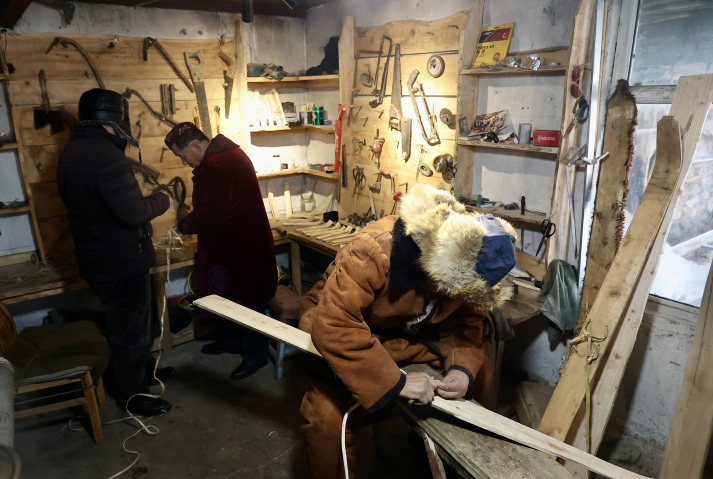
Beyond the myth
Those who visit soon notice the pulse of progress. Down the mountain in Kanas Town, coffee shops serve oatmilk lattes to snowboarders. At the Jiangjun Mountain Ski Resort, instructors in neon jackets shout tips in standard Chinese, Kazak and English. Industrial parks hum quietly beyond the horizon, shipping local products to markets as distant as Istanbul.
Michel Foucault once used the word “heterotopia” to describe spaces that hold contradictions. Real places where old and new, sacred and ordinary coexist. Altay fits this description perfectly. It is both the cradle of ancient nomadic culture and a bold participant in China’s new frontier development. The contrast is its charm: neither untouched nor corrupted, but perpetually in between.
The idealized image of Altay began with literature. Writers painted a land of eternal migration between pastures and of pure struggle against the elements. Readers in bustling cities saw holiness in its hardship. However, as any Kazak herder will tell you, poetry rarely keeps you warm at night.
“People think our nomadic life is beautiful, but they do not know our backs ache from riding all day,” one herder said, adjusting the leather strap of his saddle. “The snow is pretty only when you don’t have to live in it.”
His humor captured a truth lost in romanticism. The Utopia outsiders crave was, for generations, the very reality locals sought to move beyond.
Professor Chen Xiangjun of South-Central Minzu University, who has studied Kazak culture for over 20 years, notes that tradition here survives by changing form. Even families who settle into brick homes often design circular living rooms echoing the shape of a yurt; during weddings, they raise a small felt tent in the courtyard to complete the ceremony. The old concept of seasonal movement persists. Now, this migration is not always across mountains but between rural and urban lives. Young people work in the cities through winter, then return home to help with spring festivals and summer tourism. Altay’s heritage is not vanishing; it is rewriting itself in modern rhythm.
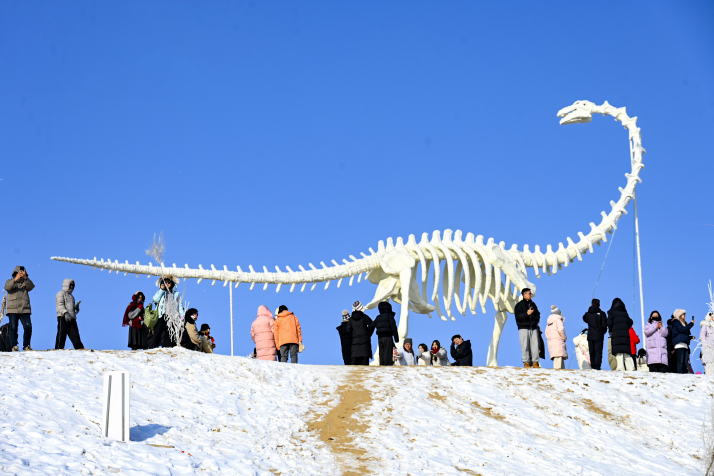
Snow and speed
Few visitors realize that Altay sits on the same latitude as the Alps and the Rockies. This region is described by some experts as the “golden band of skiing,” with its sixmonth snow season and dry, powdery flakes. The slopes have every ingredient for a winter sports boom, and archaeological discoveries of 10,000-year-old ski fragments here have earned Altay the title “birthplace of human skiing.”
Today, it is China’s Snow Capital. On crisp mornings, gondolas climb the white slopes, delivering tourists to ski resorts. By afternoon, steam rises from wooden bathhouses and herders invite tourists into yurts for bowls of warm mare’s milk.
Since October 2025, more than 6.11 million travelers have visited the region, spending roughly 4.85 billion yuan ($710 million). The four main ski resorts together have earned 112 million yuan ($16 million), with the effect rippling into transport, food, crafts and homestays. The dream of “one industry lifting a hundred others” no longer feels like a slogan. It’s visible in the neon lights of new towns that come alive even on freezing nights.

When the snow melts
Altay’s charm doesn’t vanish in summer. When the high pastures turn emerald, the same valleys that echo with snowboarders’ cheers buzz with the softer sound of hooves.
In Xiaerhete Village of Jimunai (Jeminay) County, horseback tourism has resurrected the local economy. Travelers saddle up to ride alongside herders, learning to steer through rivers and grasslands. Each evening, village residents light fires by the tents, where tourists learn folk dances under the ethereal glow of the Milky Way.
Locals often repeat two phrases: shoujinshan, “to guard the gold mountains,” and pojinshan, “to break them.” The first means protecting Altay’s abundant natural wealth. This includes ensuring its clean air, rare mushrooms, mineral veins and snow peaks are not depleted from overexploitation. The second urges people to escape the trap of simply selling raw resources for little profit.
Meanwhile, industrial parks promote smarter ways to benefit from the mountains. Fine processing of hemp and wool adds value to traditional goods; and clean energy plants turn the region’s fierce winds and abundant sunlight into power. Perhaps the boldest transformation lies underground. The newly discovered high-purity quartz now supplies Altay Golden Sun Solid State Lithium Battery Co. Ltd., Xinjiang’s first solid-state battery manufacturer.
Last November, a delegation of deputies to people’s congresses at all levels conducted an official inspection of Altay’s socioeconomic progress. During their visit to the facility, the lawmakers watched firsthand as raw stone was transformed into hi-tech solid-state batteries on the production lines. “From raw stone to materials, and materials to finished products—I never imagined Altay’s mineral resources could be developed to such a sophisticated level,” one deputy remarked.
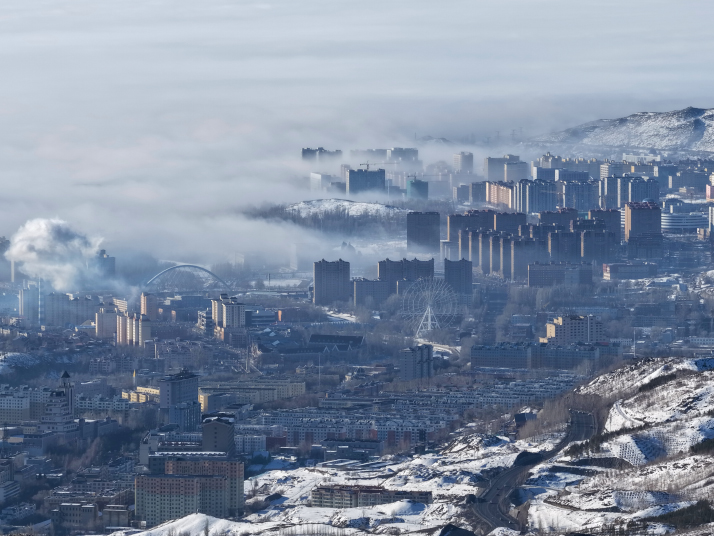
Today, travelers arrive in search of poetry, but find pragmatism too. What they find is a harmony of serenity and progress. The air smells of pine resin and diesel, and of campfires and coffee. Minarets shimmer beside new hotels. Snowboards lean next to saddles. Across the region, ethnic Kazak, Han and Mongolian families share the same curiosity for what’s next.
Altay no longer needs fairy tales to justify its beauty. It is living proof that a place can welcome modern life without losing the song of its ancestors. The magic, travelers discover, lies not in timelessness but in transformation. –The Daily Mail-Beijing Review news exchange item