By Ali Imran
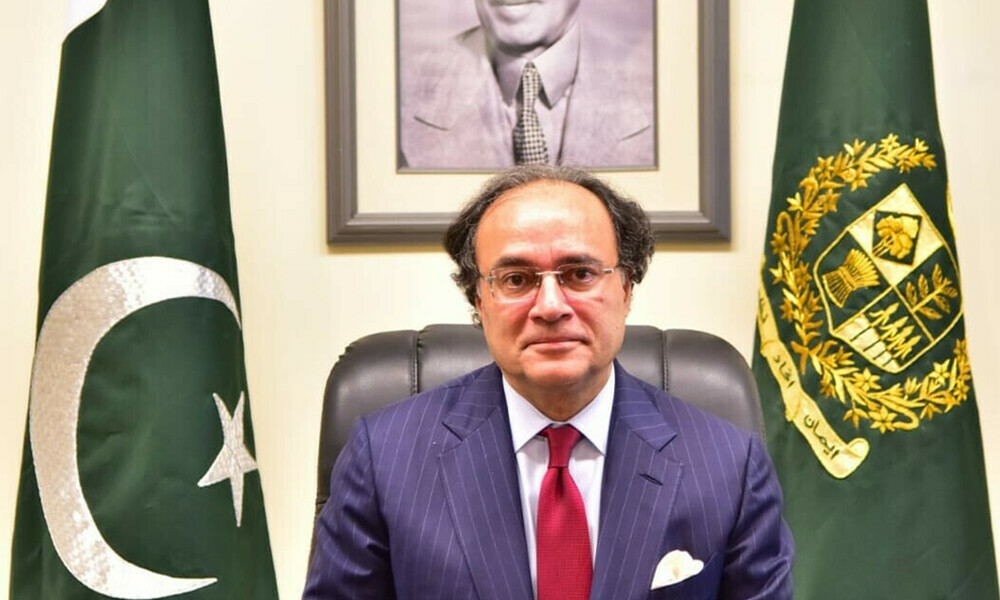
Finance Minister Muhammad Aurangzeb on Wednesday said that Pakistan was actively pursuing diversified funding avenues, including green bonds and sukuk, to support its climate resilience and energy transition goals.
Addressing a climate change conference in Islamabad, Aurangzeb said that the country has access to around $600 to $700 million in climate finance.
Emphasising the importance of green financing, the finance minister maintained that the government was focusing on diversifying its funding base through instruments such as green bonds and locally issued green sukuk.
He said that Pakistan expected to receive around $200 million from International Monetary Fund (IMF), while the Asian Development Bank (ADB) was also extending assistance to the country.
Further, the government was working to go for the inaugural Panda bond this month, which is expected to be around $250 million equivalent in Renminbi (RMB), he added.
He stressed the need for a pragmatic approach, urging stakeholders to effectively utilise currently available resources instead of focusing on large, theoretical financing gaps.
The discussions about hundreds of billions of dollars in gaps are academic at this stage, he said, adding that the priority should be to deploy available funds efficiently.
Referring to international practices, the finance minister said that China’s rapid growth in green finance — achieving nearly 40% of global green bond issuance — provided valuable lessons.
He also acknowledged the support of international experts in helping Pakistan develop a green investment pipeline and accelerator framework.
Highlighting broader economic and energy priorities, Aurangzeb emphasised that Pakistan must move beyond maintaining commercial reserves and work towards establishing strategic reserves, while accelerating the transition to renewable energy.
He called for scaling up investments in solar, wind and hydropower projects to reduce reliance on fossil fuels, noting that ongoing initiatives including energy efficiency measures, electric vehicle promotion, subsidies and risk-sharing mechanisms support the transition.
The minister called for greater reliance on indigenous resources, stressing the need to strengthen domestic capital markets and reduce overdependence on bank financing.
Aurangzeb highlighted the importance of mobilising resources through Pakistan’s capital markets and channel them towards green investment and sustainable finance.