
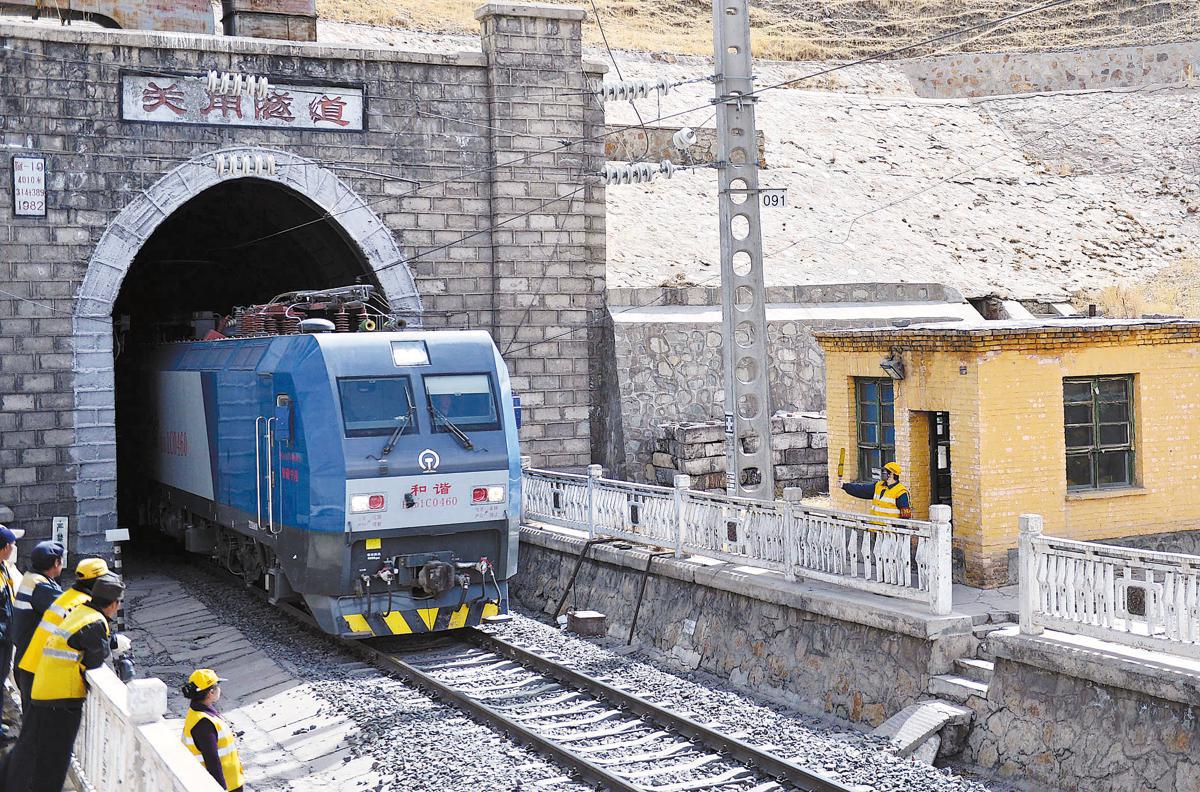
BEIJING: At the Nagchu railway workshop, situated 4,500 meters above sea level, workers once gave a simple flight of stairs a grim nickname: the “deadly 23 steps”.
The staircase is short. On the plains, one would scale it without a second thought. But in the thin air of the Northern Xizang Plateau, climbing it after hours of outdoor labor leaves railway signal mechanics gasping for breath, their lips turning a distinct hypoxic blue and their limbs heavy.
“Even walking could leave us short of breath,” maintenance worker Zhang Huxiong recalled. “But we still had to carry tools and get the job done.”
For Zhang, the nickname captures something outsiders often miss about the Qinghai-Xizang Railway. The difficulty of keeping trains running on the world’s highest rail line is not always found in dramatic moments. More often it is found in the body’s reaction to an ordinary staircase.
Much of the railway runs through areas above 4,000 meters, where the effective oxygen intake per breath drops to roughly 60 percent of sea-level values. Sub-zero temperatures, gale-force winds and vast geographic isolation compound the physical toll of routine maintenance.
For the older generation of railway workers, this brutal environment was once managed almost entirely through sheer physical endurance.
Hundreds of kilometers north of Nagchu, at the gateway to the plateau, Gu Haidong has spent over three decades maintaining tracks near the Guanjiao Mountains in Qinghai province. When he arrived in 1994, the infrastructure was primitive.
Trains labored slowly through the old, exposed Guanjiao pass, and maintenance meant brutal shifts in unpredictable alpine weather, followed by weeks cut off from civilization. In the busiest periods, Gu said, he could be away from his family for nearly 100 days straight. A trip home to Xining once took most of a day. –The Daily Mail-China Daily news exchange item