
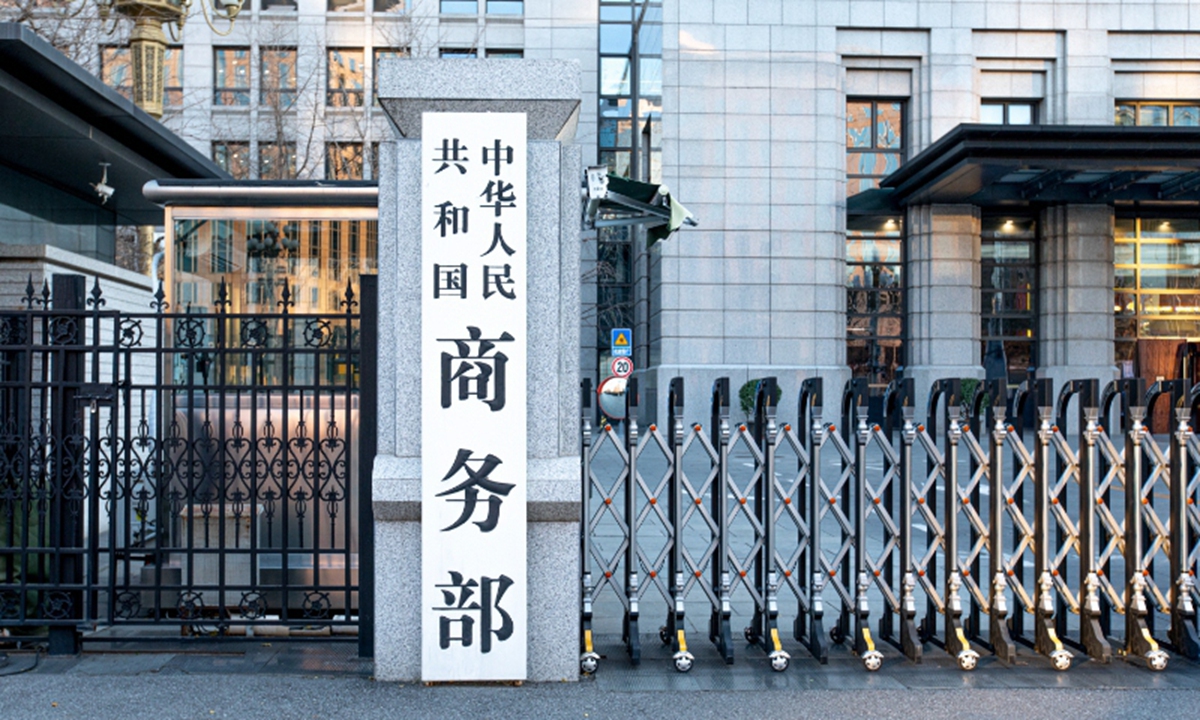
BEIJING: China released a position paper addressing the so-called “overcapacity” issue on Tuesday. As global competition intensifies and supply chains change, some countries have politicized trade issues by hyping China’s so-called “overcapacity” and imposed protectionist measures. To clarify the facts and articulate its policy stance on the so-called “overcapacity” issue, China has released a position paper, according to the position paper published by the Ministry of Commerce (MOFCOM).
Chinese experts view the document as a response from China in the face of some Western countries politicizing economic and trade matters – driven by concerns over their own industrial competitiveness and market position – while hyping up the narrative of “overcapacity” and even “China Shock 2.0.”
The full position paper consists of a foreword, main body, and conclusion. The main body comprises four chapters, read the MOFCOM paper.
The first chapter offers a comprehensive and historical assessment of the issue. It shows that the shift from a single-center to a multi-center global industrial landscape is a natural result of international industrial division of labor. “Overcapacity” is a dynamic phenomenon inherent to market economies, with varying interpretations across countries. China believes capacity conditions should be evaluated according to different economies’ and industries’ respective development stages and levels.
Chapter two articulates China’s views on the relationships between “overcapacity” and four key economic concepts – industrial subsidies, trade surpluses, economic imbalances, and market competition. It stresses that there is no inevitable link between industrial subsidies and overcapacity; larger exports and surpluses do not equate to overcapacity; global economic imbalances have complex roots and are a historical norm; and market competition is an important mechanism for optimizing and regulating capacity.
Chapter three explains China’s commitment to building a modern industrial system through opening up. It notes that China’s rapid industrial development is driven by innovation, while its stable and healthy operation relies on deepening reforms. China’s modern industrial development does not constitute a “China Shock 2.0” for the world, but rather a “China Opportunity 2.0,” the paper argues.
The final chapter proposes jointly building an open, inclusive global industrial and supply chain cooperation framework. China calls on the international community to meet each other halfway, advocate mutual benefit and win-win outcomes, respect market rules, strengthen coordination of industrial policies, expand market access, uphold multilateralism, and construct a more equitable and reasonable international economic order.
During a press conference on Tuesday briefing on the position paper, vice commerce minister Yan Dong said that in recent years, global economic growth has lacked sufficient momentum, drawing widespread international attention and discussion on issues of global supply-demand balance and production capacity.
“In particular, some economies, driven by concerns over their own industrial competitiveness and market position, have politicized economic and trade matters.
They have hyped up the ‘overcapacity’ narrative regarding China, deliberately blurred concepts, and linked industrial subsidies, trade surpluses, economic imbalances, and market competition with excess capacity. They have promoted claims such as the ‘China Shock 2.0’ and used the pretext of ‘overcapacity’ to implement various protectionist measures,” said Yan.
Yan said protectionism will only disrupt the global economic and trade order, and pose long-term risks to world economic growth.
Chinese experts pointed out that for some time, some Western countries such as the US and EU have built a narrative around “overcapacity,” linking industrial subsidies, currency undervaluation, rising exports, trade deficits, industrial damage, and economic imbalances into a single logical chain.
These countries have promoted rhetoric such as “China Shock 2.0” to justify protectionist measures and undermine international rules.
“By issuing this position paper at a critical juncture, China aims to set the record straight, present its own practices, and chart a course toward open cooperation. This paper clarifies misconceptions and helps the international community understand that the decline in some countries’ industrial competitiveness is not due to Chinese ‘overcapacity’ or industrial subsidies,” Cui Fan, a professor at the University of International Business and Economics, told the Global Times on Tuesday.
Cui noted that through consistent effort, China has maintained its position as the world’s largest manufacturing country for many consecutive years, with steadily rising international competitiveness in advanced manufacturing. China has also remained the world’s second-largest importer for 17 consecutive years. Against this backdrop, some countries have promoted the narrative of a so-called “China Shock 2.0,” ignoring the contributions of Chinese manufacturing to the global economy and challenges such as climate change, while alleging that China faces structural “excess capacity.”
According to official statistics, over the past decade or so, China has been a crucial driver of global economic growth, with its contribution rate remaining at around 30 percent.
China’s export of high-quality, cost-effective production equipment and components has significantly lowered the entry barrier for manufacturing in developing countries. Between 2012 and 2024, China exported over $30 billion in textile machinery to developing nations, helping several countries in Southeast and South Asia become major textile producers and exporters, the vice commerce minister said.
Over the past decade, the average cost of electricity from global wind and solar projects has dropped by more than 60 percent and 80 percent respectively, largely due to Chinese production capacity.
These benefits provide the world with development opportunities and growth space – what many in the international community have rationally described as “China Opportunity 2.0,” said Yan.
“Protectionism leads nowhere; win-win cooperation is the right path,” Lin Weilong, an official of MOFCOM, said on Tuesday at the press conference.
Hyping “overcapacity” and erecting trade barriers will allow greater political interference in global resource allocation. By setting up trade barriers under the guise of national security and fair competition, some countries are placing their own industrial interests above multilateral rules, Xu Yingming, director of the Institute of International Market Studies at the Ministry of Commerce’s Research Institute, told the Global Times on Tuesday.
“The ‘overcapacity’ hype undermines the international division of labor based on comparative advantage and risks pushing global supply chains away from market-driven mechanisms toward politically drawn lines, and from open collaboration toward bloc-based fragmentation,” said Xu.
Such moves will also harm the multilateral trading system. Issues related to capacity, subsidies, and fair competition should be resolved through equal consultation under international rules, Xu noted.
Experts said the position paper is not targeting any specific country, but instead calls for global cooperation and stresses China’s commitment to opening-up.
“The paper calls for jointly building an open and inclusive global industrial and supply chain cooperation framework, strengthening coordination of industrial policies, and upholding multilateralism. China’s industrial policies are formulated in strict compliance with existing WTO rules. At the same time, we are willing to engage in dialogue on further improving international subsidy rules to enhance mutual understanding, and contribute to the rational and compliant use of industrial policies in addressing common global challenges such as climate change,” said Cui. –The Daily Mail-Global Times news exchange item