By Hina Kiyani
ISLAMABAD: Minister of State for Federal Education Wajiha Qamar on Monday reaffirmed the government’s commitment to girls’ education, out-of-school children, and equitable access to quality education under PM Shehbaz Sharif’s leadership.
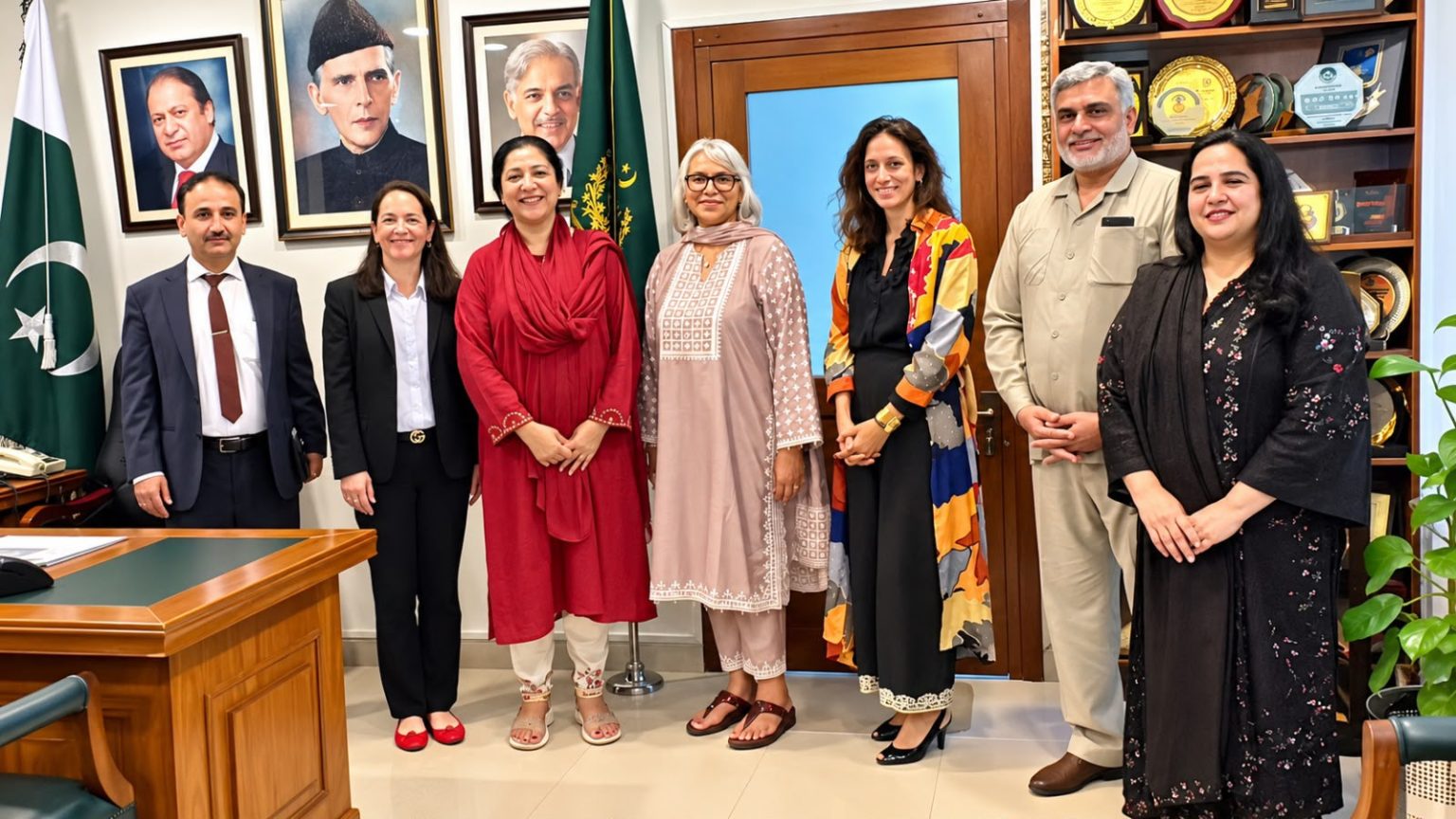
She expressed these views during a meeting with a high-level delegation of the United Nations World Food Programme (WFP), which called on her at the Ministry of Federal Education and Professional Training.
The delegation included Ms. Ahmareen Karim, Chief of Programme Operations, GPI, WFP Headquarters, Rome; Ms. Anita Hirsch, Country Director, WFP Pakistan; Ms. Kavita Brahmbhatt, Senior Programme Policy Officer, GPI, WFP Headquarters; and Ms. Rubina Zulqarnain, Partnerships Officer, WFP Pakistan.
The meeting focused on strengthening cooperation in girls’ education, inclusive education and the role of school meals programmes in improving school enrollment, attendance and retention, particularly among girls from disadvantaged communities.
Ms. Wajiha Qamar highlighted the government’s ongoing efforts to address educational disparities and bring out-of-school children, especially girls, back into classrooms through targeted interventions and inclusive education policies.
She emphasized that school meals programmes could serve as an effective instrument for improving educational participation, addressing nutritional challenges and encouraging families to keep their children in school.
“Educating girls is not merely an educational priority; it is a national responsibility and a vital investment in Pakistan’s sustainable development and future prosperity,” the Minister said.
The discussions also covered Pakistan’s national and international education commitments, progress in the education sector within the devolved governance framework, and opportunities to strengthen gender-responsive approaches in WFP-supported school meals initiatives.
The Minister appreciated WFP’s continued engagement with Pakistan and underscored the importance of stronger institutional coordination, evidence based policymaking, and sustainable partnerships to advance shared education and gender equality objectives.
Both sides expressed their commitment to continued collaboration aimed at promoting inclusive education, strengthening school meals initiatives and creating greater educational opportunities for girls across Pakistan.