——– CICG Vice President Yu Tao elaborated President Xi’s vision to help South Asian States reduce poverty make development cooperation for a shared future
——– Pakistan’s State Ministry for Planning welcomes China GDI drive, says via URAAN Pakistan, govt waned to improve economy and create better opportunities
——– China very much ready to share experiences in Party governance and state administration with Pakistan and other countries, says Chinese Ambassador to Pakistan Jiang Zaidong
——– CICG’s Director New Media Qiao Zhenqi released report about China’s achievements and philosophy for poverty alleviation
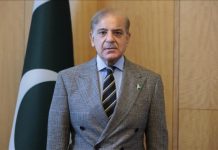
——– Forum thronged by huge number of participants including Former Pri,me Minister of Pakistan, State Minister, economy experts, educationists, intellectuals, diplomats and young development researchers
By Eman Alam and Bashir Khan
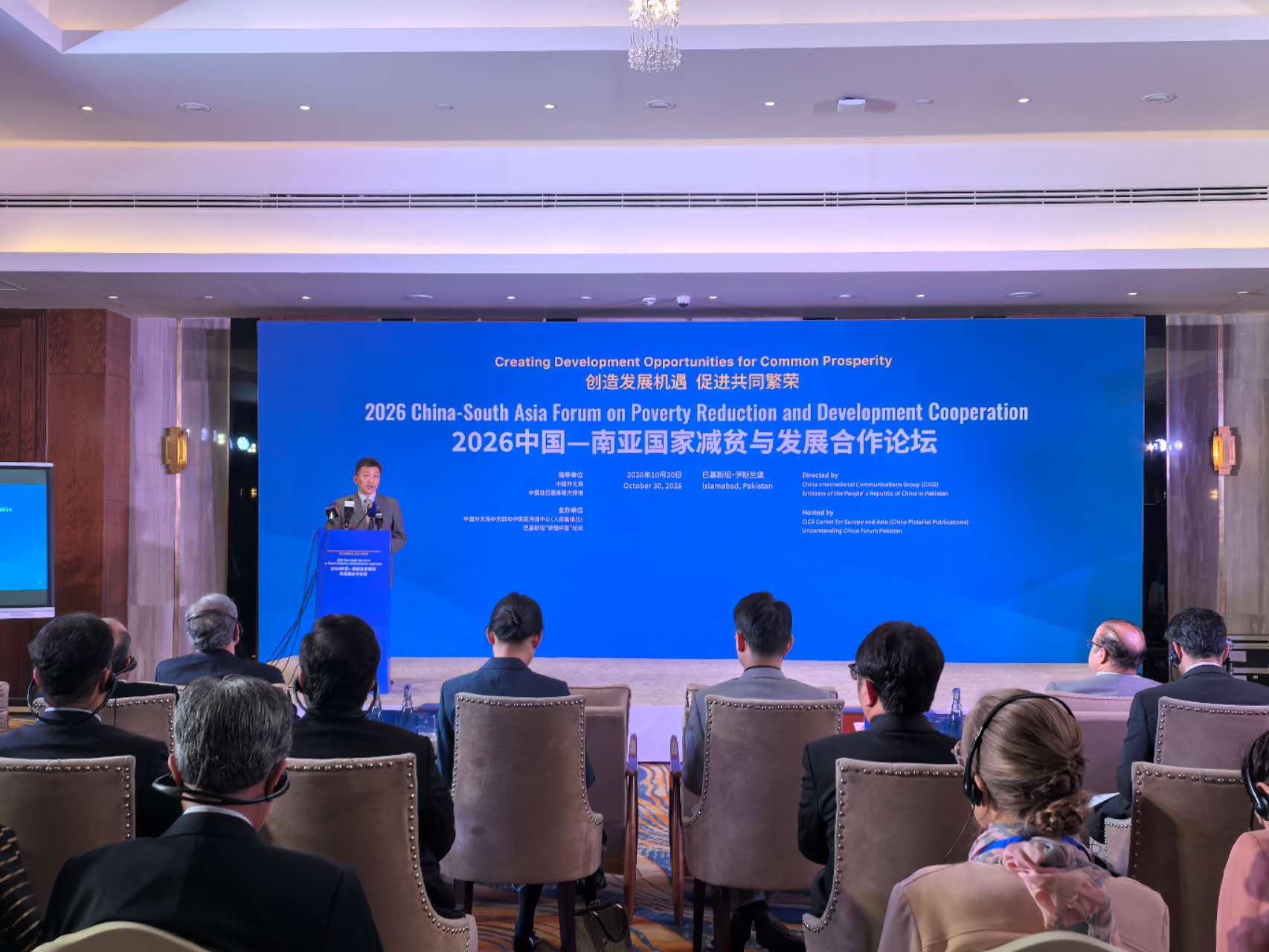
ISLAMABAD- “China completed its poverty alleviation goals as scheduled at the end of 2020 and is now consolidating and expanding the achievements of poverty alleviation while effectively linking them with rural revitalization and now President Xi Jinping has pointed out that China will work with all parties to advance cooperation in key areas, mobilize development resources, and deepen global cooperation in poverty reduction and eradication in South Asian countries including the Iron Brother, Pakistan”. These remarks were made by Mr. Yu Tao, Vice President of China International Communications Group (CICG) at the 2026 China–South Asia Forum on Poverty Reduction & Development Cooperation, held here on Friday. He said that poverty eradication was an important issue for many countries. “The latest World Bank report shows that South Asia continues to face serious challenges in food security, climate change, employment, and imbalanced regional development, and the road to poverty reduction remains long and arduous. He further said that China and South Asian countries were all developing countries. “Improving people’s livelihoods is our common pursuit, and we have a solid foundation and enormous potential for cooperation in poverty reduction. At present, positive progress has been made in connectivity across various fields. The upgraded version 2.0 of the China–Pakistan Economic Corridor is steadily advancing, continuously contributing to employment and economic development. A series of projects, including the China–Maldives Friendship Bridge and the Padma Bridge, have been successfully completed, continuously releasing benefits for sustainable development. The development of Sri Lanka’s Hambantota Port and Colombo Port City is progressing, significantly enhancing local trade capacity. Multiple projects in Nepal, including “Vibrant Villages,” “Bright Future,” and the “Amrit Plan,” have been implemented, effectively improving people’s livelihoods”, asserted Yu Tao. He further said that major landmark projects were progressing steadily, while “small yet beautiful” livelihood projects are gaining widespread public support.
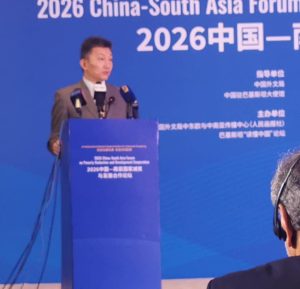 “This year marks the 75th anniversary of the establishment of diplomatic relations between China and Pakistan. During Prime Minister Shehbaz Sharif’s visit to China, the leaders of both countries agreed to deepen the all-weather strategic cooperative partnership between China and Pakistan and accelerate the building of a closer China–Pakistan community with a shared future, injecting strong momentum into economic and technological cooperation under the framework of the upgraded China–Pakistan Economic Corridor, version 2.0. We should not only explore the potential for cooperation between China and South Asian countries in infrastructure development, industrial cooperation, the digital economy, and other fields, but also establish platforms for exchanges and channels of communication to broaden opportunities for sharing experiences. Through poverty reduction forums, joint research, and the publication of research findings, we should share and explore development theories and poverty reduction practices, Asserted Yu Tao.
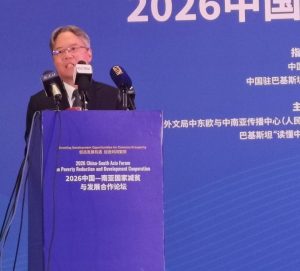
He elaborated that currently a new generation of information technologies, represented by artificial intelligence, was continuously contributing to global poverty reduction efforts and in Pakistan, the China–Pakistan Artificial Intelligence Smart Agriculture Laboratory was using regular drone inspections and artificial intelligence analysis to provide local farmers with real-time feedback on crop growth while in Nepal, the Institute of Geographic Sciences and Natural Resources Research of the Chinese Academy of Sciences and the Food and Agriculture Organization of the United Nations was using landmark habitat big data, the Internet of Things, and standardized management to trace the origin and ecological environment of large cardamom, a high-quality specialty product, and protect its intellectual property rights.
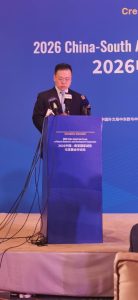 In his address at the occasion, Pakistan’s Minister of State for Planning and Development, Armaghan Subhani said that South Asian countries were currently facing mega issues like constantly increasing poverty, unemployment, floods and unequal access to basic services and a combat to resolve this issues could only achieved comprehensively only by more learning from one another. Welcoming China’s Global Development Initiative (GDI), the minister said that China had shown the world that poverty can be reduced through clear plans and steady work as in a very short span of time, nearly 800 million people in China moved out of extreme poverty which was a dramatic and spectacular achievement and a lot to be followed by others. He said that Pakistan has also worked hard to reduce poverty. But COVID, the floods of 2022 and economic problems affected many families. He said that as currently, about 29 percent of people of Pakistan were living in poverty, more work was needed to be done.
“China has invested in roads, schools, health, skills and jobs. It has also continued to help families who may fall back into poverty. Pakistan can learn much from this experience. Under our joint work on social and economic development, 27 projects were agreed in the first two groups. Most have been completed. These projects are making a real difference and will continue to help achieve the goals of poverty reduction and social as well as economical development”, asserted the Minister.
Providing his account on poverty reduction, Chinese Ambassador to Pakistan Jiang Zaidong said that to consolidate and expand the achievements of poverty alleviation, China had established a five-year transition period, linking poverty alleviation efforts with the comprehensive revitalisation of rural areas which had further strengthened the foundations of poverty alleviation and ensured that its achievements remain sustainable and that was how over the past five years, the number of people lifted out of poverty who are engaged in employment has remained stable at more than 30 million. He said that poverty was a common challenge facing human society and was also the foremost priority of the United Nations 2030 Agenda for Sustainable Development and cording to the latest report by the United Nations Development Programme (UNDP), approximately 1.2 billion people worldwide still live in acute multidimensional poverty, requiring a united response from the international community. He said that during the past five years, China had mobilised more than US$23 billion in funding and undertaken over 2,000 cooperation projects. Practical cooperation under the framework of the Global Development and South-South Cooperation Fund alone has benefited more than 40 million people. He further said President Xi Jinping had pointed out that the Chinese people hope to enjoy a good life themselves, while also wishing the same for people in all other countries. On the path towards modernization, no individual should be left behind, and no country should fall behind. He stated that the sustained and steady progress of practical cooperation between China and Pakistan was rooted in shared vision of promoting the high-quality development of the China-Pakistan Economic Corridor (CPEC). “Under the guidance and leadership of the highest authorities of both countries, CPEC has so far brought Pakistan US$25.9 billion in direct investment, 510 kilometres of motorways, more than 8,000 megawatts of electricity generation capacity, and 886 kilometres of core power transmission lines. More importantly, it has created over 260,000 jobs and improved the lives of countless ordinary families. At present, CPEC has entered a new stage of its upgraded 2.0 version. We stand ready to work with Pakistan to focus on cooperation in industry, agriculture and mining and to promote the high-quality development of the Corridor” asserted the Ambassador and concluded by saying that China always stands ready to share experiences in Party governance and state administration with Pakistan and other countries.
At the occasion, Deputy of CICG’s New Media Operations, Mr. Qiao Zhengqi, while releasing the on China’s Poverty Alleviation efforts and methodologies, provided comprehensive and insightful explanations of China’s poverty alleviation efforts and international cooperation, particularly China’s cooperation with South Asian countries, including Pakistan. “The distinctiveness of China’s system lies in its ability to overcome the internal divisions and inefficiencies associated with the West’s competitive and confrontational model of democracy. Through a stable political structure based on consultation and cooperation, sustained political commitment and strong administrative implementation capabilities, it ensures long-term coordination and joint governance of national strategies, creating a collective effort across departments and regions to combat poverty,”he noted.
The Forum turned out to be a huge success as it was thronged by huge number of participants including Former Prime Minister of Pakistan, State Minister, economy experts, educationists, intellectuals, diplomats and young development researchers. The people were seen taking immense interest in the discussions and appeared to be transforming in to a constant pressure for policy makers to follow and benefit from China Story of poverty reduction. Some experts were seen formulating future plans, based on China’s experience to share it with government. The huge number of media that was present at the Forum also also took a keen interest in the proceedings of the Forum and asked a lot of questions to the participants for their readers and viewers.
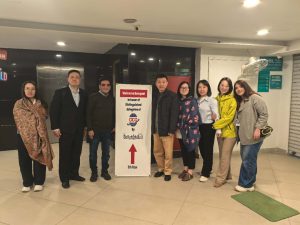
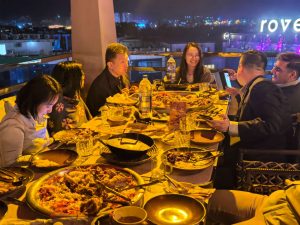
Earlier on the sidelines of the Forum, President and editor-in-Chief of The Daily Mail, Pakistan and Chairman of Pakistan-Chine Media Friendship Association, hosted a welcome banquet for the distinguished CICG delegation where guests were treated with variety of traditional Pakistani dishes from all the four provinces of the country.