BEIJING: Former British lawmaker George Galloway recalled seeing metal so thin during a visit to a Chinese steel plant that it could be torn by hand.
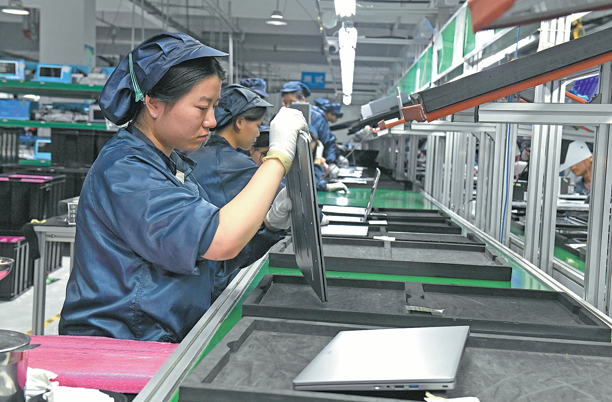
For him, it illustrated a transformation deserving closer attention: China is no longer simply supplying the world with T-shirts and toys, but increasingly with advanced technology.
Galloway said China’s progress offers lessons for other economies. What some portray as a danger is “the threat of a good example”, he said in an interview during his recent visit to Beijing.
China’s industrial advances are giving other economies access to more affordable technology, new markets and opportunities to develop their own industries, political figures and scholars told China Daily.
The term “China shock” is associated with research on job losses and slow adjustment in US communities exposed to rising imports from China. The label “China shock 2.0” is now used in debates over competition from Chinese exports in industries such as electric vehicles and solar energy.
Several of the figures interviewed acknowledged that established industries outside China faced adjustment pressures. But they argued that viewing China’s advances primarily as a threat risked overlooking the products, expertise and partnerships that could help other economies become more competitive.China hosts 25 of the world’s top 100 innovation clusters, more than any other economy, according to the World Intellectual Property Organization’s 2026 rankings. Value added in high-tech manufacturing rose 13.3 percent year-on-year in the first half of 2026, according to the National Bureau of Statistics.
Speaking at a dialogue in Beijing in October, former New Zealand prime minister Jenny Shipley linked China’s resilience to sustained investment, its strategic focus and the ability to adjust as circumstances changed.
China’s development had involved pauses and changes of direction, she said, but long-term planning and disciplined implementation had helped it maintain momentum.
She singled out research and development, saying China had directed funding toward priority areas and encouraged collaborative innovation.
China’s R&D spending rose 8.2 percent to about 3.93 trillion yuan ($590 billion) in 2025, equivalent to 2.8 percent of GDP, according to figures released by the National Bureau of Statistics on Oct 16.
Shipley said earlier infrastructure investment had also helped prepare the ground for artificial intelligence platforms and applications, creating the foundations for new economic activity.
The speed of China’s transformation into a high-tech economy — within roughly a generation and a half — had surprised some Europeans, said Slawomir Majman, deputy director of the Institute of Security and International Development in Poland.
“It’s a cognitive shock,” he told China Daily.
Some European industries had assumed their technological lead would endure and invested too little in research and development, he said. They had failed to prepare adequately for technological change.
China, by contrast, had anticipated such changes and leapfrogged certain stages of development, Majman said, citing payment systems as an example. He described the improvement in the quality of Chinese exports as a “revolution”, increasingly recognized by European consumers and businesses.
Perceptions of German and Japanese products have also changed as their quality improved, he noted. Judgments about Chinese manufacturing needed to catch up with what its companies are producing. –The Daily Mail-China Daily news exchange item