
BEIJING: Beyond serving as a means of cultural exchange, Chinese language skills are increasingly opening doors to career development, industrial cooperation and cross-cultural communication as the country’s exchanges with the world expand across the realms of trade, education, science, technology and culture, foreign officials and experts said.
Long-term efforts to advance international Chinese language education are opening new opportunities for people around the world to learn and use the language, said Albano Vicente Lopes Ferreira, Angola’s minister of higher education, science, technology and innovation, during the 2026 World Chinese Language Conference in Beijing over the weekend.
He called learning Chinese “a strategic opportunity to acquire knowledge, receive education and find employment”.
In Angola, more than 400 Chinese companies operate in the sectors of infrastructure, energy, telecommunications and industry, creating opportunities for local people with Chinese language skills to engage in business and professional exchanges.
“I think this is a very noble gesture on China’s part, as China is opening up access to its development, knowledge and technology to all parts of the world. Together with other countries, China hopes to grow together and contribute to global development,” Lopes Ferreira said.
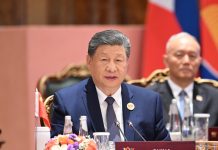
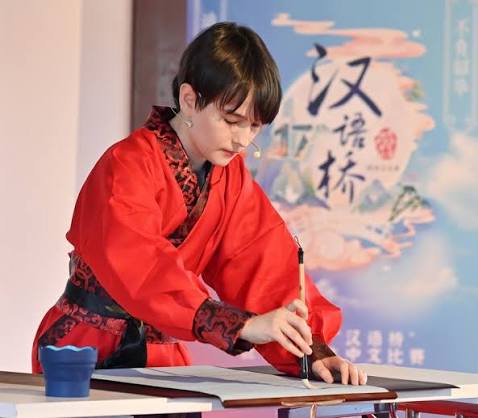
The 2026 World Chinese Language Conference was held from Friday to Sunday, with around 5,000 representatives from more than 160 countries and regions in attendance.
So far, 92 countries have incorporated Chinese into their national education systems, the Ministry of Education reported. Chinese Vice-President Han Zheng said during the conference’s opening ceremony that the number of people learning or using Chinese overseas has reached 210 million.
Siviwe Gwarube, South Africa’s minister of basic education, said language carries history, preserves culture, communicates values and enables the exchange of ideas, while also carrying an important economic dimension.
“A language is not just words; it is also about culture, about people,” she said, noting that as China promotes its language, it also reveals its people and culture to the world, as language is an important window through which the international community can see the human dimension behind the country’s innovation and development.
Gwarube said that by 2063, Africa will be home to the world’s largest working-age population, and that young people need to equip themselves with multiple languages to work and contribute in economies around the world. In her view, learning Chinese offers young Africans cross-border economic opportunities and a window for understanding that reaches far beyond the obvious.
Enda Kenny, former Irish prime minister, meanwhile, stressed that cooperation between governments, universities and technology providers cannot replace the cultural understandings built through human interaction, and young people play a particularly important role in building cultural bridges.
Since 2020, the Center for Language Education and Cooperation has promoted the “Chinese + Vocational Skills” education program, combining language learning with professional training to help meet workforce needs overseas. Since its launch in 2004, China’s volunteer Chinese language teacher program had recorded more than 69,000 overseas placements in more than 150 countries and regions as of 2023.
Meanwhile, the Confucius Institute network has continued to expand overseas since its establishment in 2004. More than 510 Confucius Institutes had been established in 164 countries and regions by the end of 2025, with 1.43 million students enrolled that year, according to the Confucius Institute Annual Development Report 2025 published by the Chinese International Education Foundation.
The Confucius Institute at Agostinho Neto University, established in 2015, has provided Chinese language training to more than 2,000 Angolan students and professionals.
Artificial intelligence is also creating new possibilities for Chinese language learning. The iChinese learning community uses AI to integrate learning resources, support personalized learning and facilitate language interaction, helping learners overcome barriers and improve learning efficiency. Such tools are also expanding opportunities to use Chinese in cross-cultural communication.
“International Chinese language education is no longer just about language teaching, it is working toward building a more diverse, open and collaborative educational ecosystem,” said Zhong Yinghua, president of the International Society for Chinese Language Teaching and a professor at Tianjin Normal University. –The Daily Mail-China Daily news exchange item