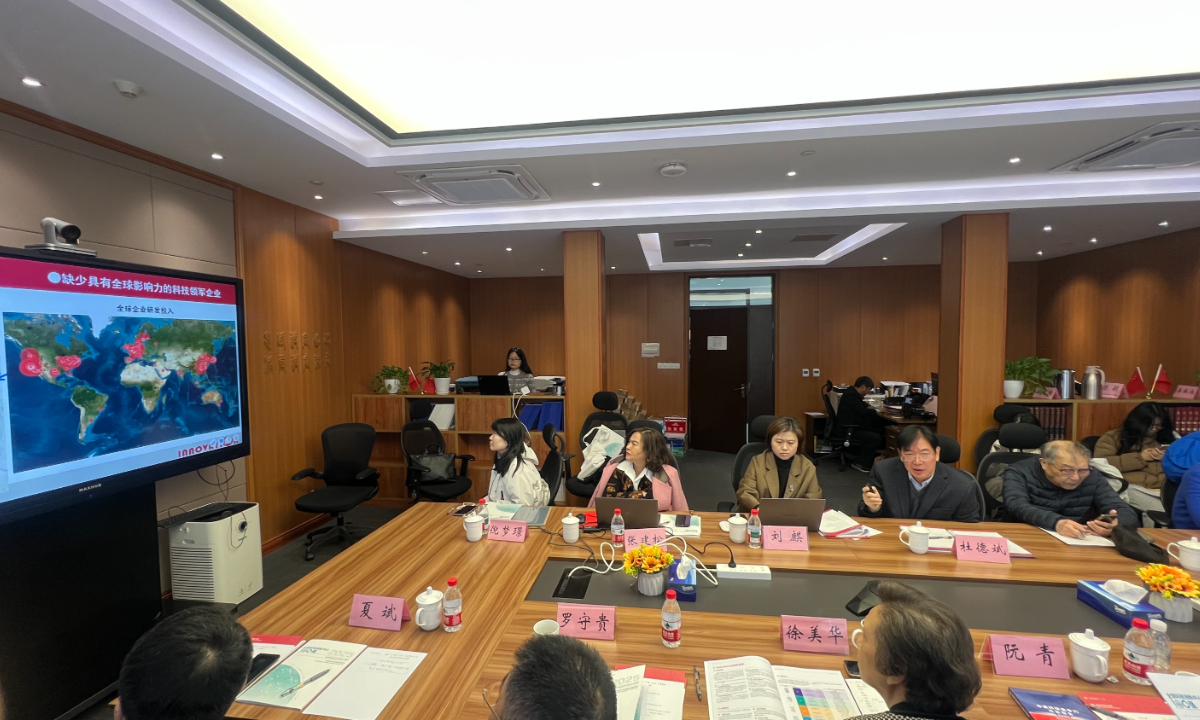
BEIJING: East China Normal University’s Institute for Global Innovation Studies released its 2025 ranking of top 100 global science and technology innovation centers on Sunday, with 20 Chinese cities making the list. Beijing breaks into the global top three for the first time, while Shanghai remains in the global top 10, the first-tier status among global innovation hubs.
As a systematic research output on global science and technology innovation centers, the ranking provides a comprehensive evaluation of 142 science and technology innovation hubs worldwide, offering forward-looking reference for improving global innovation governance systems.
Du Debin, director of the institute and lead author of the report, said that science and technology innovation centers are essentially top-tier innovation ecosystems composed of three core elements – innovative talent, innovation actors and the innovation environment, which serve as the most important platforms and strategic pillars for countries participating in global science and technology competition.
“As the global innovation landscape is undergoing profound restructuring, identifying trends, assessing changes, and anticipating future developments are essential foundations for building a strong science and technology nation. The ranking aims to clarify how leading innovation hubs operate and to support national and local innovation policy decision-making,” Du said at a press briefing on Sunday.
In 2025, the global top 10 innovation hubs are the San Francisco Bay Area, New York, Beijing, London, Boston, Paris, Tokyo, Los Angeles, Seoul and Shanghai, underscoring the US and China have been standing out as the two dominant powers in global science and technology innovation.
According to the report, a China-US dual-innovation-powerhouse dynamic is taking shape, with competition increasingly centered on direct rivalry among leading innovation cities. Leveraging its deep technological foundations, the US continues to maintain systemic advantages in areas such as the clustering of innovation factors and the original breakthroughs of technological innovation, while China is demonstrating strong scale advantages and a catch-up momentum at the top tier with steady growth in scientific research leadership and the clustering of innovation factors.
Chinese and US cities account for six of the world’s top 10 innovation hubs, marking a new stage of competition centered on direct strength comparisons among national core hub cities. Furthermore, the rivalry between the two countries has expanded into comprehensive, systematic competition spanning basic research, resource allocation, industrial development and ecosystem construction.
The evaluation results indicate that China’s science and technology innovation centers present a tiered development pattern, with leading cities driving progress amid both opportunities and constraints. Beijing’s first entry into the global top three, only after the San Francisco Bay Area and New York, stands out as a key highlight of the 2025 ranking, underscoring its transition into a world-class innovation center. –The Daily Mail-Global Times news exchange item