On March 12, the annual National People’s Congress (NPC), China’s top legislature, adopted the Law on Promoting National Unity and Progress, which will take effect on July 1. The new law aims to integrate ethnic harmony into everyday life in China and amend laws related to ethnic governance and planning, going beyond just anti-separatism laws to create a system that involves everyone in society.
Western media coverage of the law has been predictably one-sided and inaccurate. They have attempted to frame the law as “coercive assimilation,” while ignoring its legally enshrined protections for minority rights, languages and socioeconomic developmental programs. This is representative of the desperate attempt by Western media to undermine and interfere in China’s internal affairs.
For decades, Chinese policies on ethnic affairs rested on constitutional prohibitions of discrimination against any ethnic minority and criminal laws against separatism. The new law flips this paradigm, as it does not merely prohibit division but requires a proactive construction of national unity.
This new framework highlights a policy shift from reactive law to proactive law, which reinforces the legal foundation for national unity and common prosperity among China’s 56 ethnic groups in pursuit of the national modernization goals by 2035.
The pillars of the new legal framework
The core principles of the law are based on national unity, inclusiveness and shared development. The new legal framework can be divided into several key pillars.
First, unlike previous laws that focused mainly on prohibiting ethnic discrimination or separation, the new law focuses on the proactive promotion of unity and ethnic progress. It mandates that government organs and institutions at every level must actively organize educational seminars, cultural exchange programs and economic activities that foster ethnic unity.
Second, the law advances social integration with regional development. The law connects ethnic unity directly to government development programs, including reducing poverty, building infrastructure and providing bilingual education (standard Chinese and ethnic minority languages), and it requires local governments to include ethnic unity work in annual planning and evaluation, with economic and educational development underpinning social stability and ethnic harmony.
Under the vision of shared development, China declared victory in eradicating absolute poverty in 2021. All 420 poverty-stricken counties in ethnic autonomous areas and all 28 poverty-affected ethnic groups have been lifted out of poverty. The combined GDP of the five autonomous regions with large ethnic minority populations (Inner Mongolia, Guangxi, Xizang, Ningxia and Xinjiang) recorded an average annual growth rate of 5.6 percent from 2020 to 2024, which was above the national average. Similarly, increased and targeted public services, including health and education in ethnic minority regions, have led to enhanced living standards.
Third, legal accountability and supervision are required under the law. While existing criminal codes already have penalty and punishment provisions, the new law stipulates legal liabilities for individuals and organizations that engage in ethnic separatism, incite ethnic hatred and discrimination or commit acts undermining national unity. Such actors can face administrative or criminal penalties. Similarly, officials who fail to promote and enforce the law effectively may be held administratively accountable, thus providing strict accountability and a strong enforcement mechanism.
Correcting misperceptions
In terms of international media coverage, Western media, from the BBC to The New York Times have been biased, one-sided and widely portraying the Law on Promoting National Unity and Progress as a tool of “enforced assimilation.” This preconceived bias is termed by some experts as “selective blindness” due to several key factors.
First, a common Western mindset perceives any strong state-led integration policy in non-Western countries as fundamentally coercive, while similar policies in other Western or Western-oriented countries are regarded as domestic issues.
Second, the rise of China is often interpreted through a narrow geopolitical lens; policies that strengthen the state of China and unity among its people are labeled as threats to the Western-led liberal order.
Third, Western media reporting relies on information from anti-China diaspora groups, individuals and NGOs that have vested political agendas and engage in adversarial advocacy against China. Exacerbating such views is a usual method by which Western media outlets build groundless narratives and promote false agendas.
In contrast, foreign individuals, including journalists, who have visited autonomous regions with large minority populations in China consistently report stability, religious freedom and rising living standards. Yet these firsthand accounts are ignored or dismissed by Western media outlets as “state propaganda.”
Western audiences are rarely exposed to the positive side of China, including the clearly improving welfare of the people, developed infrastructure, progress in technology, diverse cultures and bilingual schools that are actively promoted under Chinese law.
This new law, like other aspects of modern China, has become a target for the pre-existing political biases of the Western media rather than being assessed objectively based on its merits and achievements.
Inclusive growth and shared development
Having lived and worked in China for several years as a foreign national, I have witnessed the inclusive growth and shared development that this law aims to realize.
I have studied, worked and traveled in different provinces and regions of China. I have witnessed the socioeconomic and technological advancement of China. From mega-commercial cities to remote rural villages, the transformation is substantial and rapid. Under the rural revitalization strategy, which aims to narrow the urban-rural gap, the introduction of new highways, vocational schools, scientific agricultural techniques and renewable energy infrastructure, among others, has visibly transformed many once-impoverished villages.
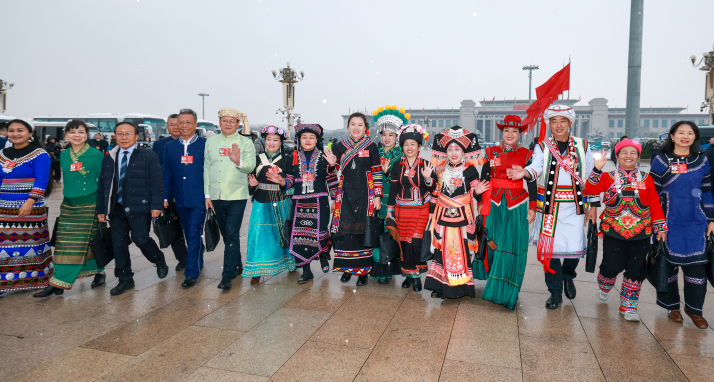
The unity of diverse regions, peoples and cultures in China is key to the rapid progress and shared development of the nation. In China, I have seen different cultural activities and institutions of ethnic minorities that are enjoyed and shared with curiosity and respect by other Chinese people, free from discrimination. I always see people dressed in their traditional or religious attire walking on the streets or people performing traditional dance and music in different parts of China. Such cultural differences and diversities are crucial sources of learning and unity rather than tension or division.
No society is perfect or utopian. China may have its own frictions and imbalances, but the legal framework now being established is based on integration through opportunity, not separation through marginalization.
As a foreigner, I have witnessed China as an equitably distributed society across ethnic lines, while any attempt to undermine this unity is considered a serious threat to social stability and a violation of the law.
What comes next
As the law will take effect in July, its true success will be measured by whether top-down legal provisions can promote grassroots solidarity and unity, as well as by whether ethnic regulations require further interpretation.
Under the law, the local governments are expected to adopt policies that allow people across China’s diverse regions to genuinely feel a deepening sense of shared belonging and opportunity. Judicial interpretations in the coming years will likely clarify the boundaries between legitimate cultural expression and legally prohibited acts that undermine national unity and stability.
For now, China’s ethnic policy has entered a new legal era, where unity is no longer an aspiration but a statutory obligation. –The Daily Mail-Beijing Review News exchange item