
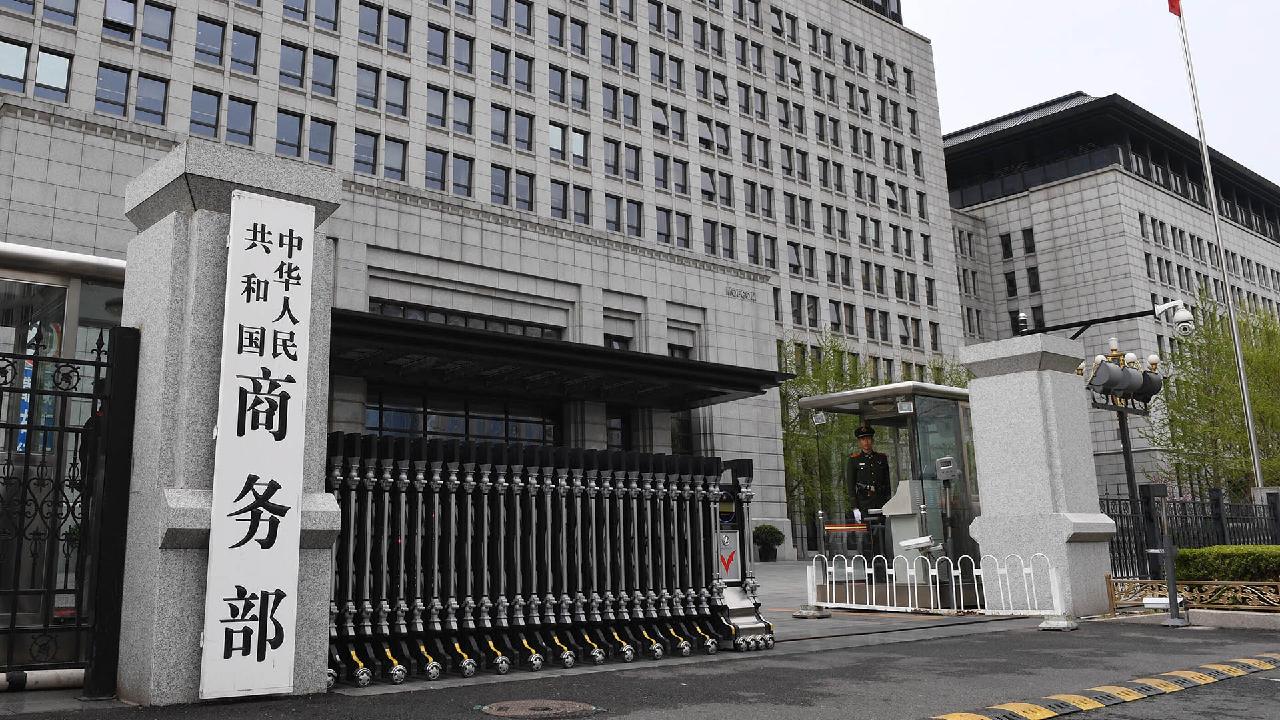
BEIJING: China became Central Asia’s largest trading partner in 2025, marking a new milestone in regional economic ties, according to the Chinese Ministry of Commerce.
Trade between China and Central Asian countries reached $106.3 billion, up 12 percent year on year and outpacing 2024 growth by six percentage points.
Exports from China totaled $71.2 billion, led by machinery, electronics and high-tech products, while imports from Central Asia rose to $35.1 billion, with a more diverse mix including chemicals, steel and agricultural goods.
Cross-border e-commerce continues to expand rapidly, supported by strengthened logistics networks, cross-border payment systems and the launch of the China-Central Asia Trade Facilitation Cooperation Platform in Nanjing.
The ministry also highlighted high-quality cooperation under the Belt and Road Initiative. Key projects in connectivity, equipment manufacturing, green minerals and modern agriculture have boosted China’s exports to Central Asia and supported industrial upgrading and economic revitalization across Central Asian countries.
Earlier, China has doubled down on steering the new energy vehicle industry away from cutthroat competition toward technology-led growth, with three high-level industrial meetings this week all stressing core innovation, particularly on autonomous driving and next-generation battery technologies.
The Ministry of Industry and Information Technology, the National Development and Reform Commission and the State Administration for Market Regulation held a roundtable meeting with 17 major automakers to rein in unbridled competition on Tuesday.
The three authorities said that the country will uphold innovation and quality as market priorities and warned that regulatory enforcement, cost and price monitoring, and product consistency checks would be strengthened. Violations, they said, would be strictly dealt with under the law.
The day before, two earlier sessions convened by the MIIT underscored China’s strategic goal of driving breakthroughs in high-end automotive technology and all-solid-state batteries.
On Monday, MIIT Minister Li Lecheng chaired a manufacturing enterprise symposium, bringing together executives from 12 companies across sectors including automobiles, steel, nonferrous metals, machinery and electronics.
Participants were urged to take an active role in setting industry rules and building self-discipline mechanisms, while consciously resisting price wars to foster win-win outcomes and a healthier business environment.
Later the same day, Li also presided over the 2026 annual meeting of the interministerial joint conference on energy-saving and NEV industry development.
At that meeting, officials said 2026 would be a critical window for the intelligent and connected NEV industry. Authorities outlined a broad policy agenda, including drafting a new development plan for intelligent NEVs, accelerating breakthroughs in key technologies such as all-solid-state batteries and advanced autonomous driving, expanding auto consumption through trade-in schemes and scaling up the use of electric heavy trucks.
Ji Xuehong, director of an automotive industry innovation research center at North China University of Technology, said: “The policy signals of three high-level industrial meetings in two days are clear. The next phase of development for intelligent and connected new energy vehicles will hinge on innovation rather than price competition. The industry is entering a period of opportunity in areas such as advanced materials, industrial software, autonomous driving and solid-state batteries, while the electrification of heavy-duty trucks and the globalization of China’s NEV supply chain are also set to gather pace in the years to come.”
The move also comes as China has summoned the country’s biggest battery, power and energy storage companies, including CATL, BYD and Gotion, as well as system integrators like Trina Solar, to a closed-door meeting with four top regulators. –The Daily Mail-China Daily news exchange item