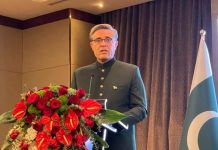
“This expo fully reflects the vigorous vitality of all Eurasian parties in promoting the Silk Road spirit of shared development and mutual benefit,” Li Hongqi, Deputy Director of the Department of Commerce of Xinjiang Uygur Autonomous Region, said at a press conference on June 30, announcing the expo’s outcomes. “Xinjiang is now in the best development period in its history. Policy dividends, development dividends and opening-up dividends are being released continuously.”
By the time the Ninth China-Eurasia Expo closed on June 29, the numbers testified to his words: 329,300 visitors had passed through the gates, including nearly 10,000 from abroad. More than 80 trade promotion events were staged. Li noted that the expo’s substantial and practical outcomes underscored a growing consensus among Eurasian nations on connectivity and mutually beneficial cooperation.
The deeper story lies in Xinjiang’s shifting role in Eurasian trade. A decade ago, the region was often seen as a corridor—a stretch of territory through which goods passed on their way to somewhere else. Today, it is becoming a hub where goods stop, are processed, repackaged or assembled, and then move onward.
Xinjiang hopes to use the China-Eurasia Expo as an important window and platform to promote Xinjiang’s opening up on a larger scale, in a broader scope and at a deeper level, deepen practical cooperation with Eurasian countries, and enable Xinjiang to contribute to the common development of China and Eurasian countries.

Global hub
Xinjiang has been a golden corridor of Eurasia and the bridgehead for China’s westward opening up.
Kazakhstan has long been Xinjiang’s largest trading partner among Central Asian countries. According to statistics from Urumqi Customs, in 2025, bilateral trade between China and Kazakhstan reached $48.7 billion. In the first five months of 2026 alone, the trade volume hit $22 billion, up 27 percent year on year. Xinjiang also accounts for a significant portion of this growth: According to statistics from Urumqi Customs, in the first five months of 2026, Xinjiang’s imports and exports to the five Central Asian countries exceeded 98.3 billion yuan ($14 billion), accounting for 45.5 percent of the region’s total foreign trade during the same period.
As a long-standing friend of the expo, Kazakhstan served as a guest country of honor for the second consecutive year, bringing more than 30 companies to this year’s event, more than ever before. Serik Zhumangarin, Deputy Prime Minister and Minister of National Economy of Kazakhstan, said at the expo’s opening ceremony, “For Kazakhstan, Xinjiang is not only a close neighbor and partner, but also a very important gateway to China’s vast market. Over the years, Xinjiang has served as the main center and hub for Kazakhstan and China in border trade, logistics and industrial cooperation. It is the logistics route connecting Kazakhstan and China, and also ensures transit transport between Asia and Europe.”
The same sentiment came from Abulaiti Maimaiti, President of the Xinjiang Office of the UAE-China Chamber of Commerce, who had attended all eight previous expos on behalf of the businesses of the United Arab Emirates (UAE). “Every session has changes and highlights. Xinjiang has not only risen as a major national renewable energy base but has also become a hub connecting Central Asia and radiating to Europe,” he said. His advice to first-time attendees was direct: “Xinjiang is vast. Don’t get to know it through screens and text alone. Come see its development and changes for yourself.”
Xinjiang has outgrown its traditional role as a transit point only to Central Asia and Europe. Zhou Hong, chief representative of the Hong Kong Trade Development Council (HKTDC)’s western China office, told Xinjiang Daily, “Hong Kong, as a trade hub and financial center, has enormous room for cooperation with Xinjiang.”
This year, the Hong Kong Special Administrative Region delegation brought more than 100 business representatives, and the HKTDC set up a dedicated Hong Kong pavilion for the first time.
“Moving forward, Xinjiang can leverage its geographical advantages to work in tandem with Hong Kong for two-way empowerment and two-way connectivity—linking to European and ASEAN markets while radiating to Central Asia and the Middle East. This would create a comprehensive, multi-tiered logistics and supply chain system, positioning Xinjiang as a hub that connects both domestic and international markets,” Zhou added.
Gateway of opening up
The expo showcases the result of years of effort by Xinjiang to advance high-standard opening up across infrastructure, transportation, policy frameworks, administrative procedures and technology.
The Xinjiang Pilot Free Trade Zone (FTZ), established in November 2023, has been a significant catalyst. According to statistics from the Department of Commerce of Xinjiang, the FTZ has produced innovations across trade facilitation, investment liberalization, financial openness and government administration.
The impact is felt on the ground. In the FTZ’s Urumqi area, a project approval reform has slashed investment approval time from three months to as few as 10 days.
“From submitting the application to breaking ground, it took only 10 days. Every step moved faster than we expected,” Zhao Cheng, project manager of a residential development project launched by the Xinjiang Production and Construction Corps (XPCC) 12th Division in the Urumqi FTZ area, told Xinjiang Daily. The XPCC is a quasi-military, governmental organization in Xinjiang.
Beyond the headline-grabbing policy reforms, the expo itself has become an institutional platform that channels year-round momentum. The human dimension of opening up, however, is best witnessed beyond the expo’s convention halls. At the Huoerguosi International Border Cooperation Center, the first cross-border economic cooperation zone between China and Kazakhstan, the daily flow of shoppers tells a story of grassroots connectivity. According to customs statistics, the center processed over 3 million border crossings in the first five months of 2026, while the year 2025 saw a record high of 9.99 million border crossings. By allowing citizens from third countries to enter with valid documents, the center has further expanded its role as a hub for cross-border exchanges.
Along Xinjiang’s border ports, the “border resident mutual trade plus bonded processing” model has turned small-scale shopping into a scalable industry. Under national policy, each border resident is entitled to a daily duty-free quota of 8,000 yuan ($1,176) for cross-border purchases. In Tacheng Prefecture alone, according to local government data released in April, more than 9,200 border residents had been registered under the mutual trade program, with 29 cooperatives established, generating cumulative direct income of over 790,000 yuan ($116,500) for local participants. The model allows villagers to pool their quotas and channel goods into centralized processing facilities, directly benefiting farming and herding communities along the frontier.
In Kashi (Kashgar), a growing hub for Central Asian e-commerce, the direct clearance model has slashed export customs processing time from three to five days to under 24 hours. The city’s foreign trade exceeded 116 billion yuan ($17 billion) in 2025, according to local government reports. The faster clearance, combined with pilot programs such as “TIR (a customs transit system enabling goods to flow across borders created by the International Road Transport Union) plus cross-border e-commerce” international road transport launched in early 2026, has made Kashi an increasingly attractive gateway for businesses targeting Central and South Asian markets. For the border communities that power this trade, the policy dividends translate not into abstract statistics, but into tangible improvements in daily livelihoods.
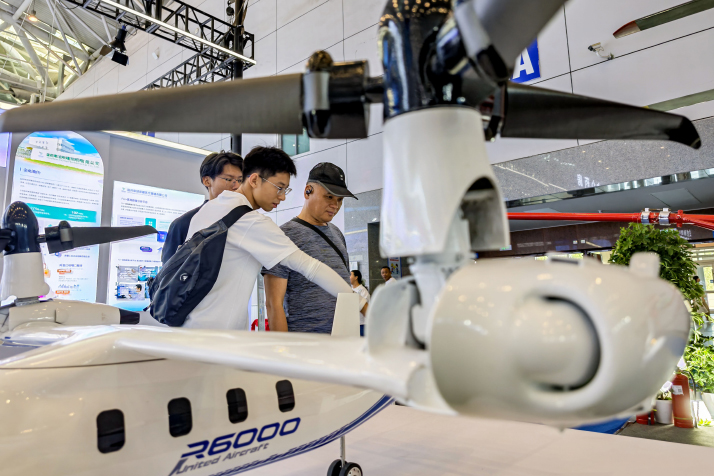
Xing Tao, Director of the Department of Commerce of Xinjiang, told reporters that the expo is being integrated with the FTZ’s three sub-zones in Urumqi, Kashi and Huoerguosi to form a “complete loop” of attraction, retention and growth. “This year’s expo strictly vets exhibitor access, brings in top-tier enterprises—over 300 from Fortune Global 500, China 500, central SOEs and hi-tech firms—and focuses on low-altitude economy, AI and digital economy,” he said.
The results of these reforms ripple beyond the FTZ itself. The “highway port plus local direct clearance” model, first piloted in Kashi and Huoerguosi, has now been rolled out to all eight of Xinjiang’s highway ports, compressing export clearance time from five days to just one. At the railway ports of Alashankou and Huoerguosi, a “smart railway port plus rapid clearance” system allows customs processing to begin before trains even cross the border.
“We pushed reforms in cross-border logistics with a ‘three-step’ approach across rail, road and air,” Li Kaiyi, Deputy Director of Urumqi Customs, told a press conference marking the FTZ’s second anniversary. “In the first nine months of 2025, Huoerguosi road port saw freight volume surge by 180 percent year on year.”
Meanwhile, the infrastructure is strengthening. According to statistics from the Department of Transport of Xinjiang, Xinjiang now operates 19 open ports and 28 civil airports—the most of any provincial-level region in China—and more than 9,500 km of railway lines.
Zhou Chao, Deputy Director of the Executive Committee of the Ninth China-Eurasia Expo and Deputy Secretary General of the People’s Government of Xinjiang Uygur Autonomous Region, told a press conference in early June that the region is building an optimized “123 express logistics circle”—one day within Xinjiang, two days within China, and three days to Central Asian countries. “We are accelerating the construction of the China-Kyrgyzstan-Uzbekistan railway and the third China-Kazakhstan cross-border railway, turning Urumqi, Huoerguosi and Alashankou into smart port models,” he said.
On the rail front, according to statistics from Urumqi Customs, more than 10,000 China-Europe (Central Asia) freight train transits have been made annually for six consecutive years, accounting for more than half of the national total. The product mix has also evolved. In earlier years, trains carried mostly small commodities and machinery. Today, solar photovoltaic modules, auto parts, smart electronics and new-energy vehicles make up an increasing share.
The shift is perhaps best captured in the numbers: According to statistics from Urumqi Customs, Xinjiang’s foreign trade hit 520.37 billion yuan ($77 billion) in 2025, up 19.9 percent year on year, ranking first nationally in growth rate. During the 14th Five-Year Plan period (2021-25), the region’s total trade surpassed 1.71 trillion yuan ($251 billion), up 144.3 percent from the previous five-year period.
Looking ahead, Xinjiang will continue to play an even greater role in China-Central Asia cooperation.
“We will further leverage our commercial strengths to support Xinjiang in deepening foreign economic and trade cooperation, using high-quality commercial development to help Xinjiang integrate into the country’s broader opening-up strategy,” Zhang Dong, Deputy Director of the Department of Eurasian Affairs at the Ministry of Commerce of China, told a press conference in Beijing on June 9, prior to the expo. “We welcome all parties to actively make use of this expo as a broad platform for in-depth exchanges, tapping potential and expanding cooperation, to share in the new opportunities of Xinjiang’s opening up and development.” –The Daily Mail-Beijing Review News exchange item