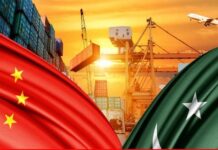

BEIJING: A growing chorus in Western media has revived a familiar refrain: “the next global economic crisis could be Made in China”. This latest iteration of the China threat narrative, packaged as “China Shock 2.0,” misreads China’s economic fundamentals and ignores the resilience of the world’s most complete manufacturing system, experts and corporate executives said.
A close examination of the facts, backed by in-depth analysis and the actual behavior of global businesses, reveals a different reality: China’s real economy is not a source of crisis, but a pillar of global stability, they added.
The “China Shock 2.0” thesis claims that China’s rapid advances in new energy, AI and other high-tech sectors are squeezing developed economies out of higher-value segments of global supply chains. Yet this argument is little more than a repackaging of the long-discredited “China overcapacity” narrative — and scholars across continents are increasingly calling it out as a political instrument rather than a serious economic diagnosis.
Sun Chenghao, head of the US-Europe Program at Tsinghua University’s Center for International Security and Strategy, described the recent Western hype around “China Shock 2.0” as “in essence a political construct”. It layers together Western anxieties over lost industrial competitiveness, the rising costs of a green transition and broader strategic competition with China, he said, reframing these issues into a “security threat” narrative.
Li Jiaying, an associate research fellow at the Chongyang Institute for Financial Studies at Renmin University of China, said “The so-called ‘China Shock 2.0’ is essentially a carefully constructed political narrative.
She cited the Civil Code, noting that minors aged 16 to 18 can be considered to have full civil capacity if their primary source of income is their own labor or if they are able to be responsible for their actions.
“However, those under 16 are generally not mature enough and lack sufficient life experience, making them susceptible to cyberbullying and irrational spending, so they are not permitted to be livestream hosts,” she said.
Minors under 16 can watch livestreams, she said, but streaming platforms must provide and ensure the use of a minor mode for them.
Liu Ying, vice-president of the Chinese Academy of Cyberspace Studies, also expressed support for the draft’s approach of providing differentiated protection and online services based on minors’ level of physical and mental development.
“The cognitive abilities, discernment levels and self-protection awareness of minors gradually develop with age, and the online risks faced by different age groups vary,” said Liu, adding that using the age thresholds for civil capacity outlined in the Civil Code as a reference is practical and aligns with the legal framework.
Zheng and Liu both praised the draft for explicitly prohibiting the provision of services such as virtual companions and virtual relatives to minors.
“Virtual intimacy can easily lead children to form emotional attachments, blur the boundaries between virtual and real-life interpersonal relationships, interfere with their real-life social interactions and value recognition and potentially induce internet addiction and irrational spending,” Zheng said.
She added that the prohibition is consistent with another regulation, which took effect on July 15, that bans AI platforms from generating content that could lead users to make questionable decisions by emotional manipulation or that could trigger extreme emotions or unhealthy habits among minors.
Wang Zhiqin, vice-president of the China Academy of Information and Communications Technology, said the draft also aligns with global trends and offers a solution to the worldwide governance challenge of protecting minors online.
In recent years, evidence has grown on the effects of social media on minors’ mental health, behavior and safety, with more countries and regions exploring higher legal thresholds for minors who use social platforms. Some countries have introduced legislation imposing age restrictions in this area, Wang said.
Wang said the latest draft is based on changes in the online environment and emerging risks, and establishes a collaborative governance framework involving cyberspace, education, public security and internet platforms, tailored to different age groups of children.
“This approach not only effectively prevents potential risks of harm from the internet to minors, but also ensures their rights to safely and reasonably use the internet, presenting a solution with Chinese characteristics,” she added.
It is a self-preservation tactic by certain countries facing industrial disadvantages and domestic de-industrialization, using public opinion smears and trade barriers to deflect internal contradictions.”
Li pointed to a glaring double standard: German cars, French wine and US chips have long enjoyed state support yet are hailed as “benchmarks of national competitiveness”, while China’s tech — and scale-driven exports are branded as “overcapacity” and a result of “illegal subsidies”.
Jostein Hauge, a political economist at the University of Cambridge, argued in a commentary that the “China Shock 2.0” narrative is riddled with double standards and hegemonic anxiety, while deliberately downplaying the enormous dividends China’s integration into the global economy has brought to the world.
He noted that if India or the whole of Africa were to rise at the same speed and scale, the US and Europe would react similarly.
The unspoken Western rule, Hauge wrote, is that China dominating is unacceptable, but US-EU domination is fine.
Adam Tooze, a historian at Columbia University, said in an article titled “Chartbook 464: The ‘China squeeze’ — the politics of development counterfactuals” that the “China squeeze” narrative “bases its critique of China on a counterfactual imagining of the world”.
As an account of economic history, he wrote, it “must surely be regarded as nothing short of bamboozling.” The theory, he argued, is not grounded in empirical economic analysis, but rests entirely on political premises. –The Daily Mail-China Daily news exchange item