BEIJING: China and the United Kingdom’s decision to accelerate a joint feasibility study on a bilateral services trade agreement is expected to lay the groundwork for deeper cooperation in high-value services, despite broader trade uncertainties, analysts said on Friday.
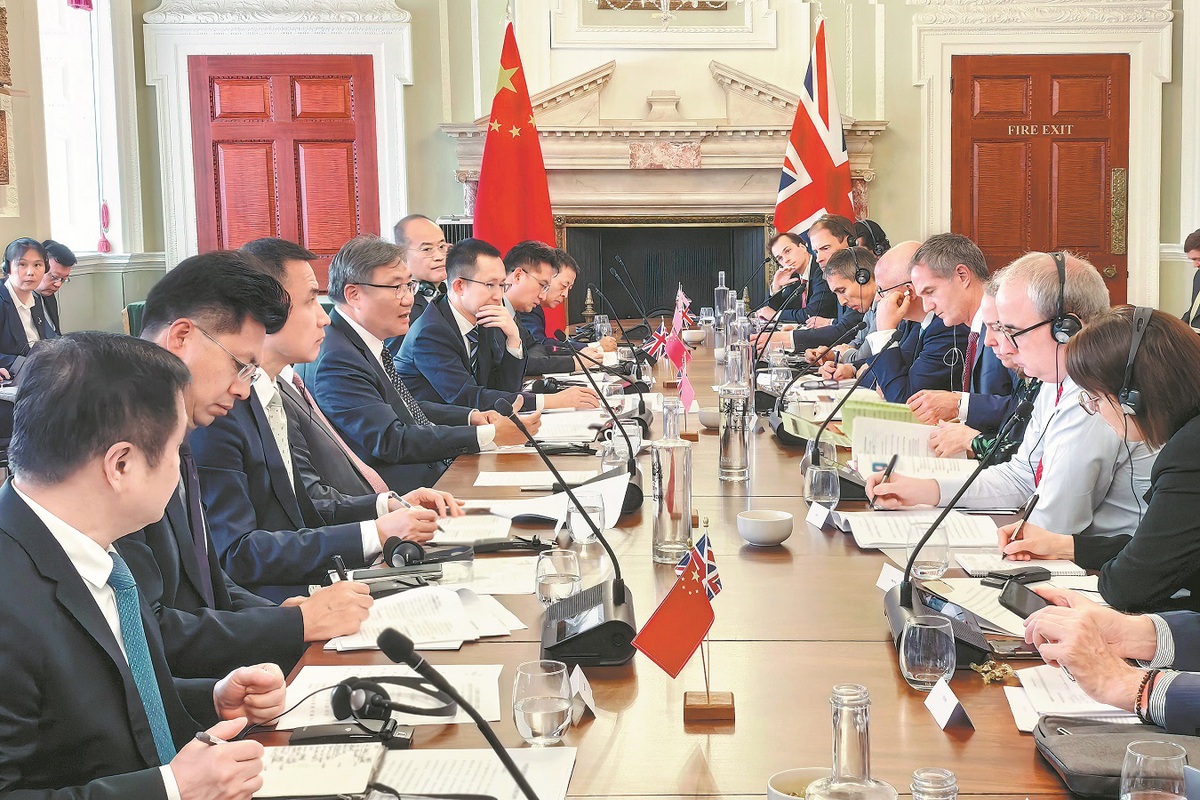
When co-chairing the 15th meeting of the China-UK Joint Economic and Trade Commission with UK Secretary of State for Business and Trade Peter Kyle in London on Thursday, Chinese Commerce Minister Wang Wentao said that China welcomes greater investment from British companies and hopes that the UK will provide a fair, equitable and nondiscriminatory environment for Chinese companies investing in the country.
According to a statement released on Friday by the Ministry of Commerce, Wang said that China and the UK, as important members of the World Trade Organization, should work together to implement the outcomes of the 14th WTO Ministerial Conference.
Kyle emphasized that economic and trade cooperation is an important pillar of UK-China relations. The rapid development of China’s services sector has created significant opportunities for British businesses.
He stressed that the UK is willing to strengthen policy communication with China and increase cooperation in the services sector via the China-UK Bilateral Services Partnership and the joint feasibility study on a China-UK services trade agreement.
During the meeting, the Chinese side expressed serious concern over the UK’s new steel trade measure, effective from Wednesday, and urged the UK to adjust the measure as soon as possible to ensure that it is consistent with WTO rules.
The measure states that the British government is limiting tariff-free steel imports, reducing the overall quota by 51 percent compared with the steel safeguard measure. Any imports above these levels will face a 50 percent tariff. Sebastian Wood, chair of the China-Britain Business Council, said that when it comes to frictions arising from surplus trades, there are both constructive and counterproductive ways to address them.
Wood said that putting up barriers to keep Chinese imports out would be the wrong approach, as it would make goods more expensive for consumers and raise costs for businesses. Such measures would ultimately make the UK economy less competitive. He said that the best way to rebalance the relationship is by boosting British exports to China and encouraging Chinese investment in the UK. Protectionism is not the answer, he added. –The Daily Mail-China Daily news exchange item