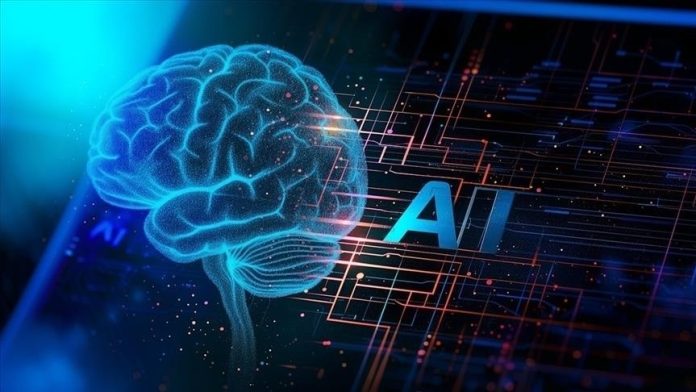
BEIJING: As artificial intelligence evolves into a core driver of global industrial competition, China’s strong power supply system and its forward-looking computing-electricity synergy strategy will give it an unparalleled edge in rolling out AI infrastructure, according to experts, corporate executives and on-the-ground evidence.
Zhang Qin, former deputy chairman of the China Association for Science and Technology and fellow of International Academy of Artificial Intelligence Sciences, said that “AI is creating an explosive demand for energy, and the solution lies in safe, reliable and green power. China has great strength in that area”.
“Apart from solar and wind power, nuclear energy can also be a crucial power supply for data centers if safety is guaranteed. This is a technological frontier to be conquered rather than a barrier to AI adoption,” Zhang told China Daily on the sidelines of the recent World Internet of Things Top 500 Summit in Beijing.
The comments came as China embraces AI with open arms. The value of its core AI industries exceeded 1.2 trillion yuan ($177 billion) last year, maintaining annual growth of more than 20 percent for several consecutive years, according to the Ministry of Industry and Information Technology.
Furthermore, the country is turning AI into real-world applications and a driver of economic growth. In the first half of this year, China’s industrial output of AI-related sectors, including integrated circuit manufacturing and in-vehicle intelligent equipment manufacturing, grew more than 30 percent year-on-year.
Wei Zhigang, chairman of CNNC Hainan Nuclear Power Co, said that as AI triggers unprecedented global demand for computing power, “the ultimate constraint has become clear: the need for vast, stable electricity supplies”.
Tech giants such as Microsoft and Google are actively exploring small modular nuclear reactors, or SMRs, to power AI data centers.
Wei added that CNNC’s Linglong One — the world’s first onshore commercial SMR — is nearing completion, and the company plans to begin commercial operations later this year. One key advantage of SMRs, Wei said, is their flexible placement, allowing them to be deployed right where computing power is needed, enabling close load-matching.
Zhou Ji, a senior researcher at market consultancy Pangoal, said that “China’s energy system has an edge in three dimensions: scale, structure and system, which constitutes solid support for AI computing infrastructure at the foundational level”.
Regarding scale, China ranks first in the world in total electricity generation and also leads in incremental growth. In terms of structure, the country has the world’s largest installed capacity of new energy, with the share of green power continuing to rise, Zhou said.
As for system, China’s ultra-high-voltage grid technology enables cross-regional optimization of power resources, while the country is also adopting a pioneering approach that aligns computing infrastructure with clean energy sources, he added. –The Daily Mail-China Daily news exchange item