Staff Report
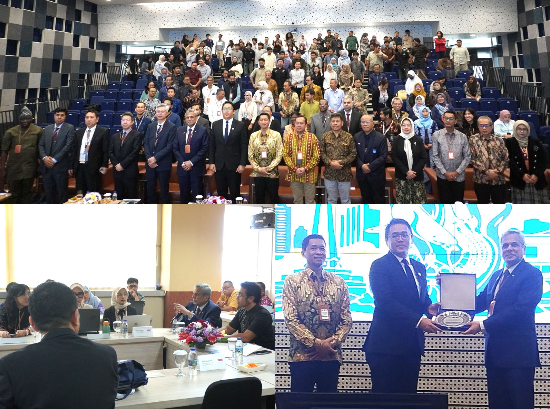
ISLAMABAD: The “COMSATS–ITS conference on Emerging Technologies for Sustainable Development” has been successfully held in Surabaya, Indonesia on Wednesday.
The Conference was organized by the Commission on Science and Technology for Sustainable Development in the South (COMSATS) and its esteemed Centre of Excellence, the Institut Teknologi Sepuluh Nopember (ITS), Indonesia, in collaboration with the Alliance of National and International Science Organizations for the Belt and Road Regions (ANSO), said a press release.
The event was held in conjunction with the 26th Meeting of COMSATS Coordinating Council. The S&T Conference aimed to highlight the role of Emerging Technologies in advancing sustainable development; share best practices, research findings, and policy experiences related to technology-driven sustainability solutions; and identify opportunities for collaboration.
Sharing his thoughts as Chief Guest at the opening ceremony, Dr. Mohammad Fauzan Adziman, Director General of R&D, Ministry of Higher Education, Science and Technology, Indonesia, shared insights in Indonesia’s growing international engagement for scientific research and development.
He highlighted the facilitative frameworks to support research collaborations of Indonesian scientists. Stressing that international collaboration is key to development, he praised COMSATS’ initiatives and activities, including indigenous EV Technology program, NanoTech Lab, Joint Center on Industrial Biotechnology, TeleHealth Clinics and other innovative initiatives.
He encouraged Indonesian R&D organizations to actively engage COMSATS to benefit from its Centres of Excellence. He expressed keen interest in the COMSATS’ mentioned initiatives for sharing of expertise and transfer of technology.
In his remarks, the Executive Director COMSATS, Ambassador Dr. Mohammad Nafees Zakaria, stated that the developing countries continue to face serious and interconnected challenges, however, the real challenge for the developing countries is to harness the emerging technologies in order to effectively respond to local challenges and meet the socio-economic needs of the people.
He highlighted the need for sustained investment in science, technology and innovation, establishing strong institutions, instilling forward-looking policies, ethical regulations, and above all, meaningful international cooperation.
He emphasized that COMSATS is committed to assisting Member States in their endeavors towards sustainable development. Prof. Dr. Bambang Pramujati, Rector of ITS, stated that inventions begin with conversations and exchange of ideas, and therefore, such conferences are of huge significance.
Highlighting the important role of scientific R&D in addressing various global challenges, the Rector ITS praised COMSATS’ efforts to connect scientists across borders to help develop tech solutions for challenges faced by the developing countries.
Prof. Liu Weidong, Executive Director ANSO expressed pleasure on collaborating with COMSATS and ITS for holding this important conference.
He highlighted the importance of the event’s themes for achieving socio-economic development.
The themes included AI, Big Data, and Digital Transformation; Renewable Energy; Climate Change Mitigation, Adaptation, and Environmental Technologies; Water, Food, and Agricultural Technologies for Resource Security; Biotechnology; Health Technologies; Advanced Materials, Nanotechnology, and Industrial Innovation; and STI Policies and Technology Governance in Developing Countries.
During the technical sessions, eminent subject experts from COMSATS Centres of Excellence in China, Indonesia, Jamaica, Jordan, Nigeria, Pakistan, Sri Lanka, Syria, and Tanzania, as well as ANSO and The South Centre delivered technical talks on various topics related to the event’s themes.