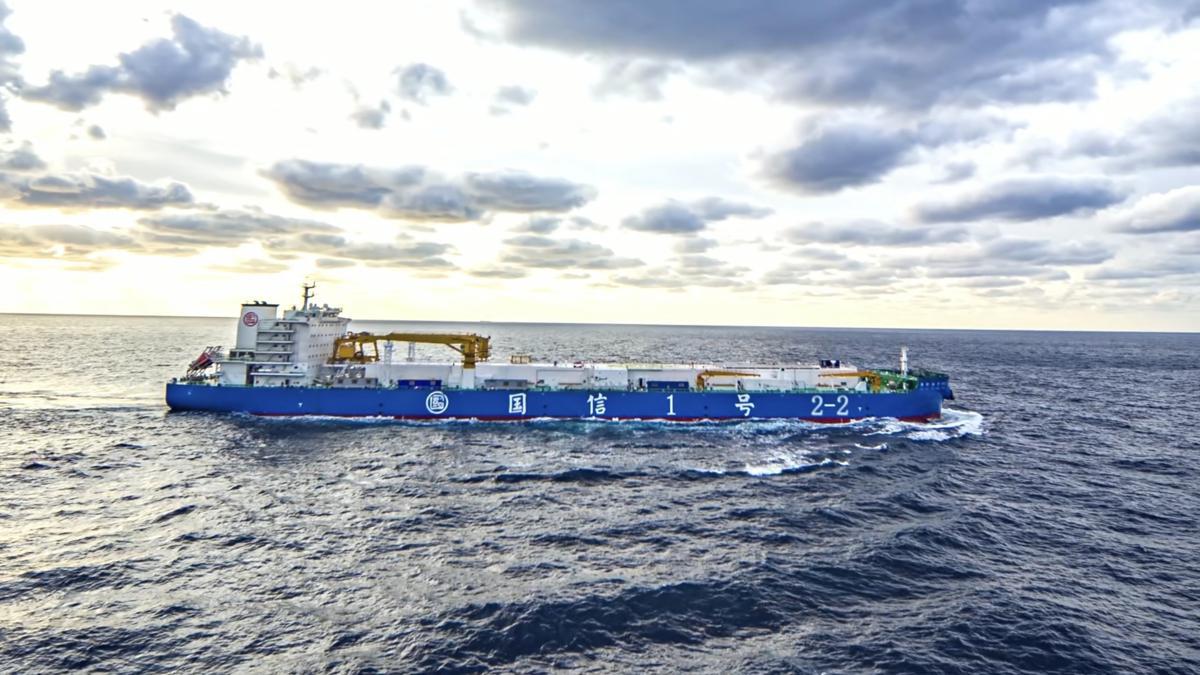
BEIJING: A giant smart aquaculture ship developed in Qingdao, Shandong province has successfully harvested its first batch of premium salmon, marking a breakthrough in China’s push toward high-quality deep-sea fisheries.
The 150,000-metric-ton intelligent aquaculture vessel “Conson No 1 2-2” harvested around 3,000 Atlantic salmon weighing a total of 12 tons on Monday. The fish were raised using a “ship-based aquaculture tank farming” model, marking the world’s first large-scale commercial production of salmonids aboard a massive mobile aquaculture vessel, according to Qingdao Conson Development Group, the vessel’s investor and operator.
According to the group, the ship is designed to carry out year-round farming trials of Atlantic salmon and other premium salmon and trout species.
The vessel features 15 standardized farming tanks with a total aquaculture volume of nearly 100,000 cubic meters. Each individual tank can hold more than 6,000 cubic meters of seawater — roughly equivalent to two or three standard swimming pools.
Unlike traditional coastal fish farms, the vessel adopts a “mobile farming” model, traveling between northern and southern waters along China’s coastline to maintain ideal conditions for the fish. The approach also allows the ship to avoid natural threats such as typhoons and red tides.
Atlantic salmon are known for their strict requirements for water temperature and quality. To address that challenge, the vessel is equipped with China’s first deep-sea water intake system for aquaculture ships, continuously drawing cold seawater from depths of 30 to 50 meters where temperatures remain between 10 and 16 degrees Celsius.
The ship also uses an intelligent feeding system capable of delivering multiple types of feed around the clock with precise timing and quantities, replacing much of the labor-intensive work associated with traditional fish farming.
Thousands of onboard sensors monitor the water temperature, salinity, dissolved oxygen levels and fish activity around the clock, helping reduce farming risks and improve efficiency.
Industry observers say the “mobile farming” model could reshape the future of deep-sea aquaculture by overcoming geographical and seasonal limitations while offering consumers a more stable and quality-controlled source of domestically produced salmon –The Daily Mail-China Daily news exchange item