
Visitors were amazed by humanoid robot N2, developed by Noetix Robotics, a Chinese technology company. Other Chinese robotics firms, including Unitree Robotics and AGIBOT, also showcased their latest robots, highlighting China’s rapid strides in the field.
“In core areas like motors and control, China’s humanoid robotics hardware has matured over the past five years, speeding products from testing to mass production,” Noetix Robotics co-founder Zhang Shipu told Beijing Review. “From full machines to dexterous robotic hands, Chinese companies are starting to pull ahead.”
These robots show more than tech progress—they reveal a shift from “Made in China” to “Created in China.” The annual tone-setting Central Economic Work Conference, held in Beijing on December 10-11, 2025, outlined priorities for 2026, emphasizing that “it will be essential to enhance innovation-driven development to accelerate the cultivation of new growth drivers,” signaling a broader transformation in the world’s second-largest economy.
New growth drivers
What exactly are China’s “new growth drivers”? In the context of a new wave of technological and industrial transformation, they are engines of economic development powered by innovation—emerging technologies, industries, business models and operational methods that reshape the way the economy grows. From AI and space exploration to digital innovation and green tech, these cutting-edge sectors illustrate the dynamic transformation of China’s economy.
The push comes amid a complex global environment. International competition is intensifying as technological breakthroughs in AI, quantum computing, biotech and semiconductors become strategic priorities. Some advanced economies are using export controls, investment reviews and other restrictions to protect these sectors, raising barriers for global collaboration.

Meanwhile, the world economy struggles with weak growth and environmental and climate challenges, highlighting the necessity of cultivating innovative and sustainable growth engines.
Domestically, China still faces unbalanced and insufficient development, and the transition from old to new growth drivers is a daunting task.
Zhang Shouying, a commentator with media outlet China Development and Reform News, notes that for decades, investment, exports and factor inputs fueled rapid growth. But as China’s development stage evolves, competition intensifies, resources tighten and traditional growth models are yielding diminishing returns, exposing structural challenges.
In this context, cultivating new growth drivers is not about chasing quick wins. It is a systematic effort to transform China’s development model, optimize industrial structure and strengthen long-term competitiveness.
Innovation drives
China’s push to build new growth drivers is no longer confined to laboratories or policy documents. Across the country, companies are turning technological ambition into practical, market-ready solutions—often in unexpected places.
One of the most striking examples is unfolding far from any tech hub, at sea.
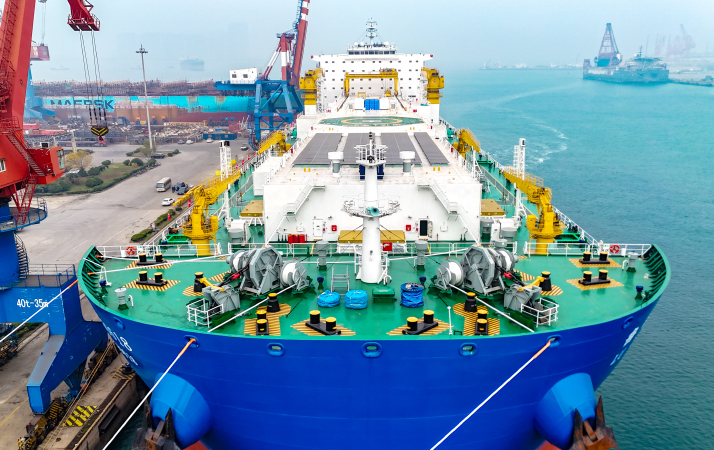
In early January, as aquaculture in north and central China slowed during the winter season, a massive vessel named Guoxin No.1 headed south. On board were millions of yellow croaker fish fry, bound for deeper and warmer waters in the South China Sea. Unlike traditional fish farms, Guoxin No.1 operates year-round, largely unaffected by weather or seasonal limits.
Built and operated by Qingdao Conson Oceantec Valley Development Co. Ltd., Guoxin No.1 is the world’s first 100,000-ton industrial aquaculture ship—a mobile “ocean farm.” From feeding and monitoring to harvesting, processing and transport, the entire production cycle takes place on a single platform, transforming what was once a weather-dependent coastal activity into a controlled, industrial operation in the deep sea.
This innovation also sparks new economic activities across the value chain: Upstream, it drives demand for advanced shipbuilding, specialty steel, intelligent aquaculture equipment and eco-friendly coatings; downstream, it boosts seafood processing, cold-chain logistics and premium consumer markets, company CEO Hu Xin told Beijing Review.
Guoxin No.1’s innovation rests on more than 160 proprietary technologies developed in collaboration with Chinese universities and research institutes. It illustrates how innovation-driven development in China increasingly means converting research capacity into economic output.
Collaborative innovation is increasingly central to accelerating new growth drivers. Humanoid robotics offers a case in point.
X-Humanoid, a Beijing-based innovation center for humanoid robotics, was launched by four robot-related companies. It focuses on developing shared core technologies and accelerating their commercial application across the supply chain.
In December 2024, the center released RoboMIND, an open-source, large-scale dataset designed to address a shortage of high-quality training data for embodied intelligence systems. Since then, the dataset has been downloaded more than 150,000 times by users from universities and research institutions all over the world—including Tsinghua University, the University of Hong Kong and the University of Pennsylvania—as well as Baidu, one of China’s leading Internet and AI firms, and Alibaba Cloud, the cloud computing arm of Alibaba Group, Wei Jiaxing, the center’s public relations head, told Beijing Review.
Collaboration is also expanding beyond individual firms.
According to the World Intellectual Property Organization’s 2025 Global Innovation Index, China hosts 24 of the world’s top 100 innovation clusters, more than any other country.
The 2025 Central Economic Work Conference also highlighted plans to develop international technological innovation centers in Beijing (Beijing-Tianjin-Hebei region), Shanghai (Yangtze River Delta) and the Guangdong-Hong Kong-Macao Greater Bay Area.
“This strategic upgrade from single cities to city clusters reflects a stronger emphasis on regional coordination and a more complete innovation system,” Gong Chao, a researcher at Tongji University’s National Institute of Innovation and Development, told Xinhua News Agency.
Innovation, however, is not limited to technology alone. Institutional reform is emerging as another powerful catalyst.
The Hainan Free Trade Port (FTP) exemplifies this. As a hub of China’s high-level opening up, it has implemented landmark measures: the country’s first negative list for cross-border services trade and the nation’s first international investment one-stop services platform, reducing paperwork by 55 percent and cutting approval times by nearly 70 percent. These institutional reforms lower transaction costs and create a more transparent, predictable environment for businesses.
At the Hainan FTP, a new industrial service model is gaining traction: bonded maintenance for high-end equipment.
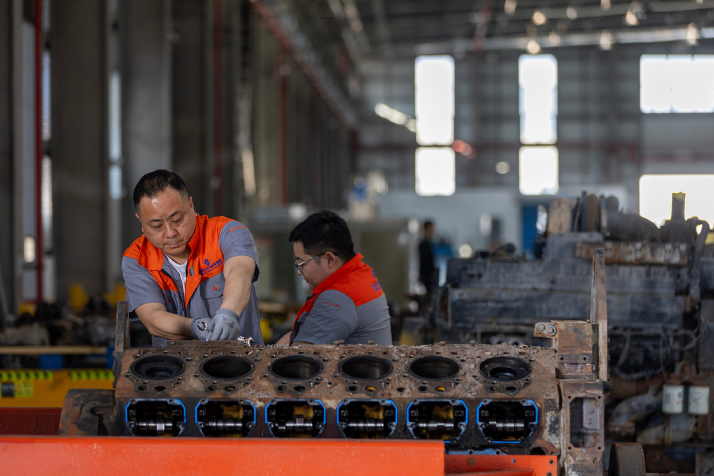
On December 18, 2025—the day Hainan officially launched its island-wide special customs operations—China National Vehicles Imp. and Exp. (Hainan) Co. Ltd. began its first batch of bonded repairs on imported diesel engines at Haikou Comprehensive Bonded Zone. The engines are not typically allowed to be imported under Hainan’s negative list for restricted and prohibited goods. Their entry was made possible only through a specific exemption in the Ministry of Commerce’s Announcement No.43, which permits 38 types of equipment to undergo bonded maintenance.
Under this model, engines are shipped from overseas, repaired under customs supervision and then re-exported without entering China’s domestic market. Zhang Zirui, the company’s marketing director, told Beijing Review that repair costs for large diesel engines in Hainan are roughly half of those in Europe, with turnaround times cut by nearly 50 percent.
China’s complete industrial supply chain, combined with Hainan’s tariff exemptions and streamlined customs procedures, allows companies to source parts faster and operate at lower cost. The result is a high-value service industry with global reach.
By expanding services such as bonded maintenance, Hainan is positioning itself as a specialized hub for global repair and industrial services. More broadly, the experiment shows how institutional innovation—alongside technological breakthroughs—is helping China move up the global value chain and cultivating new engines of growth.
Strategic balance
Cultivating new growth drivers is never simple. Success hinges on carefully managing several vital relationships.
The first is that between government and market. As Zhang Shouying noted, governments should focus on building platforms, setting rules, shaping the environment and guiding expectations—especially in areas like basic research and major shared technology initiatives. But the market and enterprises are still best positioned to identify technological paths and lead industry development.
Take the coastal city of Qingdao for example: In December 2025, it launched an action plan aimed at creating a first-class business environment, with 36 targeted measures spanning fair competition, industrial growth, high-level openness, regulatory standards and the protection of rights. By improving access to financial services, providing specialized funds and coordinating fiscal and financial policies, the plan gives innovation-driven enterprises the capital and support needed to turn ideas from the lab into market-ready products.
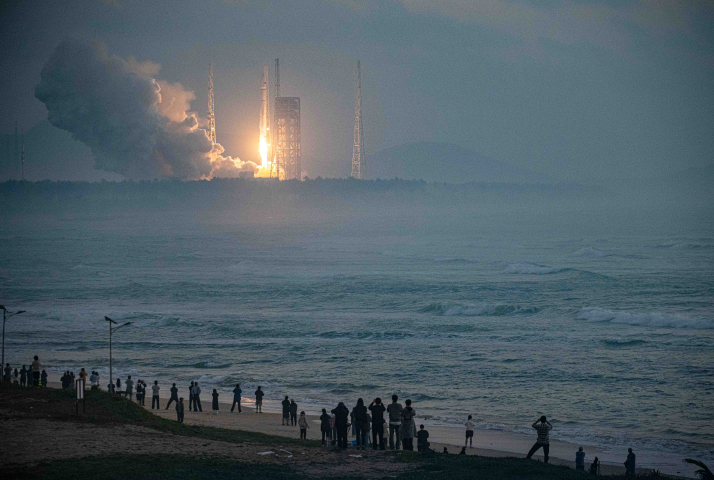
The second relationship is that between short-term and long-term priorities. Innovation, especially in high-risk, long-cycle fields like commercial spaceflight, requires strategic patience. In 2023, the Interstellar Glory Aerospace Science and Technology Corp. completed China’s first full-scale liquid-fueled rocket first-stage vertical takeoff and landing test for a reusable rocket—achievements that signaled a breakthrough in China’s reusable launch technology. The company’s experience shows that true innovation cannot be rushed. As company CEO He Guanghui told the Hainan International Media Center, “Commercial space is inherently long-term. It’s more like running a marathon. We focus on using capital efficiently and sustaining our operations, making sure every step is solid and stable.”
The third relationship is that between investing in physical assets and investing in human capital. “Investing in physical assets” focuses on technology upgrades, infrastructure and the physical economy, laying a strong material and technical foundation. “Investing in human capital,” on the other hand, develops knowledge, skills, health and adaptability—turning human resources into sustainable human capital. The integration of both is key to adapting to changing conditions, nurturing new growth drivers and building competitive advantages.
People are the drivers of consumption, production and innovation—the most active and dynamic component of productivity. “Investing in people boosts human resource advantages, sparks creativity, accelerates the development of new quality productive forces, and lays the foundation for high-quality growth,” Yu Chunhai, Executive Dean of the School of Economics at Renmin University of China, told media outlet QStheory.cn. New quality productive forces refer to the shift toward innovation-driven growth, technological advancement and high-quality development in different sectors of the economy.
Education, training, employment and talent development are all essential elements to ensure human capital can fully contribute to new growth. –The Daily Mail-Beijing Review news exchange item