
BEIJING: Despite Washington’s expanding military footprint in Greenland, a development that strains the transatlantic alliance, the EU unveiled its new “Strategy for the Arctic” on Tuesday, which will reportedly carry heightened geopolitical rivalry and military-security overtones. Meanwhile, an EU senior official also sought to counter so-called China-Russia efforts to “dominate” the Arctic Circle.
Analysts say the new Arctic strategy reflects Europe’s ambivalent and anxious strategic mindset. While the Greenland episode has laid bare the risks of US unilateralism for Europe, the EU avoids open confrontation with Washington and instead targets China and Russia, ignoring prospects for win-win Arctic cooperation. Against the backdrop of globalization, Arctic governance should uphold open multilateral coordination instead of reverting to the Cold War path of zero-sum confrontation and containment.
In a Monday report, The Times described the new version – which it obtained the draft earlier – as “a much more geopolitical statement of intent” compared with EU’s existing Arctic strategy, which was published in 2021 and was primarily concerned with the environmental effects of global warming and pollution.
The new strategy includes a surveillance center for tracking suspicious shipping activity, support for military-grade ports and airports for the rapid deployment of troops, and a hub for monitoring and repairing subsea data cables in case of sabotage, according to The Times.
It also commits to building up Europe’s icebreaker fleet and allocating €260 million ($292 million) for Arctic-capable military technologies such as extreme-weather aircraft and long-range sensors, The Times reported.
According to Zhao Junjie, a senior research fellow at the Institute of European Studies at the Chinese Academy of Social Sciences, the defining shift in the EU’s new Arctic strategy is to redefine the Arctic, once a region focused on climate governance and sustainable development, as Europe’s forward security frontier. The EU strategy puts heavy emphasis on security issues, seeking priority in Arctic resource exploitation and shipping lane development to seize the strategic initiative.
“Fueled by climate change and energy crisis caused by tensions in the Middle East, the Arctic shipping route is growing more valuable as an alternative trade corridor. The Arctic also hosts abundant critical strategic minerals, an area where the EU hopes to engage and project influence,” Xin Hua, director and research professor of the Center for European Union Studies at Shanghai International Studies University, told the Global Times.
The Financial Times, citing data from Lloyd’s List Intelligence, reported in October that voyages along the Northern Sea Route (NSR) hit 133 in September, roughly four times the figure for the same period in 2022.
In an interview with The Times on Monday, EU foreign policy chief Kaja Kallas claimed that the West must work to prevent China and Russia from seizing control of the new maritime route opening up in the Arctic and turning it into a chokepoint on global trade.
She said the EU needed to catch up on what was becoming the “front line of global power competition,” per The Times report, and claimed that the EU is worried that Russia and China are expanding their maritime power.
Kallas alleged that China is not an Arctic country, but is always “very strategic about the steps they are taking.” She added that China-Russia’s scientific activities are “not only scientific research for the sake of climate change.”
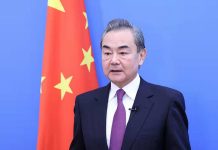
Kallas’ claims came after the meeting between Chinese top diplomat Wang Yi and Russian Presidential Aide and Chairman of the Maritime Board Nikolai Patrushev in Beijing on October 12.
During the meeting, Wang said that China and Russia should expand exchanges on maritime and Arctic‑related affairs.
According to Zhao, the EU’s wariness of China-Russia cooperation on Arctic affairs reflects a narrow geopolitical mindset.
Holding an observer status in the Arctic Council, China has legitimate rights to participate in and speak on Arctic governance and maritime security,” said the expert, adding that China advocates open cooperation on Arctic affairs and has the technical capability to engage in joint resource development and sustain regional stability.
“Strategically and security-wise, China presents no direct threat to Europe. China’s Arctic engagement centers on scientific research, commercial shipping and multilateral cooperation, in strict accordance with international law,” said Xin. –The Daily Mail-Global Times news exchange item