
———- Seeks urgent reforms for higher education, faculty welfare
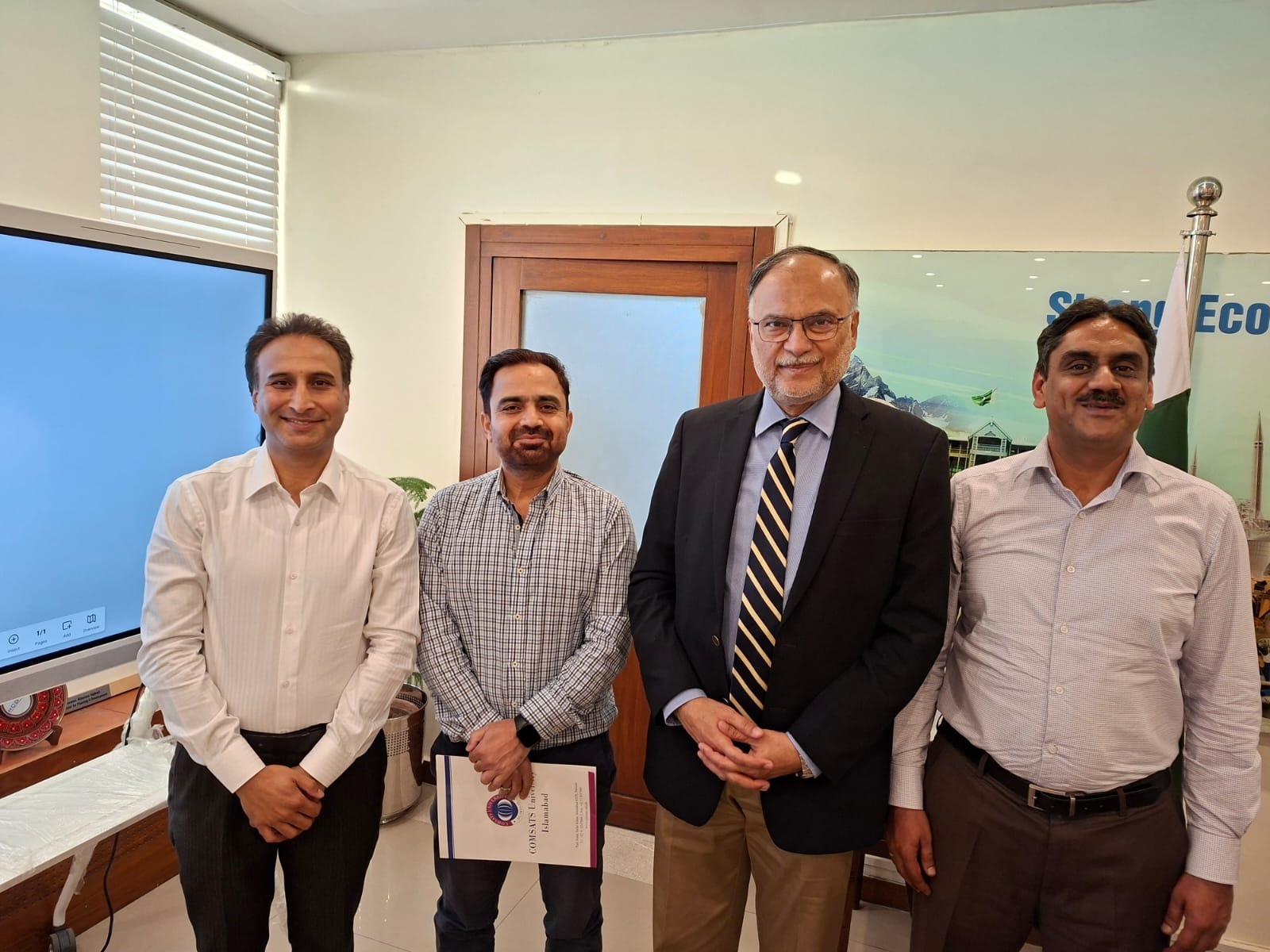
ISLAMABAD: A delegation of the Federation of All Pakistan Universities Academic Staff Associations (FAPUASA), Islamabad Chapter, led by its President Prof. Dr. Aamir Ali and Vice President Dr. M. Farooq Iqbal Buzdar, met with Federal Minister for Planning, Development and Special Initiatives, Prof. Ahsan Iqbal, to discuss critical issues concerning higher education, research, and faculty welfare in Pakistan.
During the meeting, the FAPUASA delegation highlighted the growing financial and administrative challenges facing public-sector universities and emphasized the need for urgent policy interventions to strengthen higher education institutions, promote research and innovation, and improve faculty welfare.
A key issue raised by FAPUASA was the substantial increase in the budget allocation for the Higher Education Commission (HEC) to support universities, research activities, scholarships, laboratories, and academic infrastructure. In response, Prof. Ahsan Iqbal acknowledged the importance of higher education and agreed that the HEC’s recurring budget should be significantly enhanced. He stated that efforts would be made to pursue the matter with the Ministry of Finance and relevant authorities.
The delegation also emphasized the immediate approval and implementation of the long-awaited salary revision for faculty members serving under the Tenure Track System (TTS), in accordance with the recommendations of the Prime Minister’s Task Force on Higher Education. The Federal Minister acknowledged the validity of the concerns raised by university faculty and noted that the recommendations had already been forwarded to the relevant forums. He expressed optimism that a positive decision would be taken and assured the delegation that he would continue to follow up on the matter.
FAPUASA further called for the restoration of the tax rebate for university teachers and researchers, highlighting their significant contributions to education, research, innovation, and national development. The delegation informed the Minister that previous committees had recommended the restoration of the tax rebate. Prof. Ahsan Iqbal recognized the importance of the issue and assured the delegation that he would raise the matter with the concerned authorities, including the Ministry of Finance.
The delegation also highlighted the absence of death benefits and social protection mechanisms for faculty members serving under the Tenure Track System. FAPUASA proposed that TTS faculty be included in social protection and welfare schemes similar to those available to other public-sector employees. The Minister expressed his support for the proposal in principle and acknowledged the need to address this important concern.
Another major issue discussed during the meeting was the implementation of a uniform promotion policy for faculty members serving under the Basic Pay Scale (BPS) system in public-sector universities. FAPUASA pointed out that unlike other government employees, university faculty often face lengthy delays in promotions due to procedural constraints, limited availability of positions, and delays in the constitution of Selection Boards. The delegation stressed that a transparent and uniform promotion framework is essential for faculty motivation and institutional growth.
Prof. Ahsan Iqbal agreed that promotion-related issues affecting BPS faculty deserve serious consideration and assured the delegation that the matter would be discussed at the appropriate policy level, including within the framework of ongoing higher education reforms.
The meeting concluded in a cordial atmosphere, with both sides reaffirming the importance of strengthening Pakistan’s higher education sector. FAPUASA expressed its appreciation to the Federal Minister for his positive engagement and commitment to addressing the concerns of university teachers and researchers. The federation reiterated its resolve to continue working constructively with policymakers and stakeholders for the advancement of higher education, research, and academic excellence in Pakistan. –PR