
BEIJING: China’s efforts to integrate health into its national poverty alleviation strategy offer important lessons for tackling extreme poverty worldwide, highlighting the need to prioritize health, coordinate government action and expand primary healthcare coverage, according to a report released on Thursday by the Lancet Commission.
The report examines China’s health-centered poverty alleviation initiative, which received a cumulative investment of 1.4 trillion yuan ($215.6 billion) between 2015 and 2020, as the country pursued its goal of eradicating extreme poverty by 2020.
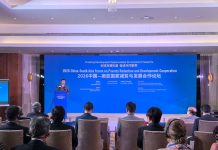
The initiative combined efforts in healthcare, water, sanitation, housing, nutrition and education — areas closely linked to poverty and health disparities — within a coordinated, multisectoral framework, the report said at its release event in Beijing. The initiative also used sociodemographic data and real-time monitoring to identify households at high risk of falling into poverty and target assistance to the most vulnerable.
In addition, it built on existing healthcare reforms to improve service delivery and financing for people living below the poverty line, the report said.
The results were significant. Between 2015 and 2020, China lifted about 55.8 million people out of poverty and eliminated absolute poverty across all county-level regions.
The initiative also helped improve access to healthcare. The share of out-of-pocket payments in total inpatient expenses fell from 41 percent in 2013 to 31 percent in 2018. Treatment rates for 30 curable severe diseases reached 99.6 percent, while the hypertension control rate rose from 33 percent in 2019 to 45.4 percent in 2022.
“These improvements were accompanied by accelerated gains in access to safe water, sanitation and housing among people living below the poverty line, narrowing equity gaps,” the report said.
Tang Kun, an associate professor at the Vanke School of Public Health at Tsinghua University and a co-author of the study, said healthcare costs are a common and significant cause of financial hardship. In 2019 alone, out-of-pocket healthcare expenses pushed an estimated 344 million people into poverty or worsened their economic circumstances.
“China’s experience offers an important case for examining what a more integrated approach can achieve and what it takes to sustain it,” he said.
Richard Horton, editor-in-chief of The Lancet, said global progress in reducing poverty had stalled since 2020. Citing World Bank projections, he said the global extreme poverty rate could rise from about 10 percent today to 15 percent by 2050, potentially leaving an additional 600 million people in poverty.
Reflecting on China’s experience, Horton emphasized the importance of making health a foundation of social and economic development and mobilizing coordinated action across government departments.
“The multisectoral, collective action across the broad social determinants of health is what really drove the success of taking almost 60 million people out of extreme poverty in just five years (in China),” he said.
Other lessons include expanding primary healthcare to promote equity and establishing rigorous accountability mechanisms and regular evaluations to gather feedback and address weaknesses, Horton said.
However, the report also identifies challenges to sustaining China’s health-related poverty alleviation efforts, including financial sustainability, the growing burden of noncommunicable diseases, population aging and climate change.
Amanda Bissex, the United Nations Children’s Fund deputy representative to China, said the findings underscored the need to strengthen support for vulnerable families who do not meet the criteria for being classified as poor. She also called for stronger financial and social protection measures, including expanded access to primary healthcare. –The Daily Mail-China Daily news exchange item