
By Asim Hussain
ISLAMABAD: Pakistan must “move beyond rhetoric” and urgently strengthen homework, coordination, and institutional capacity ahead of the next UN climate summit, said Chairman of the National Assembly Committee on Finance and Revenue, Syed Naveed Qamar.
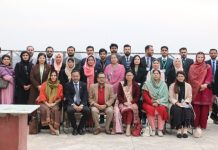
He was speaking as chief guest here at a post-COP30 seminar, titled: “Beyond Belém: Pakistan’s Next Climate Action Milestones,” organized by Sustainable Development Policy Institute (SDPI) here on Wednesday.
Qamar said climate change is not an academic debate, but “a living issue” the country’s next generation of civil servants would face now. “Pakistan’s failure to convert global goodwill into tangible outcomes stemmed from weak preparedness,” he said.
Highlighting the losses due to 2022 floods, he noted that despite billions pledged at the Paris Conference convened by French President, Pakistan secured only one project, i.e., the Sindh Housing Initiative. He said: “The homework was already done, and the project was transparent and monitored through satellite.” Policymakers could outline broad priorities, he said, adding that “implementation rests with civil servants and domestic institutions.”
He warned that while climate disasters are intensifying globally from South Asia to the US, major nations have enriched themselves through fossil fuels and are now pushing restrictions that developing countries like Pakistan cannot emulate.
“We cannot follow the same path because the world will not allow it,” he said, urging accelerated transition to clean transport, stronger provincial action, and active preparations for COP31 in Türkiye. “Climate problems are known. Youth must now lead the solutions.”
Minister of State for Climate Change, Dr Shezra Mansab Khan Kharal, said COP outcomes have become “questionable and disappointing” due to vague, non-binding commitments, but Pakistan remains determined to advance climate action “within its own capacity, because there is no other choice.”
She called Pakistan’s newly submitted NDC 3.0 a “strong, powerful document” that positions the country for better engagement at the UNFCCC. Despite leading global advocacy on operationalizing the Loss and Damage Fund last year, Pakistan “received nothing substantial,” she noted. Still, COP30 offered an opportunity for the Global South to reclaim leadership after the US withdrawal from the Paris Agreement.
Dr Mansab highlighted Pakistan’s presentation of its Climate Prosperity Plan in Belém as a model linking green growth, resilience, and sustainable development. She underscored growing provincial climate action, the success of the rooftop solar PV revolution, and Pakistan’s positioning as a “poster nation” for renewable energy adoption. A whole-of-nation approach, she said, is now essential: “Climate crisis demands that every citizen understands climate action.”
Earlier, SDPI Executive Director Dr Abid Qaiyum Suleri cautioned that Pakistan’s technical ministries, especially in food security, remain undervalued despite becoming “the most relevant institutions of the future.” He noted that senior bureaucrats often treat positions in these ministries as punishment postings, even though climate change is rapidly turning agriculture, livestock, and food supply chains into existential national concerns.
Citing the latest UNEP Emissions Gap Report, he said global warming is now far off the 1.5°C pathway, with Islamabad’s winter temperatures already around four degrees above historic averages. For Pakistan, he said, rising heat threatens food security, manufacturing productivity, livestock survival, and even public behaviour. “Heatwaves are causing mood swings and psychological distress; service sectors face rising tempers and public frustration,” he said.
He reminded participants that under the Kyoto Protocol, obligations fell on wealthy nations, but the Paris Agreement made both developed and developing states responsible, with rich nations pledging financial support that “has not materialized for a decade.” Pakistan, he argued, must incentivise provinces for taking climate action, build domestic best practices, and strengthen its case globally rather than relying on external finance.
Secretary of Climate Change Aisha Humera Chaudhary said COP30 was a diplomatic win for the Global South, which dominated negotiations despite Brazil’s logistical shortcomings. Brazil’s Murito Concept, encouraging consensus despite sharp divides, helped revive dialogue between the Global North and South.
Pakistan now needs to sharply articulate its adaptation needs, she said, noting that two major floods had cost the country 10% of GDP. “Development and adaptation can align, but they are not the same thing,” she stressed. The National Adaptation Plan, the Global Adaptation Goal framework, and the global pledge to triple adaptation finance emerged as Pakistan’s key wins at COP30.
Countries that arrived in Belém with updated NDCs were advantaged in bilateral negotiations, she said, adding that Pakistan must now highlight progress under its National Adaptation Plan and National Clean Air Policy at the provincial level. Scaling up youth-led climate startups, she added, should be a priority ahead of COP31.
Opening the session, SDPI Deputy Executive Director Dr Shafqat Munir Ahmed said that if COP30 was the “Nature COP,” Pakistan should push to make COP31 the “Water and Debt COP,” focusing on the Himalayan cryosphere and its role in sustaining Pakistan’s economy and rivers.
With climate-induced disasters accelerating, he said Pakistan must push for a formal global mechanism to protect climate-vulnerable economies from debt spirals and unilateral trade measures.