DM Monitoring
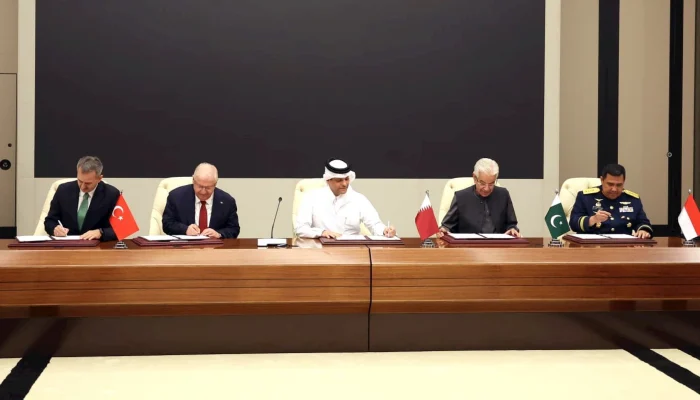
ANKARA: Pakistan, Turkiye, Qatar, and Indonesia signed an agreement on Wednesday to boost defence cooperation and strengthen defensive capabilities, the Turkish Defence Ministry said.
In a statement, the ministry said the countries signed the “Badr Memorandum of Understanding” in Doha as a sign of their desire to further deepen cooperation and develop partnerships.
“The agreement holds substantial economic importance,” it said, adding the accord sought to foster cooperation in military production, boost military capabilities, and help collaboration in technical military training, research and development.
“By leveraging the unique military production capabilities of each country, the initiative will facilitate cooperation and integration, enhance defence industrial capacities, and enable the fulfilment of the needs of allied and friendly nations,” it added.
Turkiye, which has NATO’s second-largest army and a robust defence industry, has been helping Gulf nations, including Qatar, where it has a military base, bolster their defences amid the US-Israeli war against Iran.
In August, it signed a mutual defence pact with nuclear-armed Pakistan and Saudi Arabia, under which an attack on one party constitutes an attack on all. Ankara also has close ties with Indonesia, notably in the defence industry.
The ministry said the Badr accord would strengthen ties between the countries’ defence industries and bolster collaboration to promote security and achieve shared objectives.
In a statement released later, Asif said that Pakistan places great importance on strengthening defence cooperation with trusted partners.
“This memorandum reflects our shared commitment to contributing to regional peace and stability,” he said, noting that Pakistan looks forward to exploring opportunities for strengthening self-reliance, industrial collaboration, joint production and technology transfer while drawing on the complementary strengths of our respective defence industries, in accordance with relevant international and domestic laws and regulations.
“Through this partnership, we aim to advancing cooperation across joint research and development, training exchanges and industrial capability building.”