DM Monitoring
BEIJING: Pakistani agricultural professionals are looking to China’s farming technologies for ways to address challenges at home, as 107 participants in the third batch of a bilateral training programme continue their studies at Northwest A&F University, China.
Since the programme began, 885 participants have completed training and returned to Pakistan, where they have helped establish 15 startups and train more than 50,000 farmers and other agricultural professionals, according to a Pakistani official.
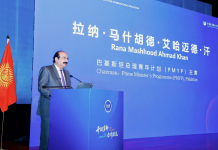
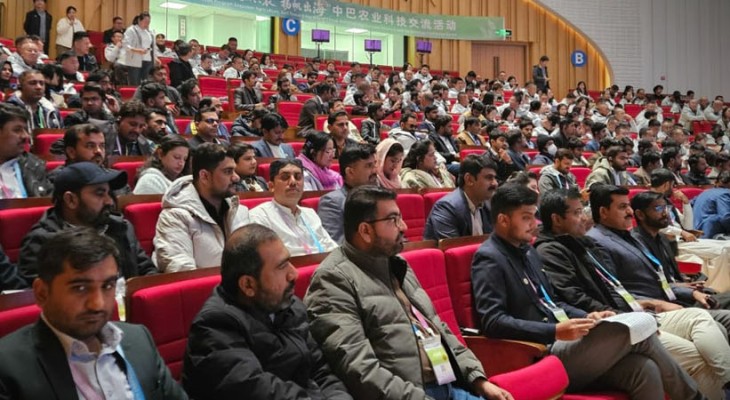
The programme was highlighted at the China-Pakistan Agricultural Science and Technology Exchange Event, themed “Touyan Program Empower Agriculture, Sail Toward the World,” held in Yangling, Shaanxi, China on October 27 alongside the 33rd Yangling Agricultural Hi-Tech Fair and the 2026 Shanghai Cooperation Organization Agricultural Expo.
Saima Naurin, project director at Pakistan’s Higher Education Commission (HEC), said the programme was designed to address practical challenges in Pakistan’s agricultural sector. Nine priority areas were identified in consultation with agricultural universities, experts and government departments.
These areas include farm mechanization; crop speed breeding; advanced technologies such as drones, the Internet of Things and artificial intelligence; seed production and processing; livestock disease surveillance; livestock breeding and genomics; aquaculture; high-efficiency irrigation and water management; and fruit and vegetable processing.
The training combines academic instruction with hands-on experience. Participants are also placed with Chinese enterprises and international organizations to learn how agricultural technologies are applied in practice, Naurin said.
The programme targets young agricultural professionals who can apply their training in their workplaces or businesses after returning to Pakistan. Applicants must have a bachelor’s degree in agriculture and be no older than 35. The selection process also considers their professional experience and their organizations’ capacity to adopt new technologies, she said.
“885 participants had completed training and returned to Pakistan,” Naurin told media. She pinpointed the programme had begun producing results in Pakistan.
According to her, returning trainees had helped establish 15 startups, develop demonstration farms and train more than 50,000 farmers, seed-company personnel and other participants. She added that organizations in Pakistan had also adopted new technologies and updated policies following the training.
Abdul Samad, founder and CEO of Pakistani agricultural startup NanoDrop, is among the 107 participants in the third batch. For him, the programme offers an opportunity to explore technologies that could be adapted to Pakistan’s agricultural conditions.
“Many things are imported from China to Pakistan. So it’s time to work on technology transfer in Pakistan,” Samad said.
NanoDrop works on water filtration and irrigation-related applications. Samad said its membrane technology can purify saline water without electricity, with potential uses in agriculture, domestic water supply and industry.
During his first week in China, Samad said he had been impressed by greenhouse technologies and equipment that could help turn dry land into productive growing areas.
He had taken photographs, collected brochures and seed samples, and obtained contacts from technology providers to learn more about their products and applications.
Samad said he planned to explore opportunities to apply what he learned after returning to Pakistan. As an entrepreneur who works closely with farmers and engages with government-supported initiatives, he hoped to find practical ways to introduce suitable technologies at the local level.
The programme originated from Pakistani Prime Minister Shehbaz Sharif’s visit to Yangling on June 8, 2024, when he decided to send 1,000 Pakistani agricultural graduates to China for advanced training, according to Pakistani media reports.
Yangling is home to China’s first national agricultural high-tech industry demonstration zone and serves as a platform for agricultural science and technology cooperation and training with other countries. More than 6,000 agricultural officials and professionals from over 130 countries had received training in Yangling, while online training had reached more than 60,000 participants.
For the Pakistani participants currently training in China, the challenge ahead is to translate what they learn into solutions suited to local farming conditions. Samad said the third batch was scheduled to return to Pakistan in January 2027 after completing its three-month training programme.