
By Ali Imran
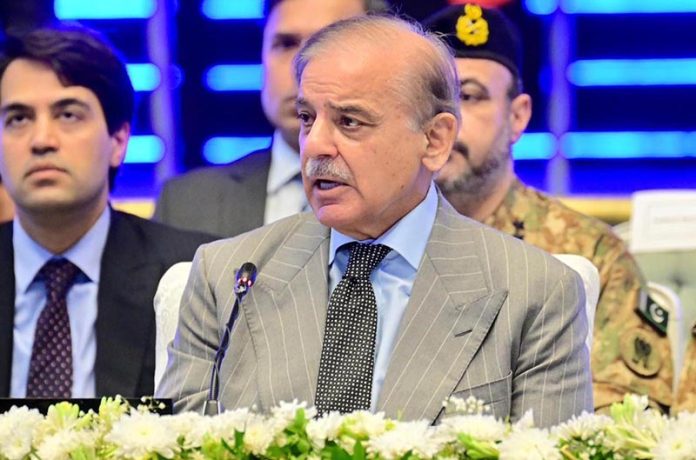
ISLAMABAD: Prime Minister Muhammad Shehbaz Sharif on Wednesday directed the relevant authorities to identify and initiate strict legal actions against the individuals and businesses involved in the informal economy and tax evasion.
Chairing a weekly review meeting on reforms in the Federal Board of Revenue (FBR), the prime minister instructed to develop a comprehensive and scientific methodology to estimate the tax potential across different sectors.
For the first time in Pakistan’s history, the prime minister highlighted that the alignment between sugar production data and FBR records was clear evidence that the FBR’s installed tracking system was functioning effectively and delivering improved performance.
He also praised the efforts of the Chairman FBR and his team in this regard and said that the individuals and businesses that comply with tax laws and regularly pay taxes were valuable national assets and deserved appreciation.
He said the government had provided maximum possible facilitation to both the export and domestic sectors regarding taxation and will continue to do so in the future.
He directed the Chairman FBR and senior officials to remain present in Karachi during the first week of every month to listen to and promptly resolve the concerns of the business community.
The prime minister pointed out that a digital production monitoring system should be made operational by December for the textile, beverages, steel, poultry, edible oil and ghee, and tyre sectors.
He said appointments and transfers within the FBR will be made strictly on the basis of merit.
“The newly introduced performance evaluation system for FBR officers is commendable, and merit and transparency will remain the highest priorities,” he said adding that a list of high-performing officers should be prepared so they can be recognized with awards on Independence Day.
He further instructed that an immediate third-party audit and validation should be conducted to identify and address any irregularities in Customs bonded warehouses.
The prime minister was also briefed on the installation of the FBR’s production tracking system, reforms implemented in human resource management, and measures to improve operational efficiency.
He was informed that the tracking system was fully operational in the sugar, cement, tobacco, tiles, and fertilizer sectors.
“Implementation is in its final stages in five additional sectors with an estimated tax potential exceeding Rs 700 billion.”
Participants were further informed that work was underway with nine manufacturing sectors to design and implement tracking systems, enabling the government to tap an additional Rs 560 billion in tax potential.
The prime minister directed that the implementation of the tracking system for indirect tax collection across the manufacturing sector be completed by the end of the current year.
During the briefing on human resource reforms, it was stated that newly recruited officers are receiving training at one of the country’s leading universities, with a strong emphasis on merit and performance.
“Existing officers are also undergoing training. The training modules have been designed in line with international standards and tailored to the requirements of Pakistan’s tax system.”
The meeting was informed that, following the introduction of a peer review and evaluation system, individuals with strong professional reputations are being appointed to key positions in Customs and Inland Revenue.
It was also noted that a performance-based reward and accountability system has been introduced within the FBR to recognize high-performing officers and staff while taking disciplinary action against those with poor performance.
To strengthen transparency, 957 third-party auditors have been appointed. Meanwhile, the recruitment process for 280 Goods Evaluators under the Customs faceless system is underway, with merit and transparency being given top priority.
The faceless system has not only reduced the time required for cargo clearance and movement but has also improved revenue collection.
The meeting was further informed that a Case Scrutiny Committee is being established to reduce unnecessary tax litigation. The committee will decide, on merit, whether tax-related cases should be filed.
Similarly, under the Alternative Dispute Resolution Committees (ADRCs), 152 out of 377 applications received up to June 2026 were resolved within 90 days, resulting in the recovery of PKR 54 billion in tax revenue.
The meeting was attended by Federal Ministers Azam Nazeer Tarar, Dr. Musadik Malik, Ahad Khan Cheema, Muhammad Aurangzeb, Attaullah Tarar, Shaza Fatima Khawaja, Ali Pervaiz Malik, Minister of State Bilal Azhar Kayani, State Bank Governor Jameel Ahmad, and other senior government officials.