By Uzma Zafar
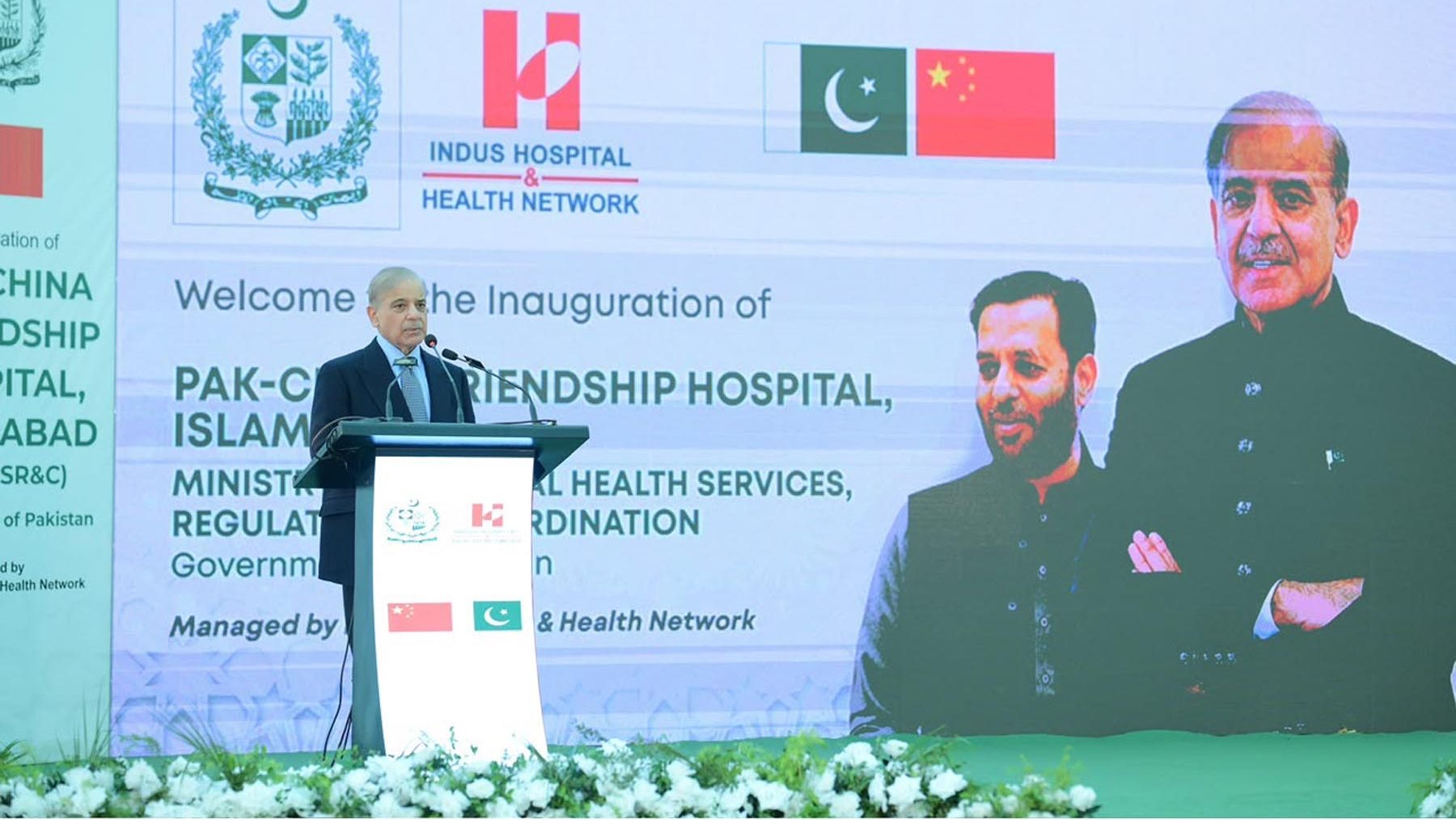
ISLAMABAD: Prime Minister Shehbaz Sharif on Thursday inaugurated the revamped Pakistan-China Friendship Hospital here and directed the authorities to ensure provision of free, quality healthcare to patients from across the country at the facility, stressing that public resources must be utilised to serve humanity rather than allowed to go to waste through institutional neglect.
The prime minister toured the newly renovated facility, received a briefing from Minister of National Health Services, Regulation and Coordination Syed Mustafa Kamal and interacted with patients, reaffirming his government’s commitment to ensuring free treatment through professionally managed healthcare facilities.
Originally gifted by China during the COVID-19 pandemic, the Isolation Hospital and Infectious Treatment Centre (IHITC) had become non-operational after the pandemic subsided, remaining closed for years. Its revival under the new name of Pakistan-China Friendship Hospital aims to restore a valuable national asset and provide modern medical services to patients, particularly those unable to afford expensive treatment.
The revamped Pakistan-China Friendship Hospital has 182 beds, including 50 intensive care unit beds, and is expected to serve patients from Islamabad, Rawalpindi, Khyber Pakhtunkhwa, Gilgit-Baltistan, Azad Jammu and Kashmir and other parts of the country.
Under the new arrangement, the government will finance patient care, while the Indus Hospital and Health Network will provide professional management and medical expertise to ensure efficient operations and high-quality services.
Addressing the inauguration ceremony, Prime Minister Shehbaz Sharif regretted the prolonged closure of the hospital, describing it as a painful example of neglect towards the poor and vulnerable sections of society.
He said he had taken immediate notice of the situation after learning about the hospital’s condition through a newspaper report and directed the health minister to take urgent measures to restore the facility.
The prime minister said the hospital was a generous gift from the Chinese government and people, reflecting Chinese President Xi Jinping’s vision of international cooperation and shared responsibility for human welfare. He apologised to the Chinese ambassador and the people of China for the years during which the facility remained closed.
PM Shehbaz Sharif said the government would bear 100 percent of the treatment costs, while the Indus Hospital and Health Network (IHHN) would manage the facility under a public-private partnership model.
He said his experience with hospitals managed by the network had convinced him that entrusting public healthcare facilities to competent organisations could improve service delivery, efficiency and accountability.
The prime minister directed Health Minister Syed Mustafa Kamal and the hospital’s management to make the facility a model institution, emphasising that providing treatment to those unable to afford it was among the most valuable forms of public service.
He also directed a third-party performance audit to assess the quality of healthcare services and ensure accountability, saying the hospital should establish a benchmark for other public-sector institutions.
Prime Minister Shehbaz commended Federal Health Minister Mustafa Kamal and his team for conceiving and completing this public welfare project in record time, advancing the government’s mission of accessible and high-quality healthcare for all.
In his address, Federal Health Minister Syed Mustafa Kamal thanked the prime minister for his personal efforts and close supervision, saying his detailed involvement and commitment had helped bring the hospital’s revival to fruition in a short period.
He highlighted the growing demand for healthcare services in Islamabad, noting that the capital’s population had increased substantially since its establishment, while patients also travelled from Gilgit-Baltistan, Khyber Pakhtunkhwa, Azad Jammu and Kashmir and Rawalpindi for treatment.
The minister said the 182-bed hospital would help address this growing demand and provide much-needed relief to patients from the capital and surrounding regions.
He also informed the gathering that a 200-bed cancer hospital at the Pakistan Institute of Medical Sciences (PIMS) had been prepared and was expected to become operational next year.
Thanking the Chinese government and people on behalf of Pakistan, Mustafa Kamal described the hospital as a precious gift and said he was honoured to contribute to restoring it to service.
Chinese Ambassador to Pakistan Jiang Zaidong welcomed the inauguration, expressing happiness that the facility had been transformed from an isolation hospital into a general hospital under the personal attention of Prime Minister Shehbaz Sharif.
He appreciated the decision to name the facility Pakistan-China Friendship Hospital, saying it reflected the prime minister’s strong feelings for China and his commitment to strengthening bilateral relations.
The ambassador also acknowledged Pakistan’s efforts in other areas of public welfare, including polio eradication, expansion of health card initiatives and youth development.
Referring to Pakistan’s economic indicators, Jiang noted improvements in foreign exchange reserves, exports, foreign direct investment and credit ratings, expressing China’s desire to work with Pakistan to advance economic cooperation under the second phase of the China-Pakistan Economic Corridor (CPEC).
He expressed hope that the Pakistan-China Friendship Hospital would operate successfully and continue to serve the people, further strengthening the longstanding friendship between the two countries.
Dr Abdul Bari Khan, Chief Executive Officer of the Indus Hospital and Health Network, thanked the prime minister and the health minister for entrusting the organisation with the management of the facility, describing the partnership as an important opportunity to expand free healthcare services in the federal capital.
He said the network operated 15 hospitals, 140 primary healthcare clinics, four blood centres and four physical rehabilitation centres across Pakistan, serving approximately 700,000 patients every month.
Dr Bari recalled that the partnership with Shehbaz Sharif dated back to his tenure as Punjab chief minister, when the government entrusted the network with the management of hospitals to improve access to quality healthcare.
He said the network’s operations had grown significantly, with its annual budget increasing from Rs1 billion in its first year to Rs 68 billion in the current year. He attributed the growth to public support, donations, the dedication of healthcare teams and the prayers of patients, adding that around 70 per cent of the network’s total budget was raised within Pakistan.
Dr Bari said the organisation had long aspired to expand its services to the federal capital and thanked the prime minister and health minister for making this possible. He also announced that the network planned to establish a blood centre in Islamabad.
He expressed confidence that the partnership would continue to grow and contribute towards a healthier Pakistan, reaffirming the network’s commitment to providing quality healthcare to patients without financial barriers.