
Staff Report
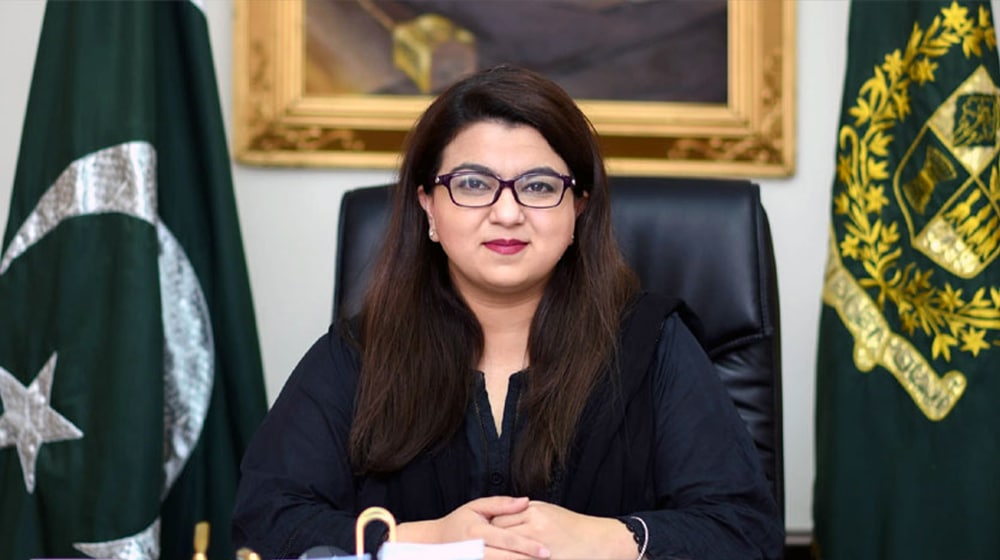
ISLAMABAD: Federal Minister for Information Technology and Telecommunication Shaza Fatima Khawaja on Monday said Pakistan had recorded the world’s fastest reduction in the gender digital divide in mobile internet usage.
Addressing the 9th OIC Ministerial Conference on Women, hosted by the Ministry of Human Rights, she said that, according to the GSMA, Pakistan recorded the world’s largest improvement in digital inclusion, particularly in mobile internet usage.
She said that when she assumed office, Pakistan’s gender digital divide stood at 35 percent. It declined to 25 percent in 2025 and further dropped to just 8 percent in the 2026 report, making Pakistan the fastest country in the world to close the gender digital divide in mobile internet usage.
Shaza Fatima Khawaja said women’s mobile internet adoption increased from 33 percent to 45 percent over the past two years.
However, she stressed that connectivity alone was not enough, saying the real measure of success was whether women living in remote and rural areas could use technology to learn, earn, receive digital payments and become entrepreneurs.
The minister said the government’s digital transformation initiatives had empowered women from low-income households by providing them with dignified access to financial assistance through digital payment systems.
Recalling the federal government’s Ramazan subsidy programme, she said the initiative was shifted from state-owned retail outlets to digital payments, on the direction of the Prime Minister, to ensure beneficiaries received financial support with dignity.
She said the programme enabled the creation of 800,000 digital wallets within one month among the country’s lowest-income population. This year, another 900,000 women joined the digital financial system through digital wallets.
Shaza Fatima Khawaja said the government, with the support of the private sector and under the leadership of the Prime Minister, also distributed 10 million free SIM cards to women across the country to help them become active participants in the digital economy.
She described these initiatives as a structural shift that would naturally expand women’s inclusion in the country’s growing digital economy.
The minister said women should not remain merely recipients of technology but must also become its creators and decision-makers, particularly as artificial intelligence becomes central to every sector.
She emphasized that women’s experiences and perspectives must be reflected in machine learning models and AI algorithms to prevent systematic exclusion.
She said women must have a meaningful seat at the table in the development of artificial intelligence, cybersecurity, public data systems and digital regulation.
Shaza Fatima Khawaja said Pakistan believes every girl should have access to digital connectivity, while every woman should be able to obtain and control a secure digital identity and financial account.
She added that women entrepreneurs should have equal opportunities to access digital markets and participate in technology-driven economic growth.
She called for measurable indicators under the OIC Plan of Action for the Advancement of Women to monitor progress in digital ownership, technology usage, income generation, enterprise growth, professional advancement and leadership.
The minister also urged OIC member states to celebrate women who continue to break barriers in technology and reaffirmed Pakistan’s commitment to sharing its experiences, learning from partner countries and building practical partnerships to promote women’s digital empowerment.
Shaza Fatima Khawaja said the future lies in guaranteeing digital rights, building capabilities, opening institutions and ensuring technology remains accountable to inclusion.
She said women should be recognized not merely as beneficiaries of technology but as equal partners in shaping the digital future.
The social, economic and political empowerment of women was essential for building a prosperous, innovative and inclusive society, stressing that technology must serve as an enabler of women’s participation rather than a source of exclusion, she added.
The minister said societies become wealthier, happier and more civically engaged when women are empowered as decision-makers, entrepreneurs, scientists, educators, public servants and political leaders.
She said Pakistan’s vision for women’s empowerment was based on three key pillars: education, legal and economic reforms, and digital public infrastructure.
Shaza Fatima Khawaja said education remained the foundation of every other freedom, enabling women to achieve financial independence and participate meaningfully in public life.
She added that legal reforms must be accompanied by an enabling ecosystem that includes finance, financial literacy, mentorship, market access and leadership opportunities.
The minister said equipping women with knowledge, technical skills and confidence would remove barriers to their participation in the economy, accelerate GDP growth, reduce poverty and promote innovation in workplaces.
She said greater participation by women in the workforce would unlock untapped talent and improve living standards across communities.
She said digital public infrastructure enables women to gain direct financial control, become visible participants in the formal economy and access education, healthcare, social protection and government services remotely.
She added that digital services reduce unnecessary delays, discretionary practices and informal payments while improving access to public services.
Shaza Fatima Khawaja said that under the leadership of the Prime Minister, the Ministry of Information Technology and Telecommunication views technology as critical infrastructure for women’s empowerment.
She said a connected device could bring education to girls living far from schools, while secure digital accounts allow women to directly control their income.
Likewise, online marketplaces enable home-based entrepreneurs to expand their businesses beyond local markets and even reach international customers.
However, the minister cautioned that technology could also deepen inequalities if women lacked access to mobile phones, affordable internet, digital identities, digital skills or protection from online harassment.
“The question is not simply whether technology is available, but who has access to it, who controls it and for whom it is designed,” she said, adding that digital participation must lead to institutional participation.
Referring to Pakistan’s history, she said the country has always produced strong women leaders.
She paid tribute to Mohtarma Fatima Jinnah for standing beside the nation’s founder, former Prime Minister Benazir Bhutto as the first woman prime minister of the Muslim world, former First Lady Begum Kulsoom Nawaz for her courage during
difficult political times, and Punjab Chief Minister Maryam Nawaz for her development-oriented leadership focused on citizens’ welfare.
The minister said Pakistani women today were excelling as entrepreneurs, engineers, scientists, startup founders and professionals across various sectors, adding that the government’s responsibility was to ensure their success became the norm rather than the exception.