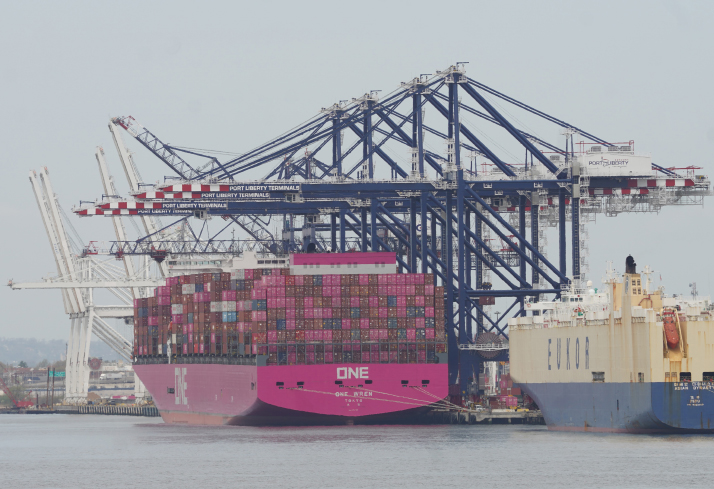
A new round of U.S. tariffs took effect on July 24, with the 10-percent tariff on imports under Section 122 of the Trade Act of 1974 (the Act), which authorizes the American president to impose temporary import duties or surcharges, having expired.
Shifting to a different statutory foundation under Section 301 of the same legislation, the new measures generally impose tariffs of 10 percent or 12.5 percent on imports from 60 trading partners, subject to product and country-specific exceptions.
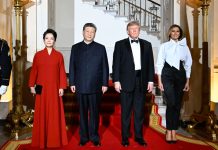
The change lands a little more than two months after Chinese President Xi Jinping and U.S. President Donald Trump met in Beijing in May, where the leaders agreed to build a constructive China-U.S. relationship of strategic stability.
This summit followed a series of tentative truces established in late 2025, marking a purposeful shift from reactive crisis management to a more structured and managed approach to trade. By establishing clear strategic guardrails, both countries aim to stabilize market expectations and reduce systemic risks amid an increasingly fragmented global economy.
Deliverables from the summit
China and the United States have agreed to establish two high-level bodies to manage ongoing bilateral economic negotiations, with their respective economic and trade teams maintaining close communication on the matter. The two boards split responsibilities: One oversees trade while the other manages cross-border investments. This division reflects a pragmatic acceptance that while core differences persist, channels are needed for non-sensitive business activities. Their creation will replace ad hoc bargaining with permanent, institutionalized dialogues.
In trade, both countries are working to create a reciprocal tariff-reduction framework covering non-sensitive goods worth at least $30 billion each. Under this arrangement, selected products will no longer face punitive tariffs and will return to most-favored-nation rates or lower agreed duties. The items targeted for tariff relief by the U.S. include consumer electronics accessories, household goods, apparel, non-sensitive medical consumables and industrial machinery parts. In exchange, China agreed in principle to include related U.S. products in the deal while emphasizing that any future U.S. tariff adjustments should not exceed the baseline levels established in late 2025.
Commercial aerospace ties also received a major boost through a deal paired with strict supply chain guarantees. Chinese airlines committed to purchasing 200 Boeing commercial aircraft based on market demand and civil aviation growth needs. To guard against potential export controls or unilateral supply disruptions, the agreement incorporates reciprocal commitments requiring the U.S. to ensure an uninterrupted supply of jet engines and essential spare parts. Should the U.S. restrict maintenance support, Chinese buyers may suspend future aircraft deliveries and payments.
Agricultural trade and non-tariff barriers reduction saw substantial progress through guiding targets, as well as sanitary and phytosanitary adjustments (changes made to regulations and measures that protect human, animal or plant life and health from risks arising from the spread of pests, diseases or contaminants—Ed.)
These outcomes show that practical dialogue can produce real commercial benefits when separated from political disputes.
Safeguarding multilateralism
The stabilization of China-U.S. commercial ties carries profound positive implications for global supply chains and international trade architecture. While bilateral trade figures have fluctuated as a result of Washington’s additional tariffs, China’s total global exports surged to a record $3.77 trillion in 2025, demonstrating the strength and indispensable role of Chinese manufacturing.
Global economic studies indicate that unilateral punitive tariffs have failed to sever international reliance on Chinese manufacturing, but have instead led to supply chain disruption and inefficiencies. Intermediate goods now flow through regional hubs before reaching Western consumer markets.
Also, maintaining steady trade ties fosters stability for both local communities and educational institutions. For instance, the 2026 Heartland Connect & U.S.-China Agriculture Roundtable, held in Zhengzhou, Henan Province, in June, showcased ongoing collaborations among sub-national leaders and agricultural experts in food security and sustainable farming.
Organizations like the U.S. Heartland China Association emphasize that joint efforts in agricultural technology and grain supply chain management serve as an essential anchor for overall bilateral relations. China’s continued support for institutional, regional and people-to-people exchanges sustains foundational trust, ensuring that economic interconnectedness delivers real benefits to both societies.
Overcoming obstacles
Despite the recent promising outcomes, the implementation of any bilateral trade consensus faces severe structural headwinds, primarily rooted in U.S. legal uncertainty and Washington’s persistent use of protectionist policies.
To replace the 10-percent import surcharge expiring on July 24, Washington imposed new tariffs under Section 301 of the Act, citing its groundless accusations of forced labor practices across trading partners. However, this problematic layer of the Section 301 tariffs might undermine the negotiated $30-billion reciprocal tariff reductions.
Without clear exemptions for products included in the bilateral deal, the new tariffs risk denying previously negotiated cuts, eroding trust between the two countries.
Geopolitical overreach by the U.S. in global energy corridors and regional trade agreements presents additional compliance challenges for international businesses. Amid recent conflicts in the Middle East and the closure of the Strait of Hormuz, the U.S. imposed unilateral secondary sanctions on several Chinese commercial entities over their alleged purchases of Iranian crude. In response, China legitimately enforced its blocking regulations to protect the lawful rights and interests of domestic enterprises against extra-territorial foreign sanctions.
Overcoming systemic challenges demands equality, mutual respect and mutually beneficial cooperation. Washington must abandon the over-stretching of national security concepts and separate genuine security boundaries from normal, non-sensitive commercial trade. Furthermore, establishing China-U.S. trade and investment boards will allow both sides to manage tariff exemptions, clear non-tariff barriers and streamline investment reviews.
Rather than relying on unilateral protectionist measures or extra-territorial sanctions, the U.S. should work with China through institutionalized, equal dialogue. Sustaining long-term economic stability ultimately depends on honoring negotiated commitments, eliminating arbitrary trade barriers and realizing shared prosperity through genuine cooperation. BR
The author is an associate professor and executive director for American Studies at the Institute of International Relations, Shanghai Academy of Social Sciences. The article was originally published on the China Focus website. –The Daily Mail-Beijing Review News exchange item