Staff Report
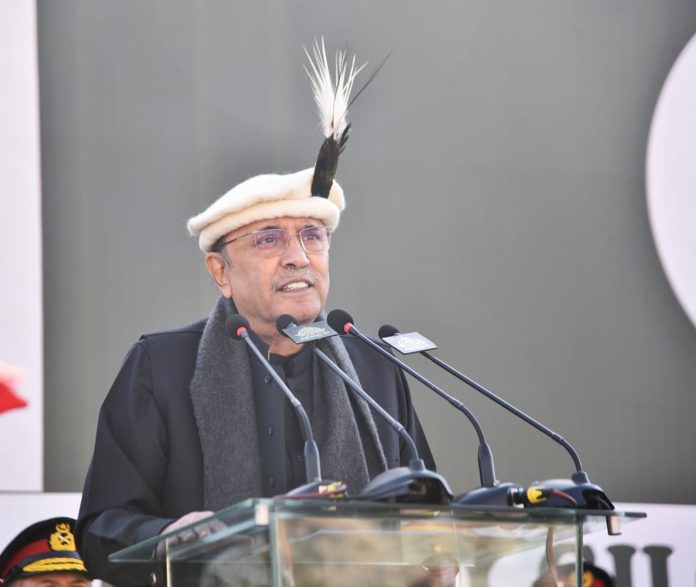
ISLAMABAD: President Asif Ali Zardari have called for joint efforts by government institutions, provincial authorities, local communities and youth to safeguard Pakistan’s rich cultural legacy, emphasizing that heritage preservation was both a national responsibility and an opportunity for economic and social development.
In his message on World Heritage Day, the President extended greetings to the nation and all those committed to protecting shared cultural assets, noting that the day highlighted the global importance of preserving heritage for future generations as recognized by UNESCO.
He said Pakistan stood at the crossroads of some of the world’s oldest civilizations, ranging from the early Palaeolithic and Neolithic periods to the Bronze Age Indus Valley Civilization, as well as the cultural richness of Mehrgarh, Mohenjo-daro and Gandhara, and later the Mughal era. These legacies, he said, reflected a continuous journey of human creativity, innovation and resilience that helped shape Pakistan’s national identity.
Highlighting intangible heritage, the President said folklore, languages, music, crafts and performing arts—including classical romances such as Heer Ranjha and Sohni Mahiwal, Sufi poetry and qawwali traditions—carried the collective memory and emotional depth of the people and helped sustain continuity of shared values across generations.
He also underlined the significance of traditional crafts, including Kashmiri embroidery and shawl weaving, Sindhi ajrak and ralli work, Balochi needlework, blue pottery of Multan, Peshawari chappal, Chitrali caps, woodwork of Chiniot and the vibrant tradition of Truck art, describing them as expressions of the diversity and skills of Pakistan’s communities.
President Zardari said Pakistan’s World Heritage Sites represented the Indus civilization, the Buddhist art of Gandhara and the forts and monuments of the Indo-Arab and Mughal periods, serving as visible records of the country’s history and cultural diversity.
He observed that heritage was not an abstract concept for citizens but a living reality that supported livelihoods of artisans, attracted visitors to historic cities, strengthened local economies around heritage sites and monuments, and helped children understand their history and identity.
Reaffirming the government’s commitment to preservation through professional expertise and modern conservation techniques, the President said heritage protection could also promote tourism, cultural industries and economic activity. He urged all stakeholders to work collectively for the protection, conservation and promotion of Pakistan’s cultural heritage.