BEIJING: A draft law on Antarctic activities and environmental protection entered its second review on Tuesday, strengthening legal safeguards for the continent’s fragile ecosystem as China enhances its role in polar governance.
The draft, comprising seven chapters and 57 articles, was submitted for further review at the ongoing session of the Standing Committee of the National People’s Congress, the country’s top legislative body, in Beijing.
Zhou Guangquan, an official with the NPC Constitution and Law Committee, told legislators that the draft strengthens environmental protection provisions by establishing legal liabilities based on the se-verity of environmental damage and the difficulty of ecological recovery, while raising fines where ap-propriate. The draft requires efforts to minimize the total amount of waste generated in Antarctica. It proposes fines ranging from 10,000 to 50,000 yuan ($1,476-$7,380) for failing to classify and properly dispose of waste or for engaging in other activities that may affect or damage the Antarctic environment. In seri-ous cases, fines may range from 50,000 to 500,000 yuan.
Zhou said the draft also improves the reporting and information-sharing system for environmental emergencies. Organizers of Antarctic activities would be required to take prompt and effective re-sponse measures and report incidents to the relevant authorities. Competent departments would strengthen information coordination mechanisms to better address such emergencies. “Antarctica is an important component of the global natural environment and ecological system, and holds significant importance for scientific exploration, environmental protection, climate change re-sponse, international cooperation and safeguarding the common interests of all humanity,” Huang Haihua, spokesperson for the Legislative Affairs Commission of the NPC Standing Committee, said at a news conference in Beijing on Monday.
Since China acceded to the Antarctic Treaty in 1983, the country has upheld the principles of peace, science, green development, inclusiveness and shared governance, Huang said.
“It remains committed to the peaceful use of Antarctica, the protection of its environment and ecosys-tem, and strives to build a community with a shared future for humanity,” he said.
The draft identifies environmental protection as a key legislative objective and a fundamental principle governing all Antarctic activities. It encourages low-carbon and environmentally friendly practices, supports the adoption of carbon-reduction, energy-saving and pollution-control technologies, and promotes the broader use of clean energy.
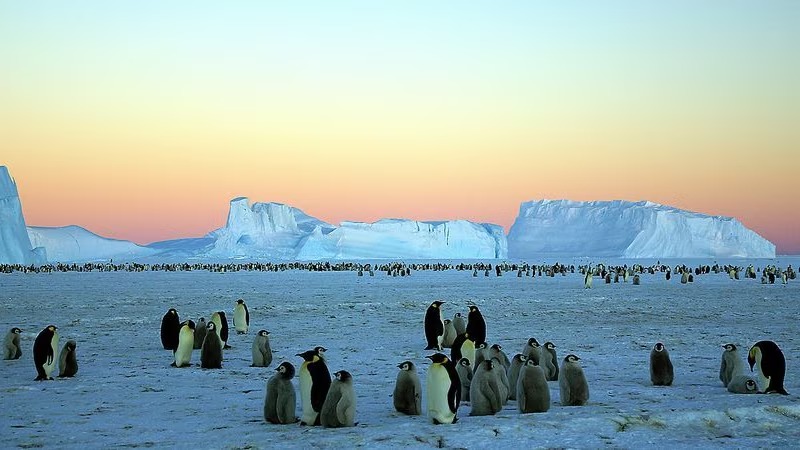
Huang highlighted a dedicated chapter on Antarctic environmental protection, which outlines general requirements and specific provisions covering the conservation of Antarctic flora and fauna, waste treatment and disposal, marine pollution prevention, regulated access to protected areas, and emer-gency responses to environmental incidents. –The Daily Mail-China Daily news exchange item