
BEIJING: As world leaders gather in Türkiye for COP31 amid renewed disputes over climate finance and a retreat from global climate cooperation by the US, China is emerging as an increasingly influential force in the fight against climate change. Its booming clean energy industry has made green technologies more affordable for developing countries, drawing praise from Western climate leaders even as Washington and Brussels impose trade barriers on Chinese products – exposing a growing contradiction between climate ambitions and economic protectionism.
Chinese Vice President Han Zheng, as President Xi Jinping’s special representative, met with UN Secretary-General Antonio Guterres on Tuesday on the sidelines of the Antalya Leaders’ Summit at the 31st meeting of the Conference of the Parties to the UN Framework Convention on Climate Change, per the Xinhua News Agency.
China is committed to setting clear targets and ensuring their implementation, and stresses the need to be true in word and resolute in deed, which will continue to provide valuable stability and certainty for global climate governance, Han said.
China has worked with the United Nations to advance international cooperation on addressing climate change, firmly upholding and fully implementing the UN Framework Convention on Climate Change and the Paris Agreement, vigorously promoting South-South cooperation on climate change, and actively supporting the UN-led Early Warnings for All initiative, he said.
The global response to climate change currently faces numerous challenges, Han said, noting that developing countries, in particular, are confronted with difficulties including funding shortages, technological shortcomings and inadequate capacity in implementing their nationally determined contributions, challenges that the international community must address together. At this year’s COP31, former US secretary of state John Kerry, who also served as special presidential envoy for climate, told the Guardian that China is leading the world in moving away from fossil fuels, and the rest of the globe – including the US – must now follow.
“The only country that has hugely accelerated [in embracing low-carbon power and rapid electrification] is China. The rest of the world is stumbling along while Mother Nature is sending us more powerful signals every week, every day,” said Kerry. Similarly, Chris Bowen, COP31 President of Negotiations and Australian Minister for Climate Change and Energy, praised China’s contribution to making clean energy more affordable worldwide on Tuesday. Bowen made the remarks at a side event titled “Ecological Civilization and Beautiful China Practice” at the China Pavilion, according to a China News report.
Speaking at a COP31 side event, Huang Runqiu, China’s minister of ecology and environment, highlighted China’s progress in green transformation, pollution control and environmental conservation, citing a series of figures: the country has completed ultra-low-emission upgrades for 1.17 billion kilowatts of coal-fired power capacity and 1 billion tons of crude steel production capacity, according to a readout published by the ministry on Wednesday.
China has also led the world in electric vehicle production and sales for 11 consecutive years. Over the past five years, average concentrations of fine particulate matter (PM2.5) have fallen by 20 percent, while the number of days with severe air pollution has dropped by 25 percent, said Huang.
This year’s COP comes after a year of devastating extreme weather, marked by soaring temperatures and deadly heat waves across Europe and beyond, while the absence of the United States has further complicated global efforts to tackle climate change. COP observers and international media have turned the spotlight back on China, wondering if “China will finally step into the leadership role” in global climate action, as the Guardian asked.
The growing international recognition of China’s role in tackling climate change reflects the country’s rising economic and technological strength, according to a Chinese expert. Once viewed largely as a costly undertaking, the fight against climate change has increasingly become an economic opportunity, driven in part by China’s rapid advances in clean energy technology and manufacturing, Bao Cunkuan, a professor in the Department of Environmental Sciences and Engineering at Fudan University, told the Global Times.
For developing countries, particularly those in the Global South, where energy costs can place a heavy burden on economic development, the expansion of China’s renewable energy industry has helped make clean power more affordable and accessible, allowing countries to pursue economic growth while reducing emissions, said Bao.
As for growing calls for China to assume a greater leadership role in global climate governance, the expert said the country’s influence should be measured not by whether it formally takes the lead, but by its capabilities and concrete achievements in advancing the green transition.
China actions
At a press conference last month, Li Gao, vice minister of ecology and environment, said that China was calling for the COP31 climate summit to focus on implementing existing commitments and addressing both longstanding gaps in emissions cuts and climate finance, as well as new challenges from unilateralism and protectionism.
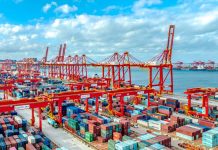
China is by far the world’s largest producer of the solar panels, wind turbines, batteries and electric cars needed to cut emissions. However, that technology is increasingly seen as a threat by countries concerned about the competitive impact on their local industries, per Reuters.
The US has imposed steep tariffs on Chinese solar products and electric cars while the European Union has done the same for autos, imposed restrictions on some solar components and is investigating a major Chinese wind company.
Steep tariffs imposed by the United States and European countries on Chinese clean energy products risk undermining the very climate goals they have pledged to pursue, said Ma Jun, director of the Institute of Public and Environmental Affairs.
With much of the world already lagging in the transition to renewable energy, such protectionist measures threaten to drive up costs, slow the adoption of affordable green technologies and hinder global efforts to combat climate change, Ma said. By prioritizing domestic industrial interests over the urgent need to accelerate the energy transition, Western governments risk turning trade protectionism into another barrier to global climate action.
According to a Reuters analysis, China sent $132 billion in clean technology and investment to the developing world last year, by far the largest contribution to carbon-dioxide reduction of any country. That figure nearly matched the total of grants, loans and private finance that all wealthy countries sent to poorer ones in 2024 to help fight climate change.
Ma said he had spoken with climate experts from Pakistan who described how falling prices had made Chinese solar panels increasingly affordable for ordinary households, prompting more families to embrace the technology.
By installing rooftop solar panels, these households have been able to reduce their dependence on an unreliable power grid and gain greater control over their electricity supply. Beyond making daily life easier, access to affordable, reliable electricity has also created opportunities for families to start small businesses, earn a living and improve their economic prospects, Ma said.
Therein lies the irony of global climate politics: Wealthy nations have yet to fulfill their climate finance commitments to developing countries, even as they lecture China over its emissions and environmental record.
Yet when China offers a more affordable path to decarbonization through its clean energy technologies, those same governments respond by slapping tariffs on Chinese products. For all their “lofty” rhetoric about saving the planet, it is becoming increasingly clear who is driving the green transition forward — and who is standing in its way, said experts. –The Daily Mail-Global Times news exchange item