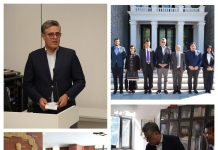

BEIJING: When the China-Maldives Friendship Bridge opened to the public in August 2018, Fazeel Najeeb — then the Maldives’ minister of state for foreign affairs — was not standing on a ceremonial stage. Instead, he was waiting in line.
Riding his motorcycle, he edged forward alongside thousands of ordinary Maldivians, all eager to experience something their country had never known before — crossing the sea by road.
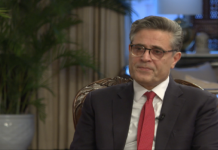
“It felt really good,” recalled Najeeb, who has been serving as the Maldives’ ambassador to China since December 2024. For Najeeb, the bridge represents far more than a shortcut between Male and Hulhumale, home to the country’s main international airport.
What once required a ferry journey of up to 30 minutes — sometimes suspended altogether due to rough seas — now takes just 10 minutes by road, he said. “This bridge has not only significantly enhanced urban connectivity, but also played an important role in supporting economic activity, tourism and social integration, thereby contributing to the Maldives’ long-term development and resilience,” he said. Since its opening in 2018, the bridge has seen more than 100 million crossings.
The project traces its origins to September 2014, when President Xi Jinping made a state visit to the Maldives, one of the earliest participants in the China-proposed Belt and Road Initiative.
Built of steel and concrete, the bridge carries meaning beyond engineering — and beyond the Maldives itself.
It reflects a development philosophy that emphasizes connectivity over exclusion, cooperation over confrontation, and shared growth over zero-sum competition, observers said.
At a time when walls are rising and divisions are hardening around the world, China is increasingly defining its international engagement through bridge-building — physical, economic and diplomatic. That vision has long been featured prominently in President Xi’s diplomatic language.
In April 2014, during a speech at the College of Europe in Bruges, Belgium, Xi noted that in the Flemish language, Bruges means “bridge”.
“A bridge not only makes life more convenient; it could also be a symbol of communication, understanding and friendship,” Xi said. He later proposed building four bridges — a bridge of peace, a bridge of growth, a bridge of reform and a bridge of progress of civilization, to forge a China-European Union comprehensive strategic partnership with greater global influence.
At the Boao Forum for Asia Annual Conference 2015, Xi quoted the ancient Chinese philosopher Mencius, saying, “Things are born to be different,” and noting that civilizations are unique and none is inherently superior to another. He advocated intercivilizational exchanges to build bridges of friendship among peoples, advance human progress and safeguard world peace.
While welcoming foreign guests attending the G20 Hangzhou Summit in 2016, Xi described the G20 as a bridge of friendship, a bridge of cooperation and a bridge of future, calling for an “innovative, invigorated, interconnected and inclusive” world economy.
Zhou Mi, a researcher at the Chinese Academy of International Trade and Economic Cooperation, said the Belt and Road Initiative is also one of the bridges that represent an open, multitiered and composite network of connectivity, allowing multiple routes of cooperation to intersect and enhancing economic resilience.
China has signed Belt and Road cooperation documents with more than 150 countries and over 30 international organizations. Investment in Belt and Road projects has surpassed $1 trillion, with the number of cooperation projects exceeding 4,000. These figures underscore how connectivity has become a defining feature of China’s global engagement, observers noted. –The Daily Mail-China Daily news exchange item