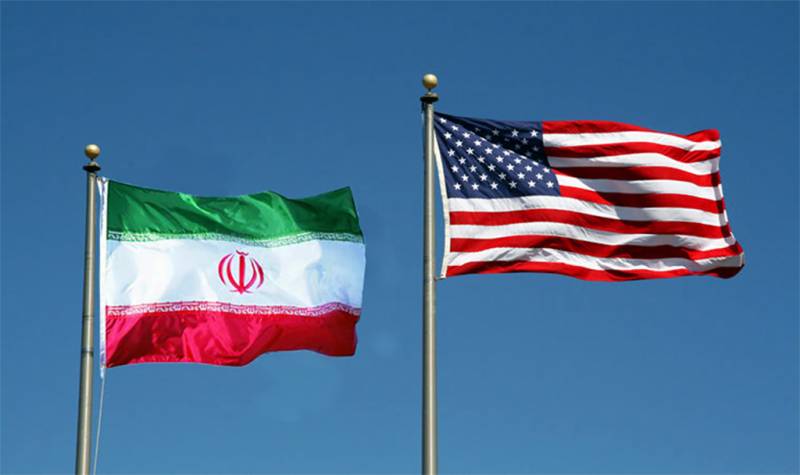
BEIJING: The announcement that the US and Iran have reached a preliminary peace framework has offered a potential turning point after months of heightened tensions in the Middle East. The development has drawn widespread attention from the international community and global markets.
The topic also emerged as a focal point at China’s regular Foreign Ministry press briefing on Monday. More than half of the questions addressed by Foreign Ministry spokesperson Lin Jian were related to the US-Iran agreement, the Strait of Hormuz, and the broader situation in the Middle East.
China welcomes the US and Iran reaching agreement on the text of the memorandum of understanding for the first stage of negotiations and commends Pakistan’s mediation efforts. We hope the document will be signed according to the agreed timetable and all relevant parties will stay committed to peaceful solutions and resolve issues through dialogue and negotiation, the ministry’s spokesperson Lin Jian said on Monday.
Lin made the remarks in response to a question that Pakistan’s Prime Minister Shehbaz Sharif announced early Monday that the US and Iran had reached an agreement following negotiations, with both sides declaring an immediate and permanent end to military operations across all fronts, including in Lebanon, and the US and Iran later confirmed the agreement. Chinese observers said that the announcement of the agreement itself has a clear de-escalatory effect on tensions in the Middle East; however, many details of the deal remain unclear at this stage, and uncertainties remain, given some lingering disputes and Israel’s reported discontent with the deal.
“The Deal with the Islamic Republic of Iran is now complete,” US President Donald Trump wrote on his Truth Social platform around 5:30 pm ET local time in Washington on Sunday. His post came shortly after Pakistani Prime Minister Shehbaz Sharif, whose country has served as a mediator, announced a deal had been struck early on Monday local time, Reuters reported.
The memorandum of understanding (MoU) is scheduled to be officially signed on Friday in Switzerland, according to Reuters.
The Associated Press (AP) described it as an initial agreement to end the US-Iran war and open the Strait of Hormuz, offering relief to the Gulf region and global economy more than three months since fighting began.
The Iranian deputy foreign minister Kazem Gharibabadi said that starting Monday night, the US naval blockade against Iran will be terminated, along with “the immediate and permanent end of the war and military operations on various fronts, including Lebanon,” according to Tasnim. The announcement of the agreement means tensions in the Middle East are expected to ease significantly, with the intensity of regional conflicts likely to decline substantially, Sun Degang, director of the Center for Middle Eastern Studies at Fudan University, told the Global Times on Monday.
As expectations grow for the reopening of the Strait of Hormuz to normal shipping traffic, energy markets will likely return to a level of stability that would undoubtedly be positive news for the global economy, Sun said.
Trump said the Strait of Hormuz, a major shipping route for global oil and gas supplies, would open on Friday, and that he had ordered the end of the US blockade of Iranian ports, Reuters reported.
Oil prices fell on the news. At one point, Brent crude futures fell 4 percent in early trading on Monday, while US West Texas Intermediate slid more than 4.6 percent, according to Reuters.
If the US and Iran are able to formally sign the MoU as planned, the months-long confrontation between the two countries will, for the most part, come to an end; however, uncertainties remain over whether disruptive factors could emerge during the implementation phase of the agreement, Sun said.
The Strait of Hormuz is an important strait for international navigation. Restoring stability in the Strait serves the common interests of regional countries and the international community, Lin said on Monday in response to a question regarding the reopening of the strait.
We have noted that the text of the memorandum of understanding for the first stage of negotiations between Iran and the United States includes the reopening of the Strait of Hormuz. We hope the Strait will become safe again for free passage at an early date. China stands ready to maintain communication with regional countries and the international community on relevant issues, Lin said.
Uncertainties remain
Broader negotiations on outstanding issues like Iran’s nuclear program would continue over the next 60 days, AP reported, citing two senior Pakistani officials. If the sides fail to reach a resolution within that time, the timeline could be extended, per the AP report.
The UK, France, Germany and Italy said they are prepared to lift sanctions on Iran in response to steps on its nuclear program after the US and Iran reached a deal to end their war, the leaders of the countries said in a joint statement, according to Xinhua.
At the implementation stage of the MoU, the US and its European allies are likely to demonstrate relatively strong willingness and capacity to implement the deal, suggesting that overall implementation could proceed relatively smoothly; however, there remains a significant possibility that Israel may attempt to create obstacles, and this risk should not be underestimated, Zhu Yongbiao, a Middle East affairs expert with Lanzhou University, told the Global Times on Monday. –The Daily Mail-Global Times news exchange item