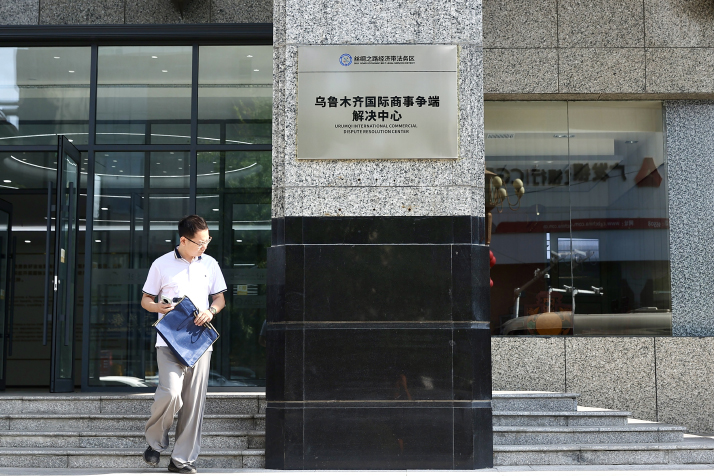
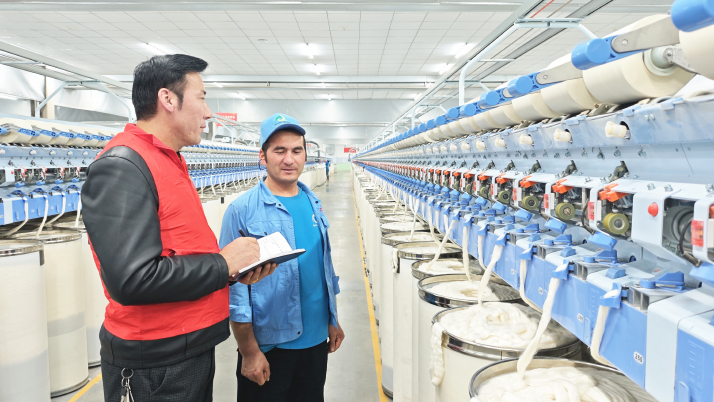
Xinjiang Baicheng Fresh Food (Group) Supply Chain Co. is a food processing enterprise in Urumqi, with a history of more than 30 years. In the past, the company faced bottlenecks due to lack of knowledge about the official paperwork needed for approvals. However, in March, its phase II production facility received the final nod and went into operation three months ahead of schedule.
This was made possible by the local housing and urban-rural development authority that stepped in. Their officials visited the site, guided the company to prepare the necessary documents and helped address fire safety issues.
This case illustrates a fundamental shift in Xinjiang’s approach to economic governance: moving from waiting passively to issue approvals to proactive service delivery.
Strategic shifts
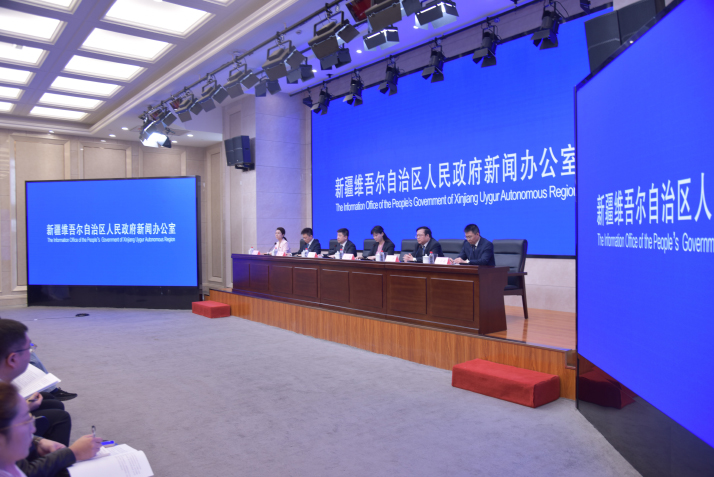
Xinjiang’s 2026 action plan for optimizing the business environment targets improving five areas—market access, allocation of factors of production, government services, the rule of law and opening up.
Wu Jun, Deputy Director of the Development and Reform Commission of Xinjiang, said there will be three strategic shifts. Instead of broad reforms, Xinjiang will focus on targeted solutions, addressing issues like bid-rigging, financing delays, overdue payments to suppliers and arbitrary enforcement. In the past, attention was given to lowering entry barriers; now operating costs will be reduced via one-stop utility connections, streamlined multimodal transport and a crackdown on unauthorized fees. Finally, from one-way administration, the region is moving to co-management by the government and businesses.
Backed by the local regulations on optimizing the business environment, which took effect in October 2025, the plan will provide market players—local and foreign alike—with stable, predictable rules on fair competition, government services and rights protection.
Comprehensive support
To foster a fair and orderly market environment, market access efficiency evaluations have been done across all 14 prefectures and prefectural-level cities. Disorderly competition in key industries has been curbed, the binding effect of fair competition reviews strengthened, and antitrust enforcement intensified. In Urumqi, Hami and other prefectural-level administrative divisions, improper prequalification and qualification lists for suppliers have been scrapped, ensuring that all market entities—regardless of size or type of ownership—can compete for government contracts and projects on an equal footing.
For bids and tenders, a long-standing headache for businesses, Xinjiang is promoting the use of electronic bidding systems and electronic bid bonds. This reduces opportunities for under-the-counter deals and cuts transaction costs for participating companies.
On the financing front, there are principal-free loan renewal policies for micro, small and medium-sized enterprises and regular issuance of real estate investment trusts in the infrastructure sector. According to Xinjiang Daily, by the end of 2025, outstanding loans for small and micro enterprises in the region exceeded 976 billion yuan ($146 billion), a 59.7-percent increase compared with 2022.
Smarter government, better services
In Xinjiang, government services have become easily accessible. The region is promoting the establishment of dedicated government counters at all levels to handle matters that cannot be resolved through routine procedures.
These reforms are producing visible results. In Midong, a district in Urumqi, a major project worth over 1 billion yuan ($145 million) moved from approval to operation in just 66 days. In Yili (Ili) Kazak Autonomous Prefecture, thanks to one-stop intake and end-to-end online processing, enterprises’ satisfaction with government services has risen to 99.98 percent.
Ke Jian, Deputy Director of the Digital Development Bureau of Xinjiang, said in 2026, four measures will be implemented to advance reforms in key services:
—A comprehensive review of the online business services would be made to identify bottlenecks and streamline procedures.
—High-quality implementation of national priorities would be ensured. They include establishing elderly care institutions, real estate transfer registration for enterprises and intellectual property protection.
—Services tailored to the industrial strengths of each prefectural-level administrative division would be launched. The recipients would include aquaculture farms, nurseries and employment agencies.
—Digital technologies would be harnessed to break down data barriers, promote mutual recognition of electronic licenses and certificates, and advance “AI plus government services” to make administrative services smarter and more efficient.
Meanwhile, mechanisms for timely policy delivery have been upgraded. The enhanced Xinqiban (Xinjiang Enterprise Service) platform integrates information about the new policies released by the Central Government, one-click application, and prompt, direct policy delivery to enterprises. The region has also established a government contract database and a performance monitoring system to ensure contracts are fulfilled and to prevent new officials from discontinuing commitments made by their predecessors.
As part of broader efforts to enhance the quality and efficiency of its foreign trade, Xinjiang has promulgated multiple regulations to develop the port economy and implemented a series of policies to foster innovation in trade of goods, services and digital products.
The one-stop service approach for foreign trade businesses has been improved and more efficient customs clearance models introduced, such as advance declaration and release before inspection. At Huoerguosi (Khorgas or Horgos) Port, customs declaration time has been shortened from three hours to one. Cross-border e-commerce and overseas warehouse operations have also been expanded and upgraded.
In 2025, Xinjiang’s total trade in goods exceeded 500 billion yuan ($72.9 billion), a year-on-year increase of 19.9 percent, the highest growth rate nationwide.
Established in November 2023 as the first of its kind in the country’s northwestern border regions, the China (Xinjiang) Pilot Free Trade Zone (FTZ) , which spans 179.66 square km across three key areas of Urumqi, Huoerguosi and Kashi (Kashgar) have played a leading role in promoting foreign trade, attracting investment and fostering industrial clusters in Xinjiang.
The Urumqi area has seen 15,000 new enterprises come up since the FTZ’s inception. Despite accounting for less than 1 percent of the city’s land area, it contributes nearly 60 percent of the city’s total import and export volume. In the Kashi area, many business services that previously required multiple visits can now be accessed in one go.
To sustain the reforms, there are three supporting mechanisms: regular government-business interaction, a unified complaint and feedback platform, and public monitoring stations where businesses can rate the business environment.
“There is no ultimate standard for a good business environment—only continuous improvement,” Wu said. The region’s goal, he added, is to build a market-oriented, law-based and globally aligned climate where companies of all types can invest and grow with confidence. –The Daily Mail-Beijing Review news exchange item