News Desk Report
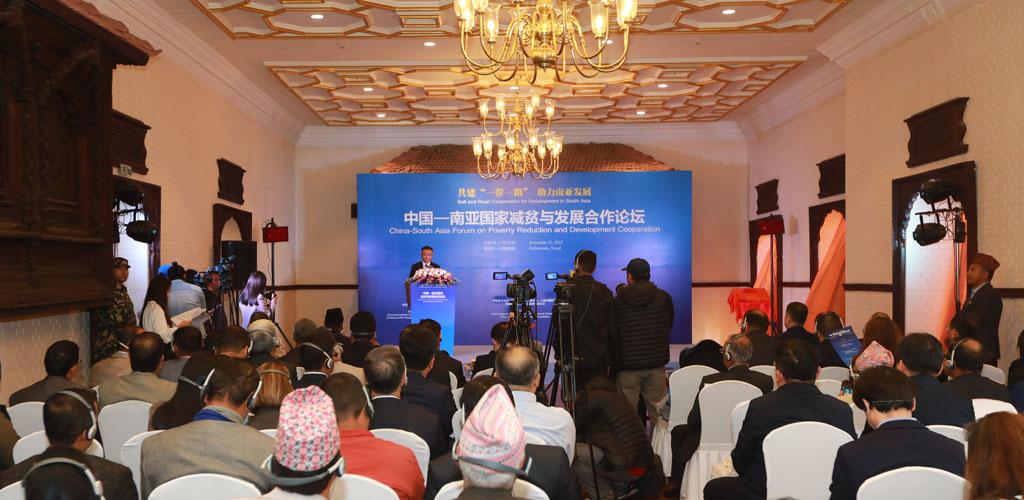
In 2023 the , soon after the COVID-19 pandemic era ended, leaving behind a flood economic destruction and started pushing people of South Asia in particular to the extreme poverty, China-South Asia Forum on Poverty Reduction and Development Cooperation was held in Kathmandu, Nepal. The forum was directed by China International Communications Group (CICG) and the Embassy of the People’s Republic of China in Nepal, hosted by the CICG Centre for Europe and Asia (China Pictorial Publications) and China International Book Trading Corporation, and organized by Current Media and Research Centre, China Study Centre of Nepal, and Nepal China Friendship Forum.
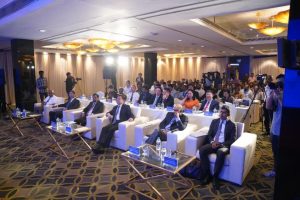
Cooperation was held at Colombo, Sri Lanka, May, 2025.
During the forum, more than 100 government officials, diplomatic envoys, experts, scholars, media representatives and international organizations from China, Nepal, India, Pakistan, Bangladesh, Sri Lanka and other countries exchanged their views under the theme “Belt and Road Cooperation for Development in South Asia.” The guests included Liu Dawei, Vice President of CICG, Ganesh Prasad Timilsina, Chairman of the National Assembly of Nepal, Chen Song, Chinese Ambassador to Nepal, Yubaraj Sangroula, former Attorney General of Nepal, Guo Ruihong, Second-Level Inspector of the Publishing Bureau under the Publicity Department of the Communist Party of China (CPC) Central Committee, and Syed Sultan Hassan Naqvi, Political and Education Counsellor of the Embassy of Pakistan in Nepal.
Liu Dawei noted that China has been committed to poverty reduction and economic growth along the Belt and Road over the last decade, in order to achieve the ultimate goal of the Belt and Road Initiative (BRI), which is to improve people’s livelihoods in all participating countries. He said that China and South Asian countries should deepen practical cooperation in various fields to enhance economic prosperity and stability in the region. In addition, they should build a flagship platform for global poverty alleviation and development.
Ganesh Prasad Timilsina said that China has cooperated with Nepal and other South Asian countries under the BRI framework and achieved remarkable results, greatly contributing to economic development in South Asia and improving people’s lives. He remarked that China would not have succeeded in poverty alleviation without the leadership of the CPC and the solidarity of Chinese people, and China and South Asian countries can jointly promote the high-quality development of the BRI by sharing poverty reduction experience.
Noting that poverty remains a severe issue in South Asia, Yubaraj Sangroula said that China’s successful experience in poverty alleviation is worth learning and the BRI provides opportunities to alleviate poverty in South Asia through infrastructure construction and technology dissemination, as well as liberalization and facilitation of trade and investment. He added that South Asian countries should seize the opportunities to promote economic prosperity in the region and improve living standards.
Syed Sultan Hassan Naqvi said that the ancient Silk Road has witnessed a glorious past of cultural exchange and mutual learning among diverse civilizations in China and South Asia, leaving splendid cultural heritage and tremendous opportunities for cooperation. He remarked that the China-Pakistan Economic Corridor, as an integral part of the BRI, has not only promoted infrastructure connectivity but also created job opportunities, enhanced corporate social responsibilities, and directly contributed to poverty reduction in Pakistan.
Dinesh Kulatunga, President of the International Board on Books for Young People (IBBY) Sri Lanka, shared his experience of translating a Chinese book that describes how a poor, remote village in the Daliang Mountains in southwestern China has moved toward prosperity. He said that the poverty alleviation approach demonstrated in the book which stimulates the inner power of impoverished people is truly sustainable, and a favorable environment for impoverished people to realize their potential can be created by aggregating resources and spreading knowledge.
At the forum, The Belt and Road Initiative: A Decade of Collaboration – China-South Asia Cooperation and Development Report was released by Huang Wei, First-Level Inspector of the Department of Coordination and Management, CICG, together with other guests. The report, led by Professor Zhang Xiaotao from the School of International Trade and Economics at the Central University of Finance and Economics, elaborates on the achievements of cooperation between China and South Asian countries over the past decade and the significant impact of the BRI on their economic and social development, especially in the field of poverty alleviation.
During the thematic session on “Eliminating Poverty and Realizing the Right to Development,” the participants discussed how to create more favorable conditions for impoverished people to realize the right to development. They believe that poverty eradication is a primary goal of the United Nations 2030 Agenda for Sustainable Development and a key approach to protecting and promoting human rights, and China and South Asian countries can work together under the BRI framework to strengthen infrastructure construction in impoverished areas, provide public services in health, education, culture, medical care among other sectors for people living in poverty, and create more jobs and enhance their self-development capacity.
During the thematic session on “Poverty Reduction Cooperation—Building a Global Community of Shared Future,” the participants said that China’s efforts in eradicating poverty at home and promoting international cooperation have greatly accelerated global poverty reduction. They noted that China and South Asian countries are expected to deepen exchanges in poverty reduction, promote regional economic and social development, and implement international cooperation projects that benefit people’s lives under the BRI framework, therefore contributing to the building of a global community of shared future.
The Colombo Forum
In 2025 China-South Asia Forum on Poverty Reduction and Development Cooperation was held in Colombo, capital of Sri Lanka. Attendees included Du Zhanyuan, President of China International Communications Group (CICG), Gamagedara Dissanayake, Deputy Minister of Buddhasasana, religious and cultural affairs of Sri Lanka, Qi Zhenhong, Ambassador of China to Sri Lanka, Faheem Ul Aziz, high commissioner of Pakistan to Sri Lanka, and Md. Jannatul Habib, head of chancery and first secretary of Bangladesh High Commission in Sri Lanka. The forum was moderated by Gao Xin, vice president of the CICG Center for Europe and Asia (China Pictorial Publications). The forum gathered over 80 participants from China, Sri Lanka, Pakistan, and Bangladesh among other countries, including government officials, diplomats, scholars, experts, representatives of media outlets and international organizations. The event featured in-depth discussions on the theme “Enhancing Regional Cooperation for South Asia’s Development.”
Du Zhanyuan noted in his speech that poverty eradication is a global challenge and a common mission for mankind. He said that it is imperative for China and South Asian countries to deepen poverty reduction and development cooperation with continuous efforts. He stressed that endeavors should be made to promote people’s well-being while adhering to the principle of amity, sincerity, mutual benefit and inclusiveness; deepen pragmatic cooperation across various sectors for shared economic prosperity and stability; and facilitate the application of innovative technologies to empower the development of poverty alleviation. He said that CICG will take the forum as an opportunity to enhance bilateral and multilateral exchanges of poverty alleviation experiences, jointly explore the path of poverty reduction and development in line with regional conditions, and contribute wisdom and strength to building a global community of shared future.
Gamagedara Dissanayake said in his speech that although Sri Lanka has made remarkable progress in healthcare, education, and infrastructure, poverty remains a long-standing challenge, particularly in rural areas and among certain urban groups. He added that China’s success in gaining economic value from cultural heritage is a valuable experience for Sri Lanka. He noted that this forum would serve as a platform to foster exchange of knowledge, identify specific areas for collaboration, and build stronger networks that will contribute to poverty reduction and sustainable development.
Shannon Hannibal, a representative for the Belt and Road Initiative Sri Lanka, said in his speech that the longstanding partnership between China and Sri Lanka has continued to deepen through Belt and Road cooperation and the Global Development Initiative over recent years. He noted that in 2023, China funded a project with the FAO to enhance the fruit value chain in Sri Lanka, improving access to international markets for local produce. He said that China also supported sea cucumber farming, rural road construction, and the Mahaweli Water Diversion and Irrigation Project in Sri Lanka, which greatly improved local livelihoods. He stressed that these achievements underscore the value of China-Sri Lanka cooperation in advancing regional poverty reduction and sustainable growth.
Liu Zongyi, research fellow and director of the Center for South Asia Studies at the Shanghai Institutes for International Studies, noted in his speech that despite being the world’s most densely populated region with the most pressing development needs, South Asia and the Indian Ocean region continue to face severe challenges posed by poverty. He said that as a global leader in poverty reduction, China has collaborated with South Asian countries on infrastructure development, agricultural modernization, food security, and green growth through the Belt and Road Initiative and the Global Development Initiative. During the forum, Liu Shuangyan, director general of the CICG International Cooperation Department, released the Chinese-English bilingual book “Questions and Answers on Chinese Modernization” compiled by the Academy of Contemporary China and World Studies. The book addresses the international community’s questions about Chinese modernization through a question-and-answer format, elucidating its inherent logic and practice pathways.
During the forum, guests visited a thematic book exhibition. The ASLCSCC received books on topics including China’s poverty reduction experience and rural revitalization.
All eyes on Islamabad Forum now.