BEIJING: Chinese companies’ surging demand for satellite services and stronger government support are expected to further fuel the country’s rapidly developing commercial satellite industry, industry experts said.
Orbital Voyager Technology Co, a Shanghai-based satellite maker, is one example. The company began building satellites on its first day of operation and achieved profitability within a year of its founding, said Xia Yiwen, head of its operations department.
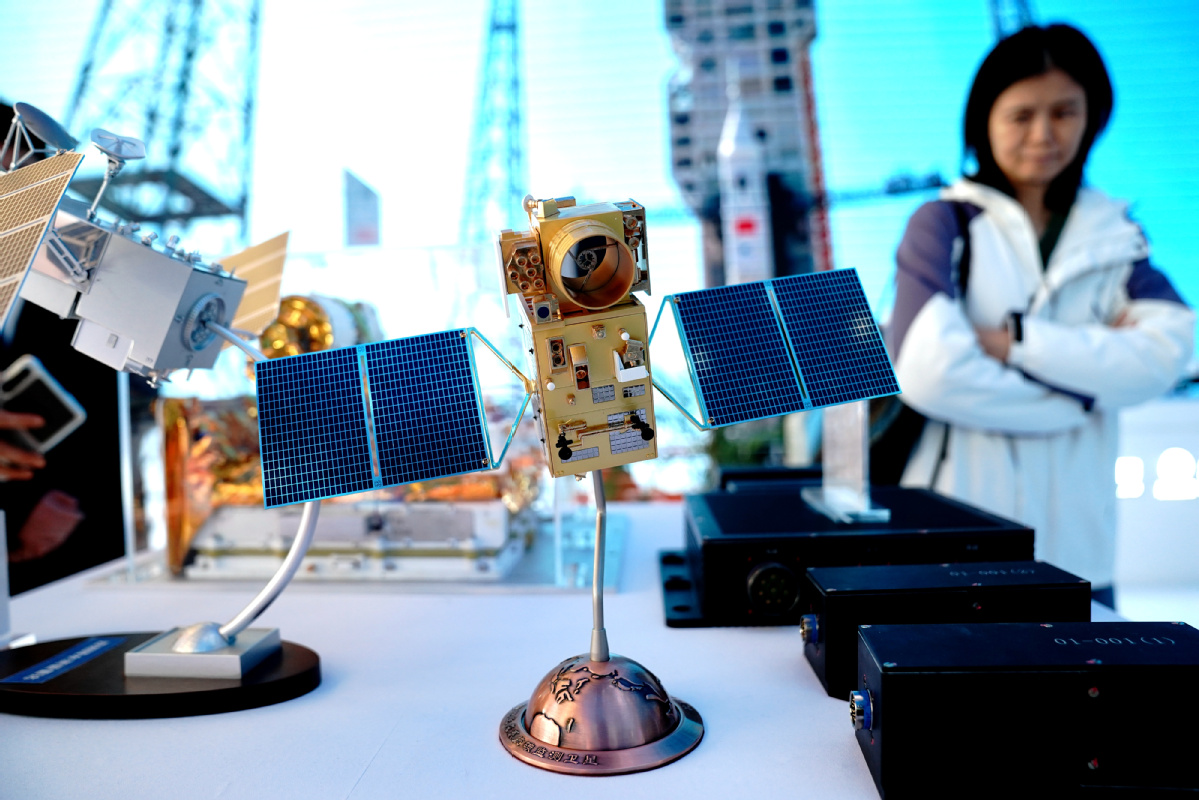
The company, established in August 2024, has to date launched seven satellites, covering a range of applications including infrared satellites for disaster mitigation monitoring,
meteorological satellites, hyperspectral remote sensing satellites and situational awareness satellites for space debris scanning. The company is scheduled to launch another 17 satellites this year, with 60 percent designed as computing power satellites, Xia said. Rising demand from companies for more efficient data collection and analysis has driven interest in such satellites. The data can be used for monitoring sea transportation for international trade, carbon emissions and urban planning, among other uses, he said.
Traditional satellites must transmit data back to Earth for processing, which can take several hours. Computing power satellites, however, can process data directly in orbit and deliver results in real time, significantly improving efficiency, Xia said.
He added that satellite-based data collection and processing is more cost-effective than alternatives such as drones, which would require hundreds of devices and more time to gather comparable data.
Experts from CITIC Securities said computing power satellites can be regarded as new infrastructure, seeing as stronger space-based computing capacity has become a global consensus. They said the Chinese government is expected to introduce clearer policy support, further relax manufacturing requirements and channel more government-backed funding into the sector.
Private enterprises account for about 80 percent of Orbital Voyager’s current client list. These companies often have data processing and payload development capabilities but lack the ability to manufacture complete satellites — a gap Orbital Voyager is positioned to fill. The process from identifying demand to signing contracts can be completed within one month, Xia said.
Analysts from CCID Consulting said satellite makers delivered some of the strongest business performances in 2025, with combined sales revenue exceeding 25 billion yuan ($3.7 billion). Supportive government policies have helped drive technological upgrades and significantly improve delivery capacity, they said.
According to CITIC Securities analysts, China’s commercial space industry is expected to reach a critical inflection point this year, transitioning from a period of technology validation to large-scale industrialization.
With the maturation of various space launch sites and commercial launch vehicles, payload capacity is expected to increase while costs decline, benefiting segments such as satellite manufacturing, rocket launch services and ground terminals, they said.
While the manufacturing costs of a satellite at traditional research institutes can reach 50 million yuan, Orbital Voyager has reduced costs to about 10 million yuan through the use of mature commercial components and localized supply chains and also due to market competition.
With about 170 million yuan in orders, the company remains optimistic about the industry’s prospects, driven largely by growing government support. –The Daily Mail-China Daily news exchange item