By Asim Hussain
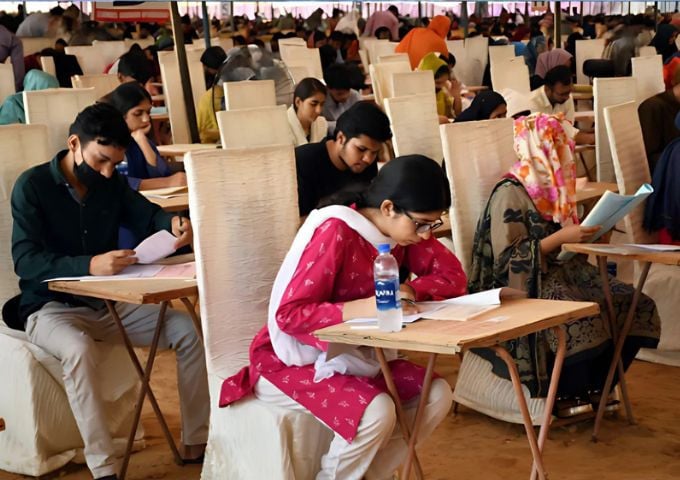
ISLAMABAD: The meeting of the Sub-Committee of the Senate Standing Committee on National Health Services, Regulations and Coordination directed Pakistan Medical and Dental Council (PM&DC) and the Secretary of Health to submit all relevant documents and legal provisions authorizing the Council to make Medical and Dental College Admission Test (MDCAT) compulsory for students intending to pursue medical education abroad.
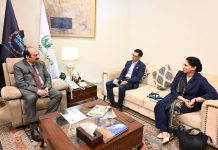
The meeting of Sub-Committee was held under the convenorship of Senator Anusha Rehman to review preparedness for the upcoming Medical and Dental College Admission Test (MDCAT) 2026, examine the existing MDCAT policy framework where 50% weightage is allocated to MDCAT test which is not tutored by any educational institution versus formal exams results, also recommend reforms aimed at ensuring uniformity in the medical admissions process across Pakistan, and assess the transparency of MDCAT fee structures.
The meeting was attended by Senator Samina Mumtaz Zehri, while Senator Agha Shahzaib Durrani participated via Zoom.
The Committee took up the issue of a recent advertisement issued by the PM&DC, which made MDCAT mandatory for students seeking admission to MBBS programmes abroad.
Members questioned the legal basis of the directive and expressed concern over what they termed an arbitrary policy decision lacking clear statutory backing.
The Committee observed that such measures were particularly concerning in light of the 743 vacant seats currently available in medical and dental colleges across the country.
While PM&DC officials explained that the move was intended to discourage admissions in substandard foreign medical institutions, Committee members questioned who MDCAT would stop admission in sub standard colleges.
They asked why a lis of substandard medical colleges list is maintained by PM&DC to guide students not to seek admission there?
The committee maintained that current measures mandated by PMDC imposing MDCAT test as criteria for seeking admission in foreign institutions without an explicit legal mandate requires further deliberation.
Meanwhile, the Committee suggested that PM&DC should publish a list of foreign medical colleges and universities that do not meet recognized standards rather than imposing blanket restrictions to better guide students and parents. Members expressed concern that certain regulatory measures were creating unnecessary difficulties for students and contributing to frustration among aspiring medical professionals.
The Committee also discussed concerns regarding MDCAT weightage and the challenges faced by A-Level students during the admissions process, as the syllabus of MDCAT primarily focus on intermediate. Members attributed the existence of vacant seats in medical and dental colleges to shortcomings in the current policy framework and emphasized the need for comprehensive reforms. The Committee further highlighted the significant disparity in the cost of medical education in Pakistan compared to countries such as China where the cost is one third.
During the briefing, officials informed the Committee that the majority of vacant seats were in dental colleges. The Committee expressed reservations regarding the international non-recognition of Pakistan’s dentistry qualifications in some countires and pointed to the need for greater standardization and alignment with global practices. The Committee was also briefed on the collection, utilization, and auditing mechanisms relating to MDCAT examination fees.
Concluding the meeting, the Sub-Committee strongly disagreed with several aspects of the current PM&DC policy framework governing MDCAT and recommended a comprehensive review and revision process involving all relevant stakeholders.
The Convenor directed that a public hearing be convened, inviting students affected by MDCAT-related issues, medical practitioners, and vice chancellors of medical universities to contribute to the development of policies and legislative reforms aimed at addressing longstanding concerns in the medical admissions system.