
ISLAMABAD: Ministry of National Health Services, Regulations and Coordination, the World Health Organization (WHO), and Médecins Sans Frontières (MSF) will improve the treatment facilities for more than 93,000 children affected by tuberculosis (TB) in Pakistan.
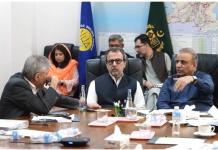
This was discussed at two-day consultation at WHO Pakistan’s Country Office in Islamabad to improve the national response to childhood TB and align policies with the latest WHO guidelines organized by Common Management Unit (CMU) for AIDS, Tuberculosis and Malaria, under the Ministry of Health.
According to officials, children account for nearly 14 percent of Pakistan’s estimated 669,000 TB cases.
Pakistan carries 73 percent of the tuberculosis burden in the Eastern Mediterranean Region and ranks as the fifth most affected country globally.
The consultation, held in collaboration with the Pakistan Paediatric Association, focused on incorporating WHO’s latest science-based recommendations into national TB policies while reviewing lessons learned from MSF’s TACTiC (Test, Avoid, Cure TB in Children) initiative.
WHO recommendations discussed during the meeting included a shorter 4-month TB treatment regimen, preventive treatment for children exposed to TB, new all-oral 6 to 9-month treatment regimens for drug-resistant TB, and family-centred decentralized care models.
Speaking on the occasion, CMU TB Programme Manager Dr Faisal Siraj said Pakistan has prioritized paediatric tuberculosis as a major public health concern in line with recommendations of the Joint Programme Review Mission 2025.
He said the programme has introduced integrated child-focused interventions including standardized clinical diagnosis, household contact investigation, and expansion of TB preventive therapy through primary healthcare and child health platforms.
Dr Florian Götzinger, National Implementer for MSF’s TACTiC initiative, said children are among the most vulnerable groups affected by TB due to difficulties in diagnosis and the higher risk of severe disease. –Agencies